Newsletter Subscribe
Enter your email address below and subscribe to our newsletter

Enter your email address below and subscribe to our newsletter


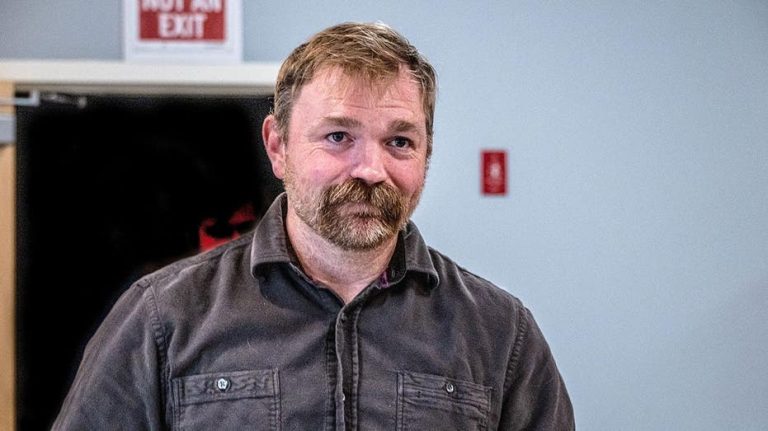
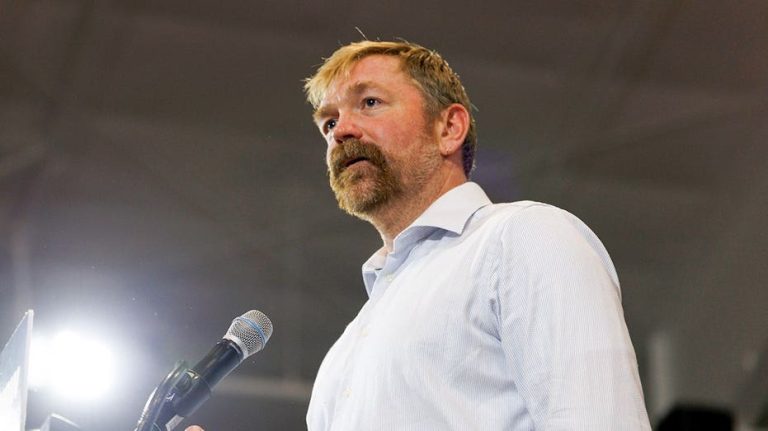
BRUNSWICK, Maine — The effort to push Graham Platner out of the Maine Senate race has some Democrats flashing back to 2024 — and making them worry about abandoning their nominee.
Platner has seen a dramatic drop in support within the party and has lost his biggest financial backers after POLITICO reported that a woman said he forced her to have sex with him, which he denies. Democrats in Maine are already jockeying to replace him on the ballot and take on GOP Sen. Susan Collins — all before Platner has even dropped out of the race.
That series of events, several voters said in interviews, dredged up unwelcome memories of one fateful summer two years ago, when former President Joe Biden ended his reelection bid late, leaving his Vice President Kamala Harris just 107 days to beat Donald Trump. Then, she lost.
Platner should end his bid “only if he does it in time for another good strong candidate to actually hit the ground really running like hell,” Claudia Knox, 85, told POLITICO.
“I do want a fighter. I do want Collins out. So, the question to me is, if he withdraws, what happens? That’s my question,” she added. “Maybe he should hurry up, because this is feeling parallel to Joe Biden and Kamala Harris.”
Some Maine voters told POLITICO they’re doubtful that another candidate can replicate Platner’s momentum, even as some of them want him to drop out. They’re skeptical of what the process to replace him would even look like and worried whether Democrats have enough time to both pick a new nominee and unseat Collins.
Linda, a 79-year-old Brunswick resident who declined to share her last name, said that it was time for Platner to end his campaign. But she’s worried Democrats now face potentially insurmountable odds to defeat Collins with just four months left before the general election.
“It’s going to be tough, tough, tough. It’s going to be very tough,” she said. “I think [Democrats] have a reasonable slate of people to work with. … They can’t just go blue sky now. I mean, they’ve got to focus.”
If Platner withdraws by Monday, the Maine Democratic Party has until July 27 to name his replacement. Some officials have already begun maneuvering to identify who can step in and are considering the unsuccessful candidates for governor in this year’s primary — Secretary of State Shenna Bellows, former public health official Nirav Shah and former Maine Senate President Troy Jackson — as well as state Rep. Valli Geiger and brewery owner Dan Kleban, who briefly launched his own Senate campaign last year.
Harris’ experience shows the difficulty for a candidate to step in late in the process and rebuild Democrats’ ticket-topping campaign. Platner’s replacement will have a short runway to reintroduce themself to voters and broadcast their policy priorities — all while continually having to distance their campaign from the oysterman and his string of controversies.
But the two situations are not entirely analogous. None of the candidates have shared a ticket with Platner, and all have forcefully denounced him. Harris, on the other hand, had to contend with the four years she served alongside Biden, as his presidency grew increasingly unpopular.
Biden and Harris spokespeople did not respond to requests for comment.
Those differences haven’t calmed some Maine voters’ early concerns at this nascent stage in the process, though.
“We are just leery about a new kind of Kamala Harris situation, where we don’t get to choose whatever Democratic candidate will be on the ticket,” said Stephanie Gardner, 38, as she removed her Graham Platner campaign sign from her yard in Topsham on Tuesday morning.
Gardner said she believes it’s time for Platner to step aside and wants Jackson to step up in his stead. Jackson, who touted endorsements from Platner and Sen. Bernie Sanders (I-Vt.) in his unsuccessful run for governor, has already filed paperwork exploring a run.
Rose Heithoff, 35, said that she might prefer a process in which party leaders help winnow the field to avoid a full intraparty war, but acknowledged that didn’t solve Democrats’ problems in 2024: “If you look back at the Biden-Harris situation, that was a fumble in some ways because I think people felt like they didn’t necessarily have the choice,” she said.
The Maine Democratic Party has promised an open process and that it will reveal details as soon as Platner withdraws from the race. In a fiery Tuesday evening post on social media, Maine Democratic Party Executive Director Devon Murphy-Anderson also slammed Platner’s team for reaching out to party officials to “put their thumb on the scale of what this process looks like.”
But for now, it’s unclear whether there will be any public debates and campaigning, or how much voters will have a say.
Platner said on social media within minutes of POLITICO’s report publishing Monday that he was “taking the time to reflect on the best path forward.” By Tuesday, he had cancelled fundraisers, pulled down ads, and lost support from his biggest backers, including Sanders. The powerful national Democratic campaign arm and outside groups who’ve helped fund Platner’s bid said they would focus their resources elsewhere.
Even so, some voters don’t want to see Platner go at all, worried about the consequences for the race.
On Monday, outside the site of a cancelled town hall in Gorham where Platner was scheduled to field questions from voters, Kirk Little, 78, said “the Democratic Party disqualifies people too soon” and he is sticking with Platner — for now.
POLITICO had published Racicot’s allegations just an hour before the event was supposed to begin, and Little had heard of it from a radio broadcast in his car.
“If it’s true, is it disqualifying historically? Yes. But since Trump, stuff like this that we used to think of as historically disqualifying isn’t,” he said. “I’ll still vote for the guy.”

About 30 miles away in Sanford, just north of the Maine-New Hampshire border, a group of about 10 Maine voters gathered in the parking lot of a veterans community center where Platner was set to appear after his town hall in Gorham. Once it became clear that he would not show, the would-be attendees started commiserating over the canceled event and the day’s news.
Rob Brandow, 41, of nearby Waterboro, leaned against the wooden fence surrounding the building and quietly followed the conversation from a few feet away. “It’s a tough one,” he told POLITICO of the allegations. “The honest answer is, I actually don’t care.”
“I think it’s possible philosophically to walk that line where I say, like, ‘Yes, those things are bad, it shouldn’t happen, and those allegations should be given appropriate due process to see the light of day,’” he said. “And simultaneously Susan Collins should not be re-elected.”
Jessica Piper contributed reporting.