Newsletter Subscribe
Enter your email address below and subscribe to our newsletter

Enter your email address below and subscribe to our newsletter


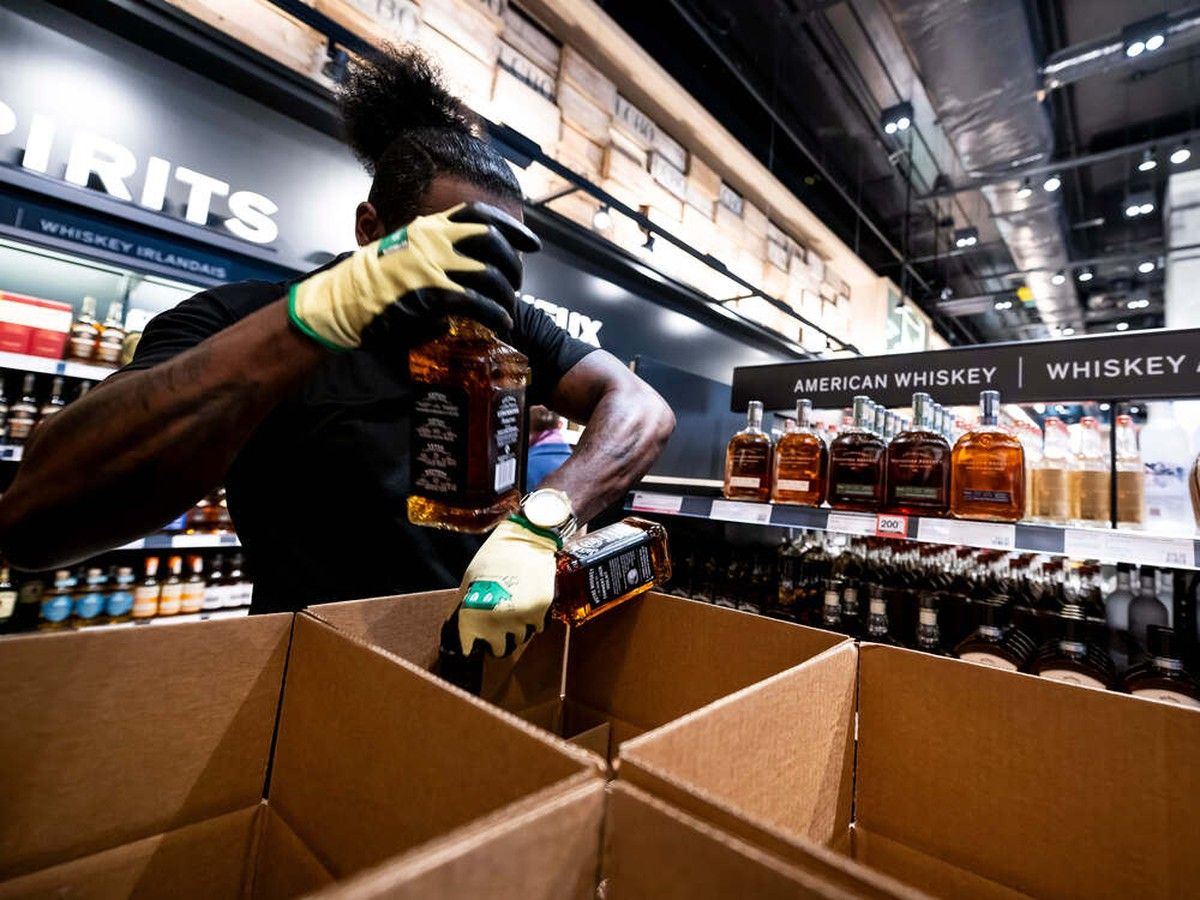
A new Abacus Data survey of Canadians in British Columbia, Manitoba, Ontario, and Atlantic Canada shows broad support for keeping American alcohol off the shelves of their respective provincial liquor store shelves — even if mean provoking further tariff retaliation from the Trump administration.
Overall, 69 per cent of survey respondents say their provincial governments should maintain restrictions on American alcohol. Only 19 per cent indicated that they want American products returned to store shelves, while 11 per cent said they are unsure.
Support extends across every region included in the poll, with the highest coming from British Columbia at 72 per cent, followed by Ontario and Atlantic Canada at 69 per cent, and Manitoba at 63 per cent.
Alberta and Saskatchewan never closed their borders to American beer, wine, and spirits. Hence, residents of those provinces were not surveyed. Quebec maintains a ban but residents of that province were also not included in the survey.
The initial removal occurred when the trade war started in early 2025. The dispute escalated again this year in mid-July, when U.S. President Donald Trump announced another round of tariffs, 50 per cent on a range of Canadian products, in retaliation for Canadian treatment of American alcohol, as well as ongoing sticking trade issues with automobiles and dairy.
The age of the respondents matters more than the region they live in, according to the survey data. Support increased from 60 per cent among those age 30 to 44 to 78 per cent among people age 60 and over.
There are substantial political differences also. More than eight in ten respondents who said they vote Liberal or NDP support keeping the restrictions, at 83 per cent and 84 per cent respectively. Conservative voters reflect more division, says Abacus, adding that a slim majority of 53 per cent still wants the restrictions maintained. A third would lift them.
When respondents were told that the provincial alcohol restrictions were cited as one justification of the newest tariff threat, 54 per cent said the restrictions should remain until the United States removes its tariffs, even if it mean further American retaliation.
Another 19 per cent said they would keep the restrictions permanently, regardless of what happens. Only 19 per cent indicated they would lift them to ease trade tensions.
“This helps explain why the alcohol restrictions remain politically durable,” says Abacus Data CEO David Coletto. “Most residents do not appear to see them as symbolic gestures that should be abandoned under pressure. Instead, many view them as leverage that should remain in place until the underlying trade dispute is resolved.”
The appetite to stand firm extends beyond the American alcohol debate. Sixty-three per cent of respondents say Canada should resist U.S. pressure even if it results in economic costs. Twenty-seven per cent would like to see de-escalation, even if it means dropping countermeasures, such as the alcohol bans.
Older respondents expressed a readiness to hold the line. That support rises from 52 per cent among those aged 18 to 29 to 76 per cent among those aged 60 and over.
“This is not simply about wine, beer, or spirits,” says Coletto. “The results reflect a broader public instinct that Canada should not reward economic pressure with immediate concessions. Most people would rather accept some risk of retaliation than remove a countermeasure without securing something in return.”
But he notes the political coalition is not uniform. “Younger adults and Conservative voters are more open to de-escalation. Governments therefore have support to hold the line, but they will still need to show that these measures are purposeful, proportionate, and connected to a credible negotiating strategy.”
This survey was conducted online with 1,363 adults living in British Columbia, Manitoba, Ontario, and Atlantic Canada from July 23 to 29, 2026. The margin of error for a comparable probability-based random sample is plus or minus 2.65 percentage points, 19 times out of 20.
Our website is the place for the latest breaking news, exclusive scoops, longreads and provocative commentary. Please bookmark nationalpost.com and sign up for our daily newsletter, Posted, here.