Newsletter Subscribe
Enter your email address below and subscribe to our newsletter

Enter your email address below and subscribe to our newsletter

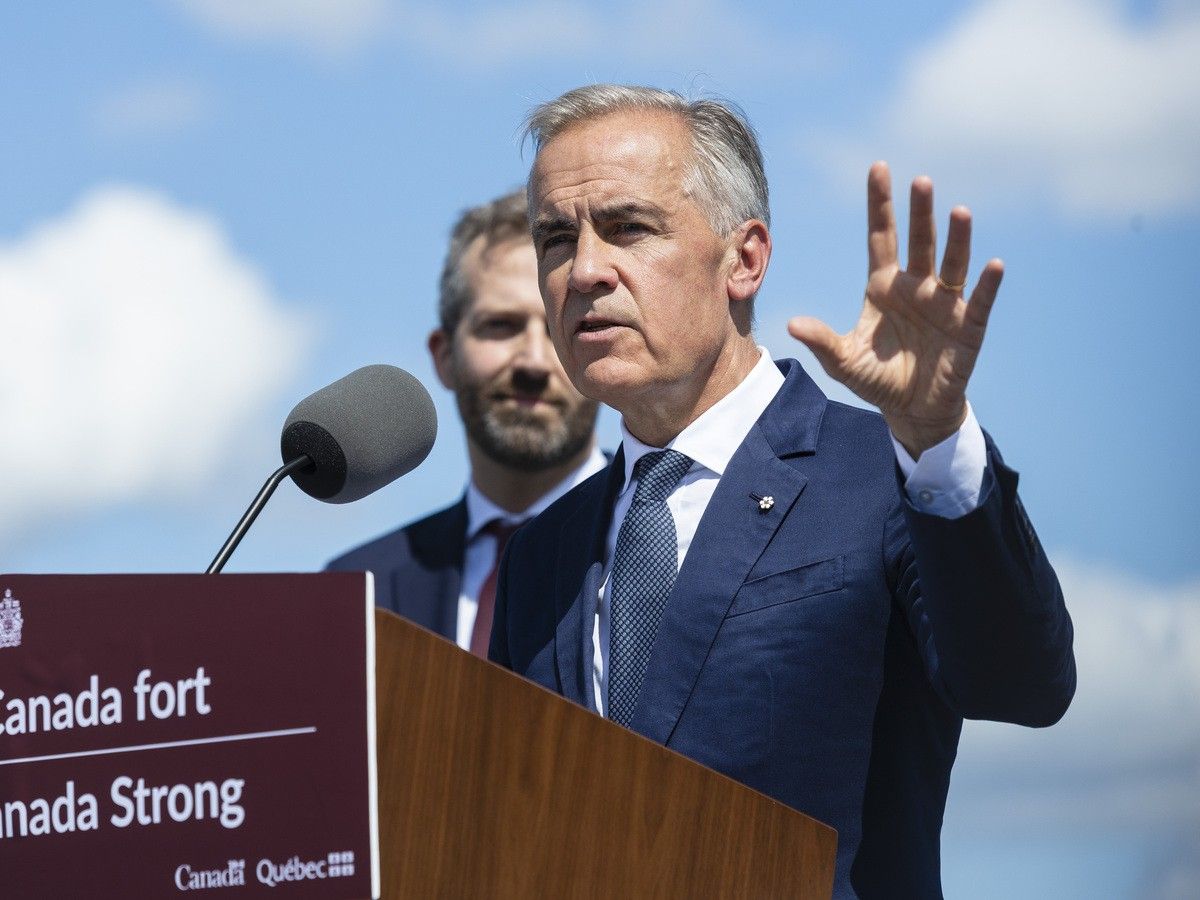
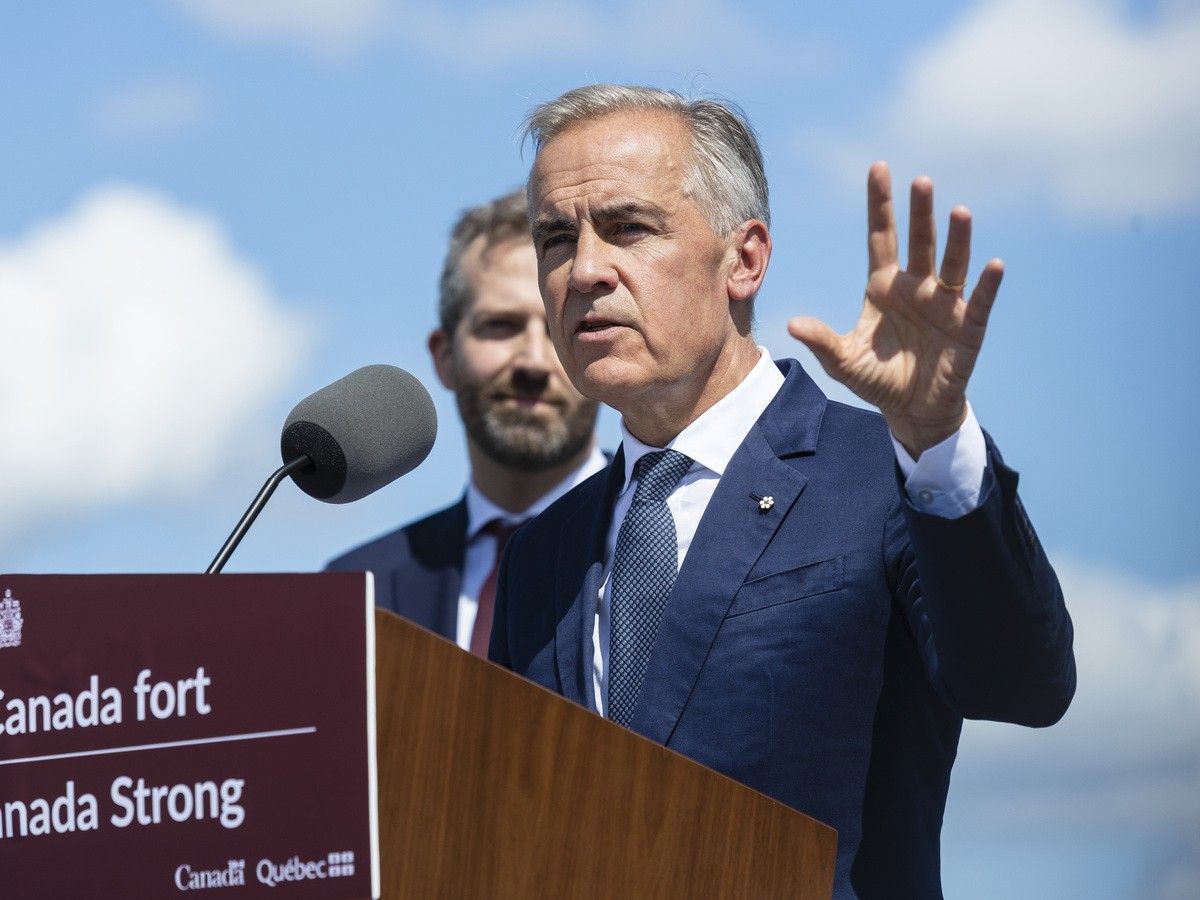
OTTAWA – U.S. President Donald Trump threatened to impose a 50 per-cent tariff on Canadian autos, trucks and auto parts on Monday, while Prime Minister Mark Carney said it would require a change in “attitude” from the U.S. to restart negotiations after trade talks collapsed late last Friday.
“On January First, 2027, Tariffs on all Cars, Trucks, both large and small, Automotive Parts, and Steel, will be increased to 50%,” said Trump, in a post on Truth Social. “Build in the U.S. and there are ZERO TARIFFS. Canada will be treated like a State no longer!”
The current tariff rate on Canadian autos sits at 25 per cent.
At a press conference on Monday in Lévis, Que., Carney said Canada wants to see a shift in demeanour from the United States.
“When the Americans go to the negotiation table first with the right attitude towards our industries and a true partnership, of course, we’ll come to the negotiating table,” said Carney.
“But an attitude at the negotiation table that Canada is a subsidiary of the United States, that Canadian industry is going to be disadvantaged relative to American industry, that we’re going to set up terms so that over time, Canadian industry is going to face constant headwinds, that’s not something we’re going to accept,” the prime minister added.
The president added that Canada is one of the most “entitled” countries to deal with in terms of trade.
“On Trade, and in other ways, also, they are among the worst Nations in the World to deal with,” said Trump. “They feel entitled, and yet, WE DON’T NEED CANADA, THEY NEED US!”
Canada and the U.S. were close to a potential trade agreement on Friday, with negotiators seeking relief for Canadian steel, aluminum, autos and lumber from Section 232 tariffs, and the avoidance of Section 338 tariffs on $28 billion worth of Canadian goods.
However, Carney suspended trade talks late Friday evening, citing several last-minute demands from the U.S. that made a deal untenable for Canada.
Carney said he wasn’t surprised by Trump’s latest tariff threat. The prime minister said it was made clear to Canada during negotiations that the president’s intention was to destroy Canadian industries, including the auto, steel and aluminum sectors of the Canadian economy, noting that the proposed terms were unfair.
Canada has been ripping off the United States of America for years. Their ridiculously high tariffs on our Farmers and farm products has made life impossible for these great American Patriots, and has long created a 60 Billion Dollar Deficit between our two Countries. Not… pic.twitter.com/7Fxpzezq5e
— Commentary Donald J. Trump Truth Social Posts On X (@TrumpTruthOnX) August 24, 2026
On Saturday, Carney specifically pointed to Canadian trucks not receiving the same tariff relief treatment as Canadian autos, language in the deal around restricting Canada’s ability to make trade deals with other countries, and “efforts to restrict our protections of our language, our culture, and in effect, our sovereignty” as some of the reasons for why Canada did not sign the deal.
On Monday, United States Trade Representative Jamieson Greer disputed Carney’s claim that U.S. negotiators were trying to curtail protections on the French language, calling it a “funny fake story.”
“I like the Québécois and I like that they speak French,” said Greer, during an interview on CNBC. “What we don’t like is a situation, where Canada, the federal government, forces American tech companies to take their earnings and give a percentage of their earnings to their competitors in Canada.”
On Monday, Carney said the U.S. views the French language protections as trade irritants, while Canada views them as rights.
Greer attributed the collapse in talks to Canada ultimately wanting more than what his administration was willing to give, noting that the proposed agreement included halving U.S. tariffs on Canadian steel and aluminum, reducing tariffs on Canadian autos and tariff relief on Canadian softwood lumber. The USTR said it was the best market access to the U.S. compared to any other country in the world.
“They wanted more,” said Greer. “I don’t know if it was political for them, it certainly doesn’t make economic sense, but perhaps for political reasons, they have some byelections coming up.”
On Monday, U.S. Vice-President JD Vance told an audience in Brewer, Maine, that trade talks with Canada remain ongoing.
The 50 per-cent tariffs under Section 338 of the Trade Act of 1930 came into effect at midnight on Friday, following the collapse of trade talks. The prime minister has promised to match those tariffs “dollar for dollar” with retaliatory measures set to take effect Sept. 8.
However, Carney said in French on Monday that due to the U.S. economy’s relative size compared to the Canadian economy, it would be difficult to have dollar for dollar tariffs. The prime minister said his government may go the more “targeted” way, adding that everything is on the table.
The federal government is expected to announce details on Canada’s retaliatory actions in the coming days. Carney is also expected to announce federal aid to affected industries.
Monday morning, Bloc Québécois Leader Yves-François Blanchet said he backed Carney’s decision to pull out of negotiations after the “broadside” from the U.S. against Canada.
Speaking from Montreal, Blanchet called on the government to re-invest every single dollar collected as part of tariffs on U.S. goods to support impacted industries. He also proposed the Liberals set up financial aid programs for impacted companies, including something resembling the COVID-era wage subsidy program.
He also said Ottawa needs to reinstate programs previously killed as part of concessions to the U.S., such as the three per cent Digital Sales Tax on domestic and foreign web giants.
“We must suspend the billions of dollars of financial aid to oil companies. Let’s not forget that the majority of shareholders of Western oil companies are American,” Blanchet added.
On Monday, Conservative Leader Pierre Poilievre asked the prime minister to recall Parliament to discuss the collapsed deal, and to make the details of the proposed agreement public.
“Canadians must see it to judge what options are on the table,” wrote Poilievre, in a letter addressed to Carney on Sunday.
National Post
Our website is the place for the latest breaking news, exclusive scoops, longreads and provocative commentary. Please bookmark nationalpost.com and sign up for our newsletters here.