Newsletter Subscribe
Enter your email address below and subscribe to our newsletter

Enter your email address below and subscribe to our newsletter


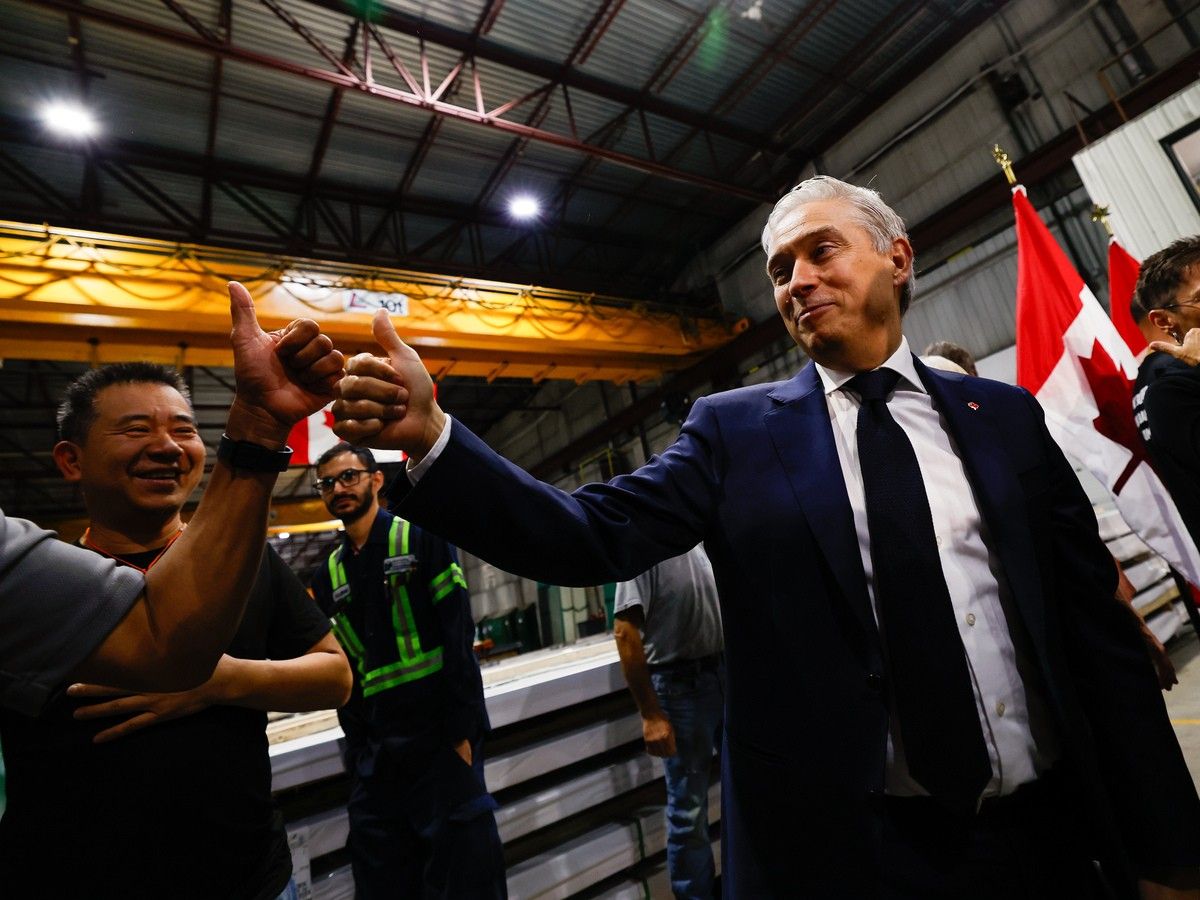
OTTAWA — The federal government announced it will match tariffs dollar for dollar on U.S. products on Tuesday, marking a tit-for-tat escalation in the trade conflict with Canada’s largest trading partner.
Canada will impose 15, 25, and 50 per cent tariffs on products drawn from those targeted by U.S. Section 338 and Section 232 tariffs, effective Sept. 8. The counter-tariffs are expected to cover $27.6 billion worth of imports from the U.S.
The matching on Section 232 tariffs also means Canadian tariffs on U.S. steel and aluminum will increase from 25 to 50 per cent.
The counter-tariffs are in response to the latest round of U.S. levies under Section 338 of the Trade Act of 1930, that came into effect on Saturday following the suspension of trade talks between Canada and the U.S.
“This is an unprecedented challenge imposed on Canada, but Canada will meet the moment, Canadians will meet the moment,” said Finance Minister François-Philippe Champagne, during the announcement at a roofing company in Ottawa on Tuesday.
“We will meet the moment together and as the prime minister has said, we will support our workers, our businesses, and our industry with whatever it takes for as long as it takes,” Champagne added.
On Saturday, Prime Minister Mark Carney said several last-minute additions to a tentative agreement made a deal with the U.S. untenable, adding that it would require a change in “attitude” on the Americans’ part to get Canada back to the negotiating table.
The Section 338 tariffs subjects $28 billion worth of Canadian goods ranging from hockey sticks to dairy products to a 50-per-cent levy. Most of the economic impact is concentrated in British Columbia, Ontario and Quebec.
The list of U.S. products now subject to counter-tariffs in Canada include dishwashers, refrigerators, video game consoles, fish, cheese, beauty products, plywood, paper products and clothing.
Speaking at a technical briefing, federal government officials said the goal of the counter-tariffs is to level the playing field for Canadian industries and businesses subject to U.S. tariffs.
On Tuesday, the federal government also announced $7.5 billion in additional funding to help businesses and workers weather the impacts of the latest round of American levies. Government officials did not have a breakdown of how much of the funding is new or pulled from existing budget streams.
This includes $1.5 billion to stand up a Regional Tariff Response Initiative for medium and small businesses under the existing Strategic Response Fund, which will be administered through the regional development agencies. An additional $500 million will be provided to the Business Development Bank of Canada to provide more interest-free loans to affected businesses, particularly in the forestry, steel and aluminum sectors. Another $2 billion will go toward the Canada Strong Diversification Fund.
Nearly $3.5 billion will go toward expanding employment insurance programs for workers and employers impacted by tariffs and for programs to retool and re-skill workers.
“Right now, we know that there are many new sectors affected, and of course, many new businesses and jobs to be protected,” said Industry Minister Mélanie Joly. “The lesson from the first round of tariffs was clear: we cannot control the decisions made in Washington, but we can control what we build here at home.”
Joly also encouraged consumers to buy Canadian products when they can.
The Canadian ministers were asked why the counter levies weren’t more strategically targeted toward Republican states.
Joly argued that the counter-tariffs did, in fact, target Republican states and Trump’s political allies, though she did not detail how.
“We think, for now, this is the most strategic response,” Joly said.
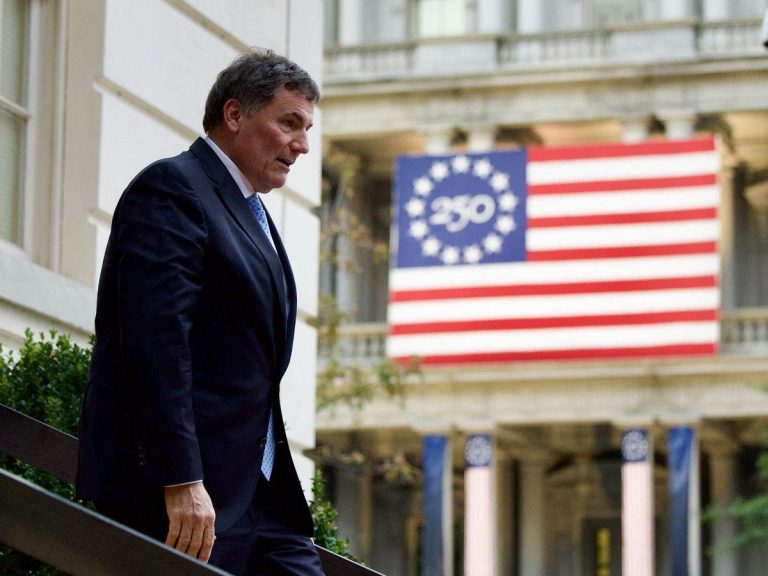
None of the key negotiators with the U.S. — Carney, Canada-U.S. Trade Minister Dominic LeBlanc and chief negotiator Janice Charette — were present for the counter-tariff announcement.
Their absence could suggest Carney does not want his negotiating team to be the face of Canada’s retaliation to what he has described as Trump’s “unfair” and “unjust” tariffs.
On Tuesday morning, LeBlanc said the government still wants to make a deal with the U.S.
“Our preference was to find a deal that benefits both countries, we still believe that’s possible, but in the meantime we’re not waiting by the phone. We’re going to do the work that’s necessary to protect our own economy,” said LeBlanc, on the CNBC show Squawk Box.
Derek Nighbor, president and CEO of the Forest Products Association of Canada, said his organization welcomed the new supports for industries, but the true test will be how fast the aid can get into the hands of businesses and workers.
“The effectiveness of today’s measures will depend on how quickly support reaches affected companies, how straightforward it is to access, and how well it responds to the different circumstances facing businesses across the forest products value chain,” he said, in a statement issued on Tuesday.
Kevon Stewart, director at the United Steelworkers union, said while retaliatory tariffs are important, the primary focus should be on impacted workers, noting that many small steel shops in Hamilton, Ont., have closed since the trade war started last year.
“What I like about this announcement is there’s actually a game plan in actually putting the platform together,” he told National Post, on the sidelines of the announcement in Ottawa. “So, when workers do get impacted, we’re not scrambling.”
Stewart also said the uncertainty for workers will last for the long-term.
“I think realistically, everyone’s dug in for the long haul,” he said. “It’s not going to be a short-term pain, quick recovery.”
Bank of Montreal deputy chief economist Michael Gregory said on Tuesday the Section 338 tariffs will be a drag on growth, while the counter-tariffs will be inflationary for the Canadian economy. Gregory said it remains unclear how much the counter tariffs will be passed on to consumer prices.
“In isolation, we estimate the Section 338 tariffs could cut 0.5 percentage points from Canadian GDP growth (if the duties remain in place for a year),” he said, in a note. “The new support measures will mitigate some of the hit to growth and, the new counter tariffs should have an inflationary impact, although the magnitude is unclear because many of the U.S. goods facing hefty tariffs have Canadian and/or non-U.S. alternatives.”
Carney briefed opposition leaders about Canada’s response to the U.S. levies.
In post on X following his meeting with Carney, Conservative Leader Pierre Poilievre renewed his call to release the text of the proposed trade agreement with the U.S. that was ultimately rejected. The leader of the opposition also called on the federal government to come up with an economic plan to address the escalating trade war.
“The plan should scrap gas taxes until Canada Day, have zero capital gains tax on reinvesting in Canada, end the industrial carbon tax, green-light the 500 projects waiting for federal permits, and have ZERO sales tax on Canadian-made cars,” he said. “As the U.S. hikes tariffs, we must lower taxes for Canadians.”
National Post
Our website is the place for the latest breaking news, exclusive scoops, longreads and provocative commentary. Please bookmark nationalpost.com and sign up for our newsletters here.