Newsletter Subscribe
Enter your email address below and subscribe to our newsletter

Enter your email address below and subscribe to our newsletter

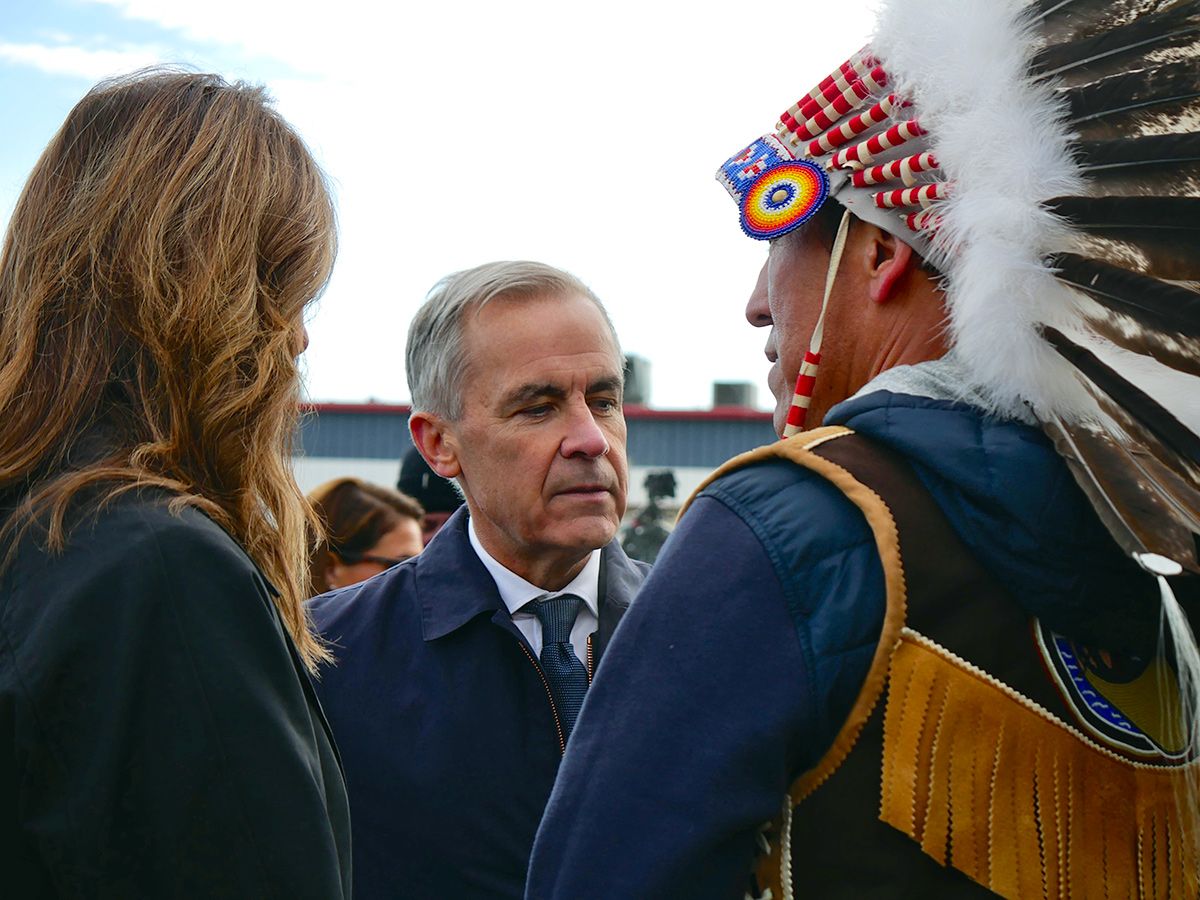
OTTAWA — The federal government has promised to have shovels in the ground in the less than a year on the construction of a new pipeline to the West Coast, but lawyers and legal academics are warning the project could face legal challenges in court.
The pipeline, called Pacific Link, is the first project to be designated within the national interest under the federal government’s Bill C-5, also known at the Building Canada Act.
The legislation allows Cabinet to give projects in the national interest a fast-tracked regulatory process.
Robin Junger, counsel on Indigenous law and the environment at McMillan LP, said he is anticipating court challenges on two fronts: the Crown’s duty to consult under Section 35 of the Constitution Act and the federally legislated United Nations Declaration on the Rights of Indigenous Peoples (UNDRIP).
“They passed a law that talks about consulting First Nations before they designate a project in the national interest, and then the statute talks about consulting First Nations and development of conditions,” said Junger.
“But that’s a different way of approving projects than previously; I’ll say it’s at best untested, and whether that’s going to complicate potential legal challenges is very much an open question,” he added.
Junger said the federal government could end up reviewing the major projects legislation if there is uncertainty there.
Prime Minister Mark Carney announced the national interest designation of Pacific Link earlier this month, promising the country will remain one of high standards, but not necessarily slow decisions.
The newly formed Major Projects Office undertook consultations with over 130 Indigenous communities between July 3 to Sept. 18, before the designation was announced. The MPO will begin its review of the project in early 2027, with public hearings held by the commission of the Canada Energy Regulator. The MPO is expected to finalize a conditions document by Sept. 1, 2027.
First Nations have been clear that they view Bill C-5 as a violation of the UNDRIP. In July, Assembly of First Nations National Chief Cindy Woodhouse-Nepinak said that fast-tracking projects will not come at the expense of First Nations’ rights.
“A one-year timeline, principally designed to attract investment, subordinates the honour of the Crown to commercial imperatives,” she said, during her opening remarks at the AFN’s annual meeting.
A note published by Osler, Hoskin & Harcourt LLP last December warned that the consultation process under Bill C-5 could be challenged in court.
“An accelerated BCA (Building Canada Act) process may result in legal challenges where Indigenous consultation is perceived to be truncated or otherwise inadequate to fulfill the federal government’s obligations,” the report said, adding that proponents can mitigate these risks by consulting early, proactively and responsively to Indigenous communities.
“However, if a project is designated as an (National Interest) Project and faces Indigenous opposition, there is a risk a court will find that Crown consultation prior to designation of the (National Interest) Project was inadequate,” the report added.
Dwight Newman, professor of law at the University of Saskatchewan, said there is ample case law about the duty to consult, which the courts have made clear does not give Indigenous communities final say on whether a project moves forward.
However, the federally legislated UNDRIP has added an extra layer of uncertainty, which was first passed by the federal government in 2021. This is because UNDRIP includes Free, Prior and Informed Consent (FPIC), which allows Indigenous communities to say no to a project development.
Justice Minister Sean Fraser told reporters last year that UNDRIP does not allow “a blanket veto power” to Indigenous communities, but later apologized for his comments after criticism, noting that speaking about UNDRIP in that way makes an assumption that Indigenous people and the federal government are working against each other.
Newman said the federally legislated UNDRIP does not go as far as the one in British Columbia, where it has become an provincial election issue, but is still having an impact on case law across the country.
Newman said a recent Federal Court of Appeal decision last Friday, in the case of Canadian Nuclear Laboratories and the Kebaowek First Nation in Quebec, has determined that UNDRIP does not change the duty to consult.
“The lower court in that case had said that the duty to consult turned into free, prior, and informed consent because Canada adopted the UN Declaration Act, and the Federal Court of Appeal has overturned that reasoning, and they’ve said the duty to consult doctrine hasn’t changed,” said Newman.
However, the case could go to the Supreme Court of Canada, which means the issues surrounding UNDRIP are not finalized.
Junger said it’s hard to say how UNDRIP will court challenges going forward.
“Is the federal government going to rescind the UNDRIP Act, or is it going 60 miles an hour into a brick wall?”
“Or am I wrong? Those are all possibilities, but they are the possibilities, and that’s separate from the duty to consult,” he added.
Newman, like Junger, noted that the court challenges could also come in the initial phase of consultations that took place prior to the national interest designation.
Heather Exner-Pirot, senior fellow at the Macdonald-Laurier Institute, said the federal government would have already run a risk assessment on the likelihood of court challenges facing the project and are preparing accordingly.
“I think everyone knew that there would be court challenges,” she said. “I think it was anticipated, and they prepared for it, especially on the designation process.”
Last week, Major Projects Office CEO Dawn Farrell had a candid moment with the BC Assembly of First Nations, noting that the frustrations over lack of consultations on the Pacific Link project made her feel “like Canada is never going to work” according to a report by the Canadian Press.
Farrell said members of her team had “very, very big scars” while working on the Trans Mountain Expansion Project.
“The projects that we have to deliver out of our office have to achieve your rights. We have to make sure that we go through your processes,” Farrell said.
“We can’t just make stuff up. The courts will just come and overturn the projects and we’ll be like Canada’s always been, 10, 15 years, dragging stuff around in the ditch and not getting it done and wasting time and money and resources, and your time and your people’s resources. We can’t keep doing that.”
Exner-Pirot said the federal government has learned its lesson from the court challenges against TMX, with the final case dismissed in 2020.
The decision from the Federal Court of Appeal concluded that “consultation means that Canada consider and address the rights claimed by Indigenous peoples in a meaningful way” but cannot be used to create a “de facto veto right.”
Exner-Pirot said the federal government has also learned from its court losses, including in the case of Enbridge’s Northern Gateway Project, which ultimately led to the federal government’s decision not to move forward.
“There’s a lot more knowns this time,” she said. “And regulators are conservative, and they are slow, but part of it is because they’re hyper aware that the durability of the approval once they do give it must be airtight, and it’s a disaster for a regulator’s decision to be overturned because the regulator did not meet the Crown’s obligations.”
However, Exner-Pirot admitted that UNDRIP certainly could complicate matters in the courts, noting that UNDRIP was not federal law during the TMX court decision in 2020.
Newman said ultimately no project development is without legal risk, and the federal government has decided this pipeline is worth facing those pitfalls.
“It would be difficult to say there are no legal risks because there are some legal risks there, but sometimes governments have to take legal risks, and they’re saying this is in the national interest, and they need to make some decisions in the national interest,” said Newman.
“And sometimes there are legal risks attached to doing that, but they’re making the decision that they’re going to do that,” he added.
National Post
Our website is the place for the latest breaking news, exclusive scoops, longreads and provocative commentary. Please bookmark nationalpost.com and sign up for our newsletters here.