Newsletter Subscribe
Enter your email address below and subscribe to our newsletter

Enter your email address below and subscribe to our newsletter

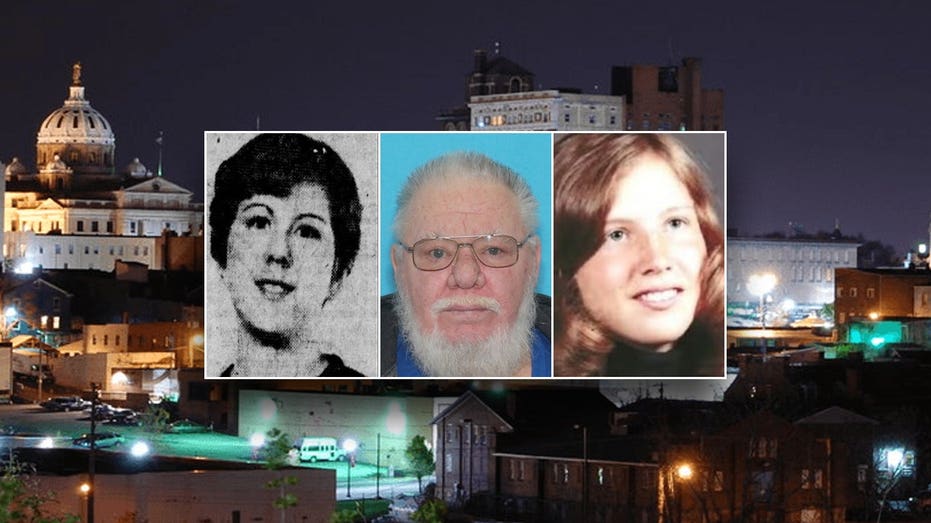
Quiet serial killers may be hiding in plain sight, an expert warns, after new DNA technology helped unmask a Pennsylvania man authorities say killed at least two women in the 1970s.
At a Thursday news conference, Pennsylvania State Police identified James Richard Clark Sr. as the man who sexually assaulted and strangled Brenda Ritter, 18, and Susan Rush, 21, in the 1970s.
Rush vanished on Nov. 24, 1976, after leaving a shopping mall, according to the City of Washington Police Department. She was supposed to meet her family at church but never arrived. Her brother spotted her car along a street the next morning, Thanksgiving Day, and her body was discovered in the trunk.
TED BUNDY LINKED TO ANOTHER DECADES-OLD HOMICIDE NEARLY 40 YEARS AFTER HIS EXECUTION
Ritter disappeared from her boyfriend’s house in 1977, police said. Her body was later found on a hillside, and authorities determined she had been sexually assaulted and strangled.
The suspect, Clark Sr., died at 66 on July 17, 2023, of natural causes.
DNA BREAKTHROUGH LEADS TO ARREST IN GRISLY 33-YEAR-OLD COLD CASE INVESTIGATORS NEVER GAVE UP ON
In late 2008, evidence from Ritter’s killing was sent to the state police crime lab, which produced an unknown male DNA profile. The DNA was put into an FBI database, CODIS, which was searched weekly with no match. In May 2025, testing at Cybergenetics’ laboratory showed the same man was responsible for the deaths of both women.
Clark left DNA at both crime scenes, according to police, and advances in testing at several labs, including Identifinders International, helped investigators zero in on him before more testing sealed the match.
SIGN UP TO GET THE LATEST TRUE CRIME NEWS
Police said Clark would have been 20 at the time of Ritter’s homicide and 19 when Rush was killed.
CLICK HERE FOR MORE FROM THE FOX TRUE CRIME HUB
Pennsylvania State Police Cpl. James Petrosky said he thinks there may be more victims.
“I believe that once you’re a serial killer, you’re always a serial killer. I believe there could potentially be more victims out there,” Petrosky said.
Dr. Kris Mohandie, a former LAPD psychologist and FBI behavioral analysis consultant, told Fox News Digital it’s “normal” for the number of known victims to fall short of a serial killer’s true toll, and that new technology is often what closes the gap.
LISTEN TO THE NEW ‘CRIME & JUSTICE WITH DONNA ROTUNNO’ PODCAST
“I think it’s normal and normative that the number of known cases is always less than what has been detected,” Mohandie said. “These kind of guys often have more victims out there than they’ve been known to be connected to. The reality is that there are usually more crimes attributable to serial offenders than they’re ever held to account for.”
Mohandie said it’s not unusual for a serial killer to go quiet for years, either because they sense investigators closing in or because their lives get busy with things like raising a family.
“There are a lot of cases where they do go dormant, what we call a cooling-off period, and that can be because they realize it’s too hot for them to continue to offend, that they’ll get caught, so it’s a strategy to avoid being captured. It may mean that they’ve had a close call with being captured, and it spooked them, so they’ll go quiet for a while because of that,” he said.