Newsletter Subscribe
Enter your email address below and subscribe to our newsletter

Enter your email address below and subscribe to our newsletter

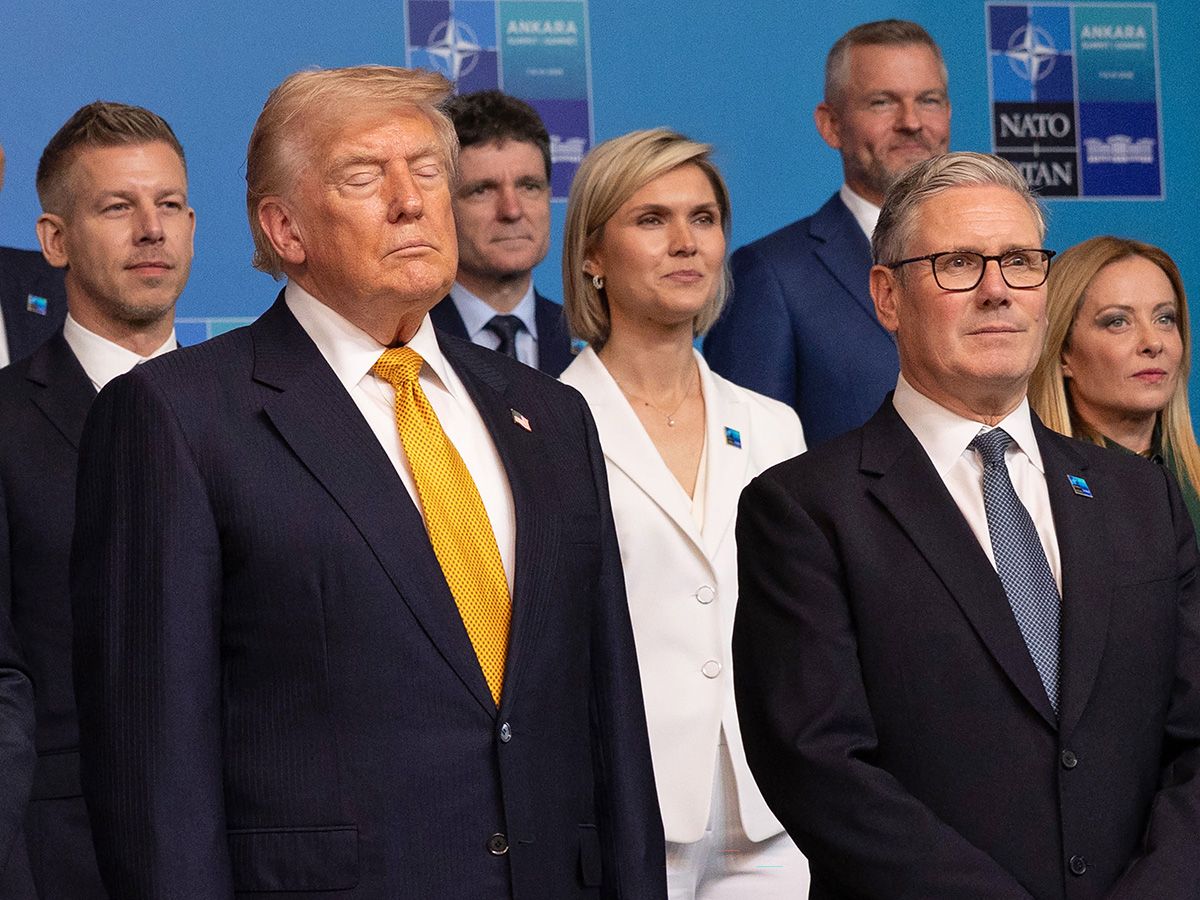
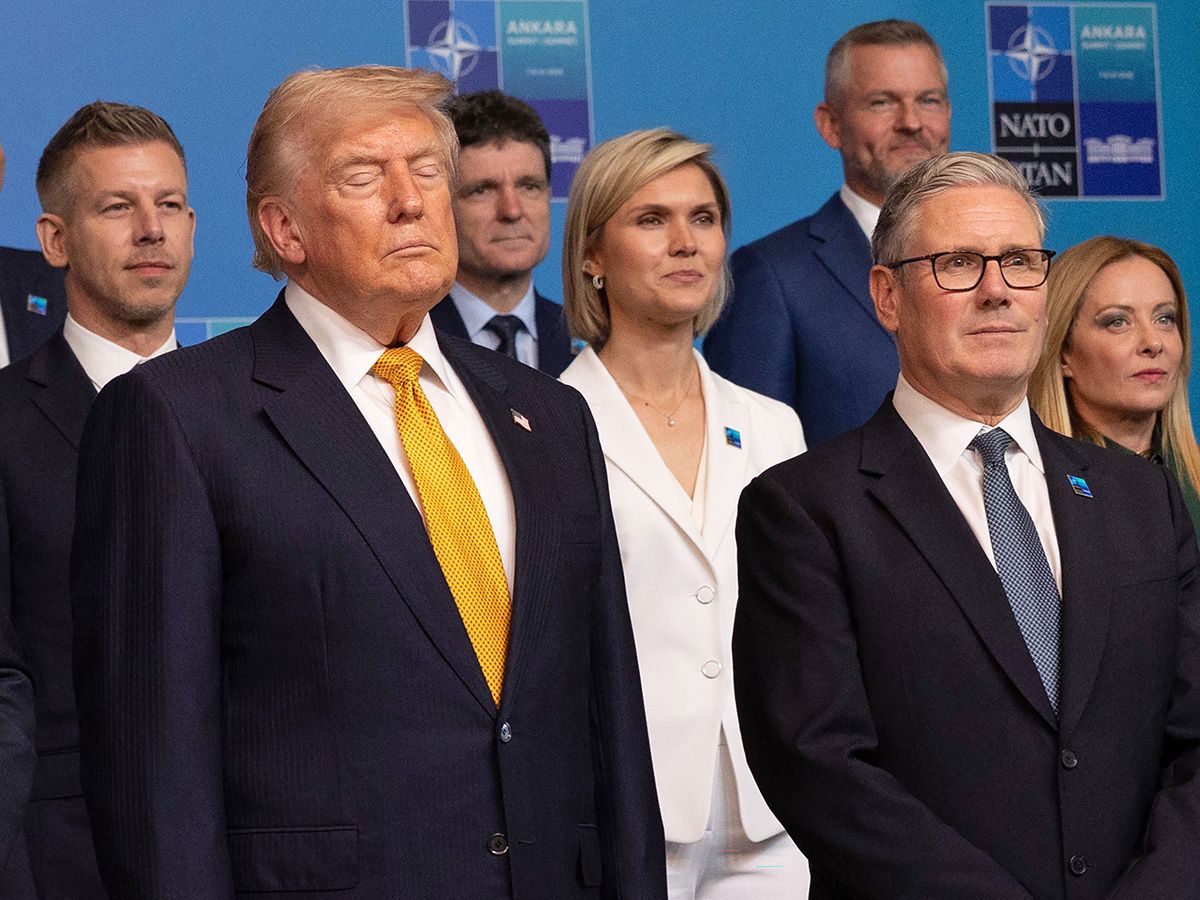
ANKARA, TURKEY — There were a few forced smiles and even fewer pleasantries at the NATO summit in Ankara on Wednesday as the leaders of the 32 allied nations prepared to wrap up their meeting and posed for the official family photo with the alliance’s secretary-general, Mark Rutte.
The atmosphere was charged after a difficult summit. The U.S. restarted its war with Iran on Tuesday night, and President Donald Trump lambasted his NATO allies for sitting out the conflict. Before that, he had returned to openly musing about invading Greenland and had once again insulted Italian Prime Minister Georgia Meloni.
With so much tension, this may end up being the last NATO summit for a while, as even the secretary-general suggested there might not be one next year.
Some think that might be for the best.
Trump made it clear as soon as he arrived at the summit that he didn’t want to be there.
“Frankly, if it weren’t held in Turkey, where my friend happens to be a very strong leader, a very strong person, it’s possible that I wouldn’t have attended,” he said Tuesday before a bilateral meeting with Turkish President Recep Tayyip Erdoğan.
“I felt I had to attend because of the fact that he’s gone all out. It’s a big thing to have NATO come to Turkey, or any place else,” Trump added.
The whirlwind two-day summit concluded on Wednesday with a short communiqué, a clear sign that consensus is hard to find in the alliance with Trump around. It did, however, “reaffirm” an “ironclad commitment” to NATO Article 5, holding that an attack on one ally is an attack on all, something Trump has previously sounded tentative about, as well as highlighting greater commitments by European members and Canada to play a more assertive role in the alliance with more robust defence funding.
The Ankara Summit Declaration ends with allies thanking Turkey for their generous hospitality and looking forward to their next meeting at a date yet to be determined.
Yet, Rutte would not confirm if there will definitely be a summit next year.
“The next summit is in Albania, and, of course, we still have to decide on the exact timing,” he said during a closing press conference on Wednesday when asked if it would take place in 2027.
Rutte has spent the last two years convincing Trump to not leave NATO with praise and at times flattery. He congratulated him for forcing Canada and European countries to step up their defence spending, saying many presidents before him never got it done.
Trump still came to the summit saying he was “disappointed” with NATO over Iran and their resistance to his designs on Greenland. He refrained from repeating his mockery of Meloni at the summit itself, after posting online on Tuesday about needing a “restraining order” against her . Once in Turkey, he said he thinks “she’s a nice person, actually.”
He simply said they have a bad relationship because “she refused to help us” in Iran. In June, at the G7, Trump had angered Meloni by claiming she had “begged” him for a photograph , which she denied.
Given all the drama surrounding the summits, it’s fair to ask whether they’re worth holding every year.
Stephen Saideman, head of the Norman Paterson School of International Affairs at Carleton University, thinks it was “unwise” for NATO to schedule annual summits during the Trump administration because the president gets ornery when he has to attend.
“He’s very temperamental in the best circumstances, and he hates travelling, and so I would not be surprised if we skipped next year,” Saideman said in a recent interview.
“It becomes a question of whether the alliance survives the week, so might as well not have the event, and therefore not have to worry about trying to survive the week.”
NATO has not held official leaders’ summits every year. NATO said that from the founding of the alliance in 1949 until the end of the Cold War, there were only 10 summit meetings. Since 1990, their frequency has considerably increased, but it hasn’t been every year.
“It wasn’t always an annual thing, so we could go back to that, and it wouldn’t kill the alliance to do that,” said Saideman. “In fact, it might sort of keep it alive.”
Robert Baines, president and CEO of the NATO Association of Canada, said there are meetings between the NATO defence ministers, foreign affairs ministers and chiefs of defence staff every two months.
He said that at summits like this, NATO leaders used to get consensus on everything from nuclear non-proliferation to artificial intelligence, with final communiqués sometimes being about 70 or 80 paragraphs long, but that hasn’t been the case since Trump has returned to office.
Wednesday’s communiqué was less than 500 words.
Prime Minister Mark Carney revealed he spoke to Trump on Sunday, ahead of the Ankara summit, to share his vision of how the alliance should move forward.
Carney suggested shifting responsibility on defence “in ways that recognize the regions in which we operate.” For Canada, he said that would include North American security but particularly Arctic security, given the country has a big part of the world’s coastline.
That would mean working more closely to defend the Arctic with Nordic and Baltic countries, but also France and Germany, adding that “that crescent is vital for NATO.”
“So, that’s where the discussion, in our judgment, needs to go, and that is where the planning is going in our view,” he said during a media availability on Wednesday.
Even if there is no leaders’ summit next year, there will be other forums for discussion.
Canada has already announced it will host the 2027 NATO Industry Forum to strengthen co-operation between allies and industry to advance defence innovation and industrial capacity across NATO.
National Post
calevesque@postmedia.com
Our website is the place for the latest breaking news, exclusive scoops, longreads and provocative commentary. Please bookmark nationalpost.com and sign up for our newsletters here.