Newsletter Subscribe
Enter your email address below and subscribe to our newsletter

Enter your email address below and subscribe to our newsletter

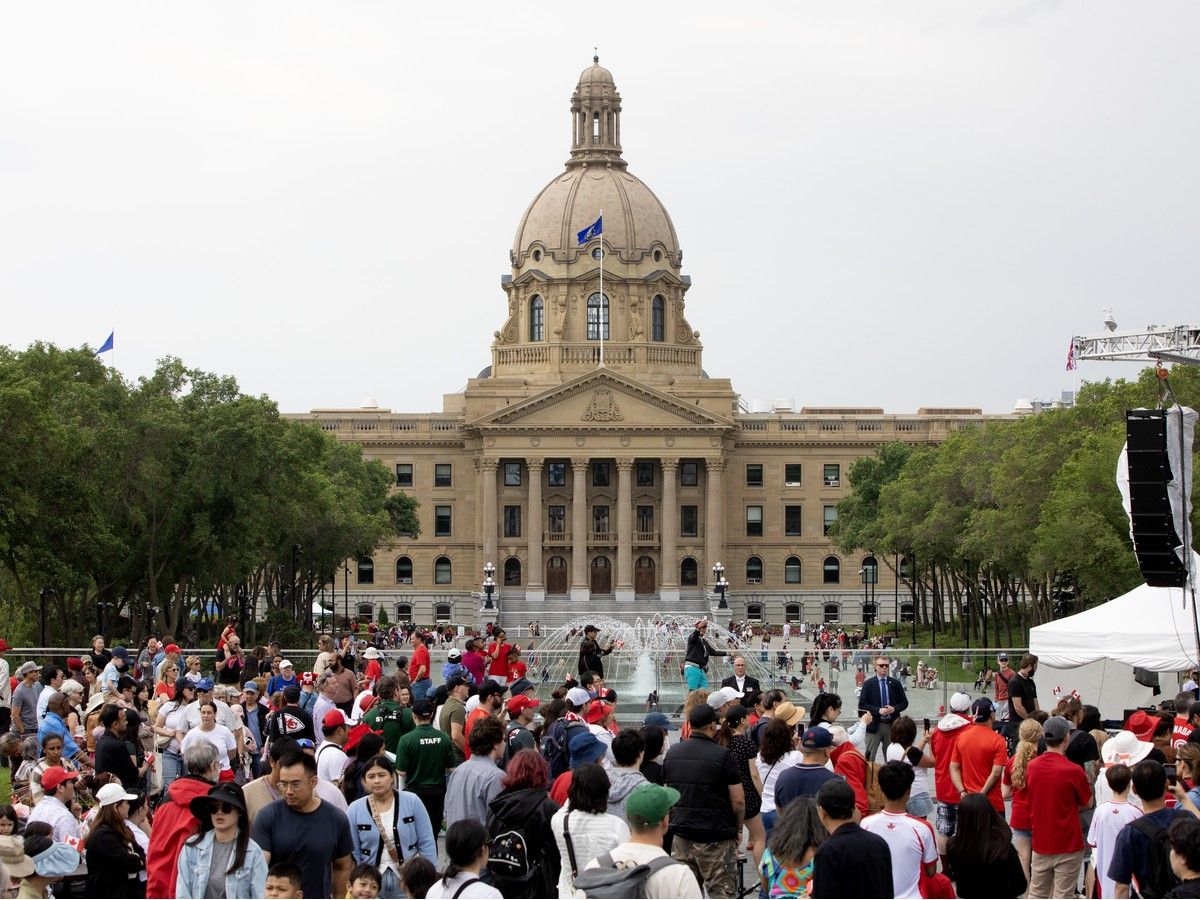
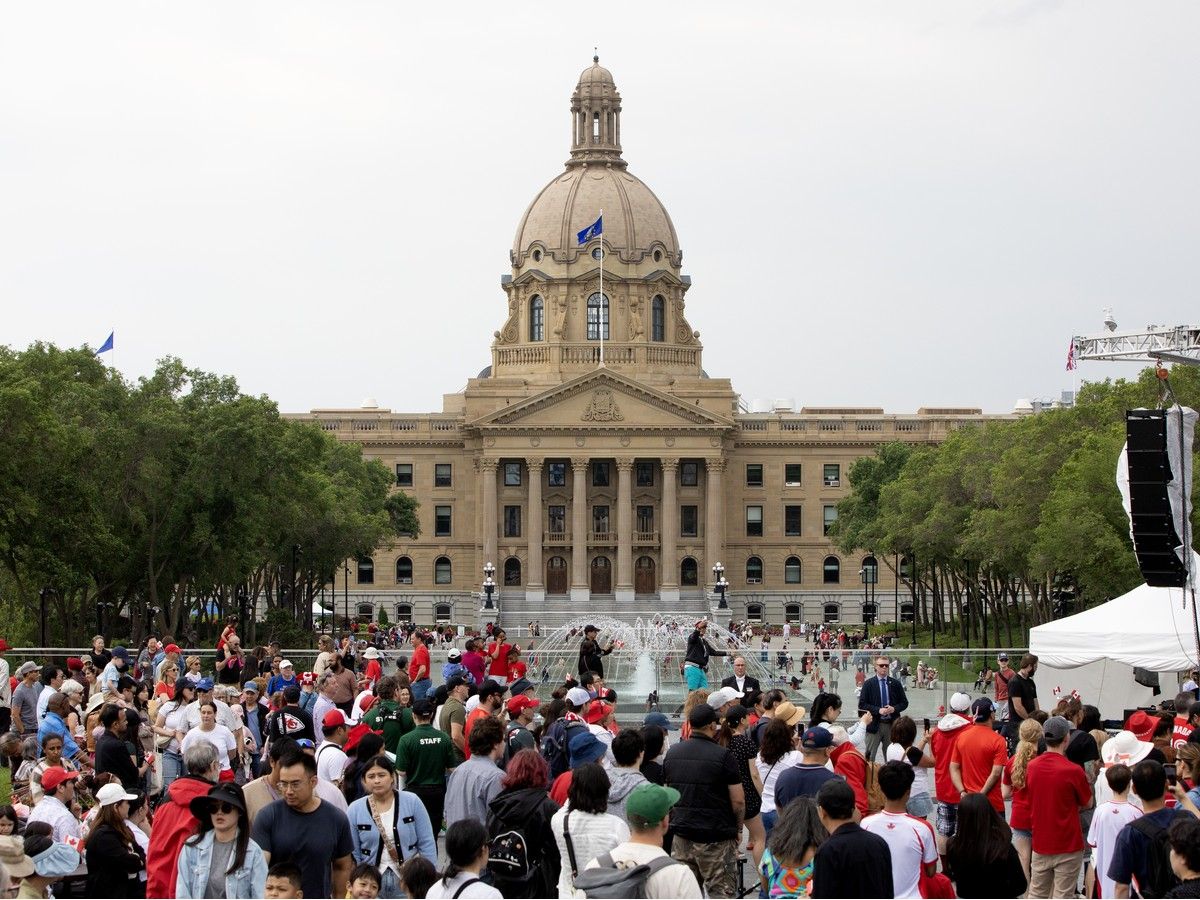
Put to Canadians outside Alberta, nine of the province’s upcoming referendum questions draw as much support as they do at home, a new poll suggests, and often more.
However, Jack Jedwab, president of the Association for Canadian Studies, puts the strong support for the referendum questions down to the wording, not necessarily a national appetite for the policies. The finding “says less about a broad national desire to remake the federation than about the way the questions are framed,” he said in an email.
Albertans vote Oct. 19 on 10 referendum questions. Nine of them cover immigration, election rules and the province’s place in the federation. These questions were put to Canadians in a new Leger poll commissioned by the Association for Canadian Studies. The tenth referendum question, which asks whether the government should begin the legal process toward a binding vote on separating from Canada, was not tested.
The immigration question asks whether Alberta should take more control over immigration to cut it to more sustainable levels, prioritize economic migrants and give its residents first priority for new jobs. Nationally, 69 per cent said “yes,” ranging from 60 per cent in Manitoba and Saskatchewan, to 78 per cent in Quebec. Alberta sat at 64 per cent, Atlantic Canada at 64 per cent, Ontario at 67 per cent and British Columbia 66 per cent.
Jedwab wrote in an email that Quebecers are “very open to suggestions that provide more control over immigration,” and that the wording triggers a yes “especially when it’s offered at no cost.”
Albertans were frequently cooler on their own ballot questions than the rest of the country. On a question requiring newcomers to wait 12 months before qualifying for social supports, Alberta’s 68 per cent was the lowest of any region, against 84 per cent in Atlantic Canada and 75 per cent nationally. On charging non-permanent residents fees for health care and education, Alberta’s 65 per cent again trailed the country, which sat at 73 per cent.
The five immigration and election questions drew the strongest support overall, from 69 to 76 per cent nationally, and from 64 to 76 per cent in Alberta. A law making only citizens, permanent residents and approved immigrants eligible for provincial services like health care and schooling drew 74 per cent nationally and 71 per cent in Alberta. Requiring proof of citizenship to vote drew 76 per cent nationally and the same in Alberta.
Atlantic Canada was the most receptive region, topping four of the five immigration questions.
The four constitutional questions drew less support nationally. Handing a province, rather than Ottawa, the power to pick judges for its higher courts drew 55 per cent support. Abolishing the “unelected Senate” drew 57 per cent support. Giving provincial law priority over federal law in shared areas drew 64 per cent support. The only question to miss a national majority asked whether provinces could opt out of federal programs in areas like health care, while keeping the federal money. Only 47 per cent supported that.
Quebec ran well ahead of the rest on the constitutional side. It led on abolishing the Senate, at 67 per cent, and on provincial selection of judges (65 per cent). On the opt-out question, its 59 per cent support was one of only two regional majorities, alongside British Columbia (51 per cent). Ontario pulled the other way, sitting lowest on the judges (47 per cent), opt-out (40 per cent) and provincial-law (57 per cent) questions.
Jedwab said he could not say so “with certainty,” but he believes the drafters of the nine referendum questions “understood very well the impact of orienting the questions the way they did.” Some of them “barely qualify as questions and sound more like affirmative statements,” he added.
The order creating the five immigration and election questions says their result is not binding, making them advisory. The four constitutional questions, on judges, the Senate, federal opt-outs and provincial law, carry no such clause. A yes on them could not take effect on its own, since amending the Constitution needs Ottawa and other provinces.
The bigger question, Jedwab wrote, is what the federal government does with the result. The poll “gives you a good idea of how Albertans will vote and the decision makers know it full well,” he wrote, and he likened Ottawa’s position to “a game of poker where if the federal government says nothing it risks providing tacit acceptance to this type of consultation, which other provinces may engage in.” Call the questions biased, he added, and voters may feel they have nothing to lose by voting yes.
For Ottawa, Jedwab wrote, the referendum may flag real grievances worth addressing, but it should not “transform suggestive language into constitutional authority.”
The Leger survey reached 1,528 people from June 19 to 21 through an online panel. A margin of error cannot be applied to a non-probability sample, but Leger says a random sample that size would have a margin of error of plus or minus 2.5 percentage points, 19 times in 20. The regional figures come from smaller samples, from about 100 people in the smallest regions to roughly 600 in Ontario, so gaps between regions are broad indications rather than precise readings. Outside Alberta, the questions were reworded to replace Alberta with the word province, so the same wording could be tested across the country.
Our website is the place for the latest breaking news, exclusive scoops, longreads and provocative commentary. Please bookmark nationalpost.com and sign up for our newsletters here.