Newsletter Subscribe
Enter your email address below and subscribe to our newsletter

Enter your email address below and subscribe to our newsletter

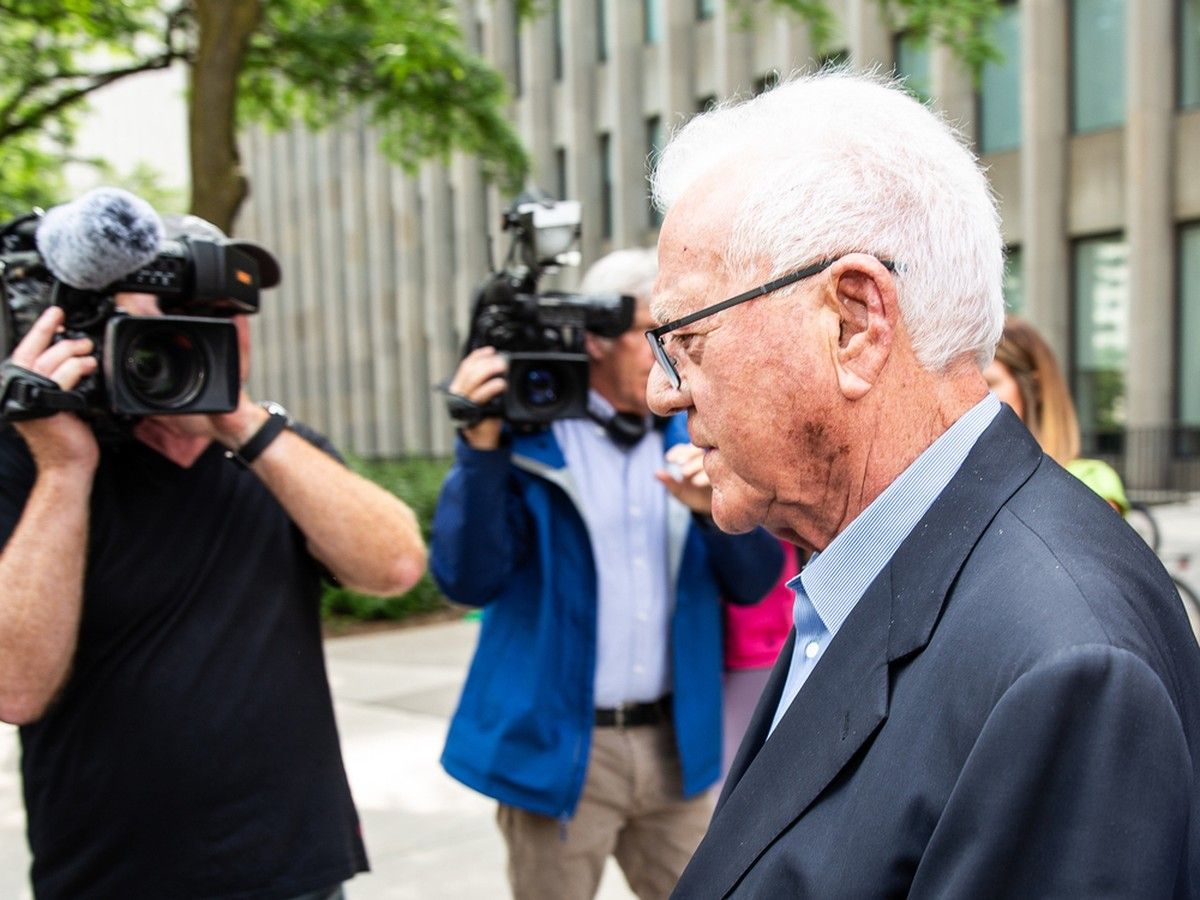
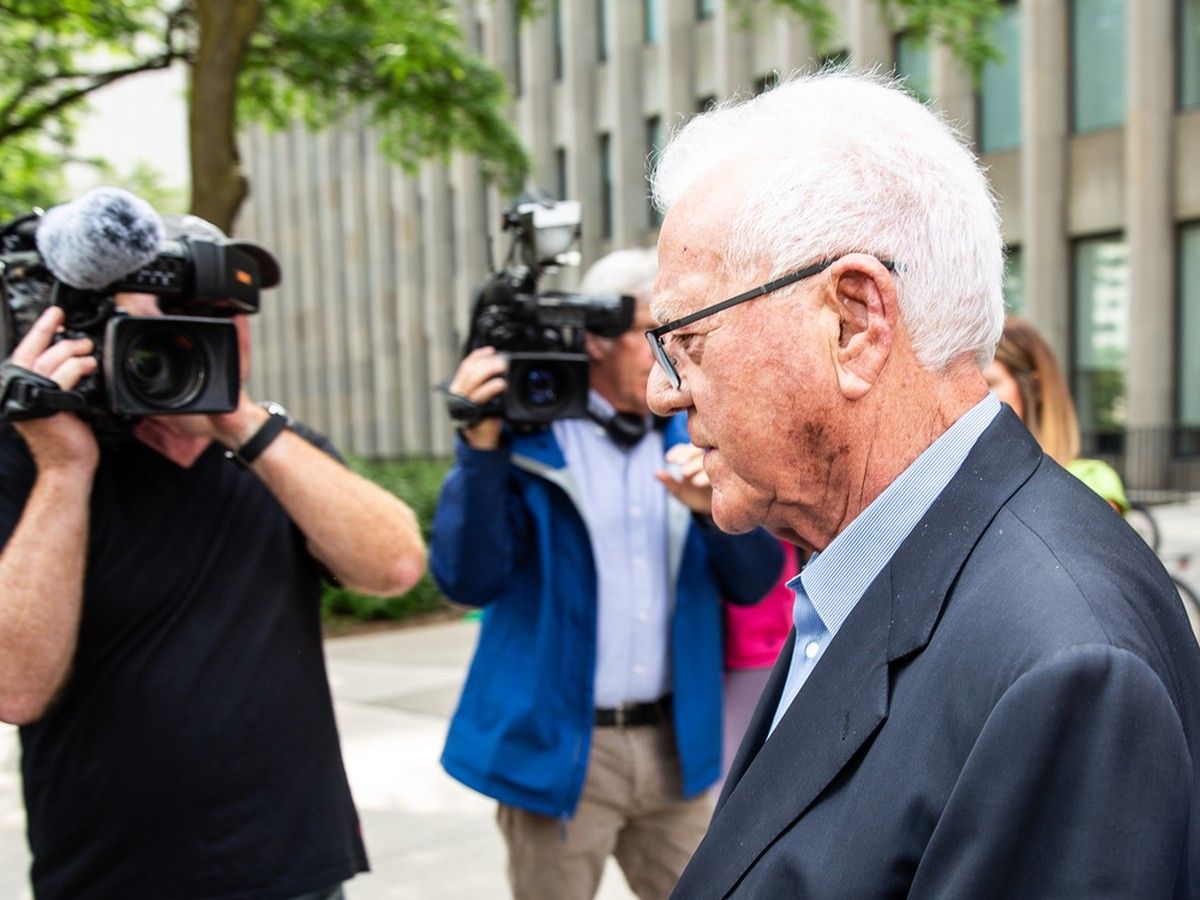
A judge has declared a surprise mistrial in the sexual assault case of Frank Stronach, voiding a guilty finding because the complainant’s lawyer made a clumsy attempt to extract money through Stronach’s lawyer, but ended up sharing information that contradicted the woman’s testimony under oath.
The shocking decision by Judge Anne Molloy overturns her recent finding that Stronach was guilty of sexually assaulting this woman, known as A.S., who once worked as a waitress in a bar Stronach owned.
It leaves one other guilty finding for indecent assault undisturbed. Sentencing arguments on that will be heard in September.
But it means that the extensive and high profile case against the prominent auto parts billionaire has succeeded in only one guilty finding, out of 12 initially alleged involving seven women complainants.
“These are unusual circumstances,” said Judge Anne Molloy, who found Stronach guilty last month.
At issue was the fact that a lawyer for A.S. recently contacted Stronach’s lawyer Leora Shemesh to, as she told Judge Molloy this morning, “extract money,” without going through the formal process of litigation. He even sketched out the details of what he would accept, nearly a million dollars based on $275,000 damages, $25,000 in legal fees, and interest since the early 1980s.
Shemesh argued there was risk of a miscarriage of justice in the case because the narrative of the crime provided by this lawyer, Shale Wagman, is different than what the complainant A.S. testified in court. For example, the lawyer’s account included details of her being afraid of Stronach when she saw him after the assault, and that he “smirked” at her, which Judge Molloy said substantially contradicts her testimony.
Although some details of the material were described in open court, lawyers and the judge made efforts not to describe it in great detail, pending the judge’s decision about whether it was privileged.
Judge Molloy said she agreed with the concern about risk to justice.
“Wouldn’t he have read my decision?” Molloy said, rhetorically, and discussed potentially calling Wagman as a witness to see whether he was operating under his client’s instructions, and whether A.S. actually told him the details of the crime that he related to Shemesh, which contradict her evidence earlier this year. Molloy called the situation “bizarre.”
There was extensive argument about whether to call A.S. to explain herself again under oath, but the mistrial makes that moot.
“I agree, it’s quite unusual, because as your honour knows, she could have waited until October (to discuss a financial settlement), because there’s no statute of limitations (on sexual assault),” Shemesh said.
In effect, this lawyer just cost his client what he thought was a million-dollar settlement.
Wagman, like Stronach, has a longstanding interest in thoroughbred horse racing, and in his legal practice he has argued cases at the Horse Racing Appeal Panel and the Ontario Racing Commission.
Wagman has also been found by the Law Society of Ontario to have engaged in professional misconduct, once by communicating with opposing counsel in an abusive and offensive manner, and once by mishandling money. His licence was briefly suspended. He could not be immediately reached for comment.
“I’m thrilled,” Shemesh said outside court, saying it highlights the problem of people using the criminal justice system to pursue their own financial goals.
In her reasons last month, Molloy wrote about finding A.S. to be “a compelling, believable, and truthful witness,” who exhibited an “extreme fairness,” sometimes seeming to be “cross-examining herself, wondering if she was giving ‘mixed messages.’” But she also described misgivings about her reliability, but decided they were “explained to my satisfaction. They do not shake my confidence that the event she described did happen, just the way she described it.”
A.S. was a waitress who had been fired from a bar Stronach owned. Molloy had found Stronach guilty of groping A.S. in his apartment after a dinner meeting to discuss her employment. It was among the more minor of the crimes initially alleged.
“I don’t see any way around this,” Molloy said before declaring the mistrial. “Interesting problems, to say the least.”
Before Judge Molloy made her decision, there was extensive argument about what to do about written materials, including email describing the alleged crime, that Wagman sent to Shemesh, identifying himself as counsel to A.S.
Crown prosecutor Jelena Vlacic said they need to call the witness back, after making sure she has counsel other than Wagman, to provide her the documents in question, and order her not to seek out any other information about this matter. Then she could be asked whether she instructed Wagman to do this, and what she has to say about the contradictory narrative.
“Mistrials don’t happen on the basis of prospective fresh evidence,” said Vlasic.
Shemesh said the Crown’s position amounts to saying that Wagman was “off on his own frolic,” and acting without instructions, perhaps even being deceptive. Judge Molloy said there would be “serious repercussions for him” if it turned out he manufactured this evidence.
But Shemesh said the court should start from the position that the material is just what it appears to be, a contradictory account of the events in question, and that it comes from her lawyer. Shemesh said it is impossible to call the witness back to “reassess” her credibility, to call some separate hearing to “re-engage” with the question of whether A.S. is credible and reliable.
Shemesh said the judge heard the witness A.S. in her original testimony, and made decisions about her credibility.
“Now you have a record in front of you that calls into question the veracity of that evidence,” Shemesh said. “That is a risk for miscarriage of justice, that is the reason I say it must be mistried.”
Judge Molloy also considered whether the written materials provided by Wagman and filed with the court should be covered b y what is known as settlement privilege, meaning that to disclose them would improperly interfere with A.S.’s civil right to seek compensation for harms done to her.
Judge Molloy decided the materials were covered by this privilege, regardless of the fact that no actual lawsuit had yet been filed.
Like solicitor-client privilege, however, there are exceptions when it can be set aside. One of those is known as the “innocence at stake” exception. Crown prosecutor Vlacic acknowledged that this would apply here.
Judge Molloy also said she was satisfied that this new evidence “goes directly to credibility.”
Having already made a ruling on A.S.’s credibility, Judge Molloy saw no way to simply add this new wrinkle to her analysis.
A mistrial does not mean this case of A.S. cannot be prosecuted again. That will be a decision for the Crown. It just means that this particular prosecution of it, which initially succeeded in securing a guilty finding, cannot stand.
Judge Molloy said her written reasons would follow.
Our website is the place for the latest breaking news, exclusive scoops, longreads and provocative commentary. Please bookmark nationalpost.com and sign up for our daily newsletter, Posted, here.