Newsletter Subscribe
Enter your email address below and subscribe to our newsletter

Enter your email address below and subscribe to our newsletter

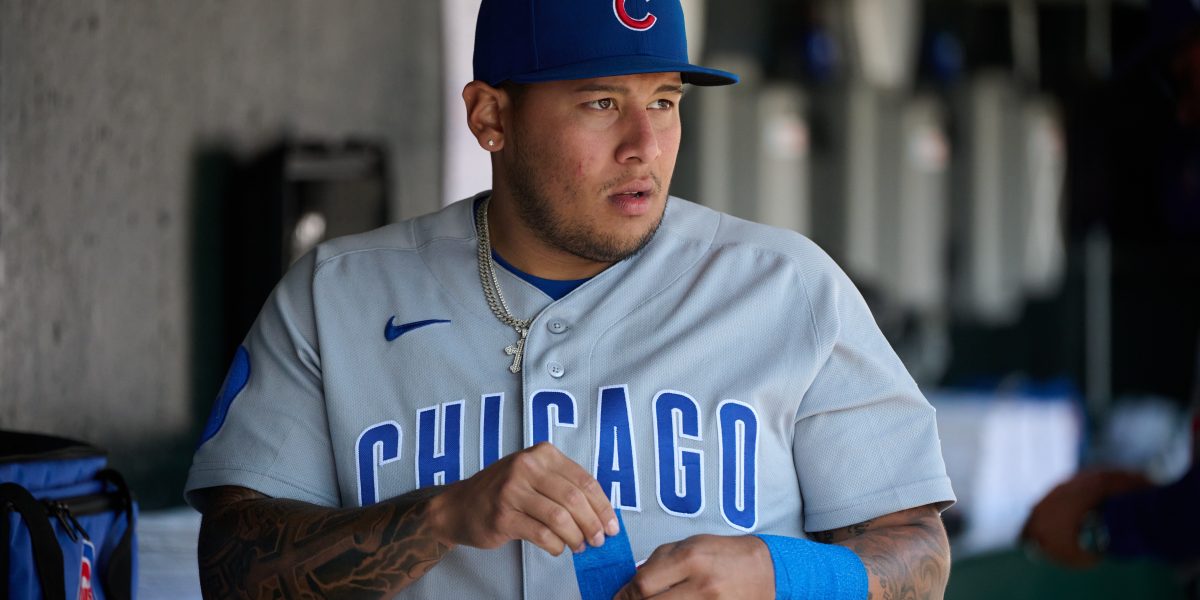

It was bittersweet for fans Monday afternoon when the Cubs included Moisés Ballesteros in a deal with the Angels to acquire controlled reliever Ryan Zeferjahn. The 22-year-old catcher/DH had spent the last few years showing off impressive bat skills at all levels within the Cubs organization. He looked like a hitter who could not be let go of, despite being primarily a matchup DH.
It felt like just yesterday he was hitting .400/.443/.665 over his first 26 games this season. However, the league adjusted to him quickly, eventually landing him back in Triple A Iowa. Still, he’s only 22 with upside. There’s no doubt it can hurt to part ways with a young high-upside guy, but one can reflect on why he was included in the Zeferjahn deal and understand it.

As mentioned before, the bat really tailed off after opponents started adjusting. He went from hitting .400 to slashing just .231/.303/.385 by the time he was demoted mid-June. MLB velocity gave Ballesteros some grief as he hit just .116 with a 40% whiff rate off four-seamers. Unfortunately, he continued to struggle in Iowa, hitting just .235/.347/.353 with two homers in 32 games.
To reinforce an earlier statement, this is not a verdict on Ballesteros’s career. He was a top prospect for a reason and up until a few months ago was mashing at every level. Adjustments, slumps, and growing pains will happen to young players. The key here is that his current lack of a solidified defensive position gave him a much shorter rope at a time the Cubs are in win-now mode.
Ballesteros caught a few innings with the Cubs this season, but Carson Kelly and Miguel Amaya are the set catchers. Add to the fact that prospect Owen Ayers is shooting up the Cubs farm as a potential future option. The current value in Ballesteros is strictly the bat, so he had to be producing to maintain value with the club. Otherwise, there just was not a spot for him.
Is it easy to give up on an upside bat like his? No. Could he have theoretically stayed in the organization to work on things? Yes. However, the Cubs needed a high-powered reliever, and one under control like Zeferjahn was going to be expensive. Ballesteros had a murkier future with the club in terms of fit, and the time seemed appropriate for the Cubs to get what they needed while he had trade value.
The post Chicago Cubs: Trading Moisés Ballesteros was a tough but fair move appeared first on ChiCitySports.