
Newsletter Subscribe
Enter your email address below and subscribe to our newsletter

Enter your email address below and subscribe to our newsletter



Tony Kinney thought the metal device implanted in his hip by a surgeon in 2006 would relieve his pain. But instead, he says, it left him living in anguish and unable to work.
“I can’t do anything. I’ve lost everything I own, house and possessions,” he says.
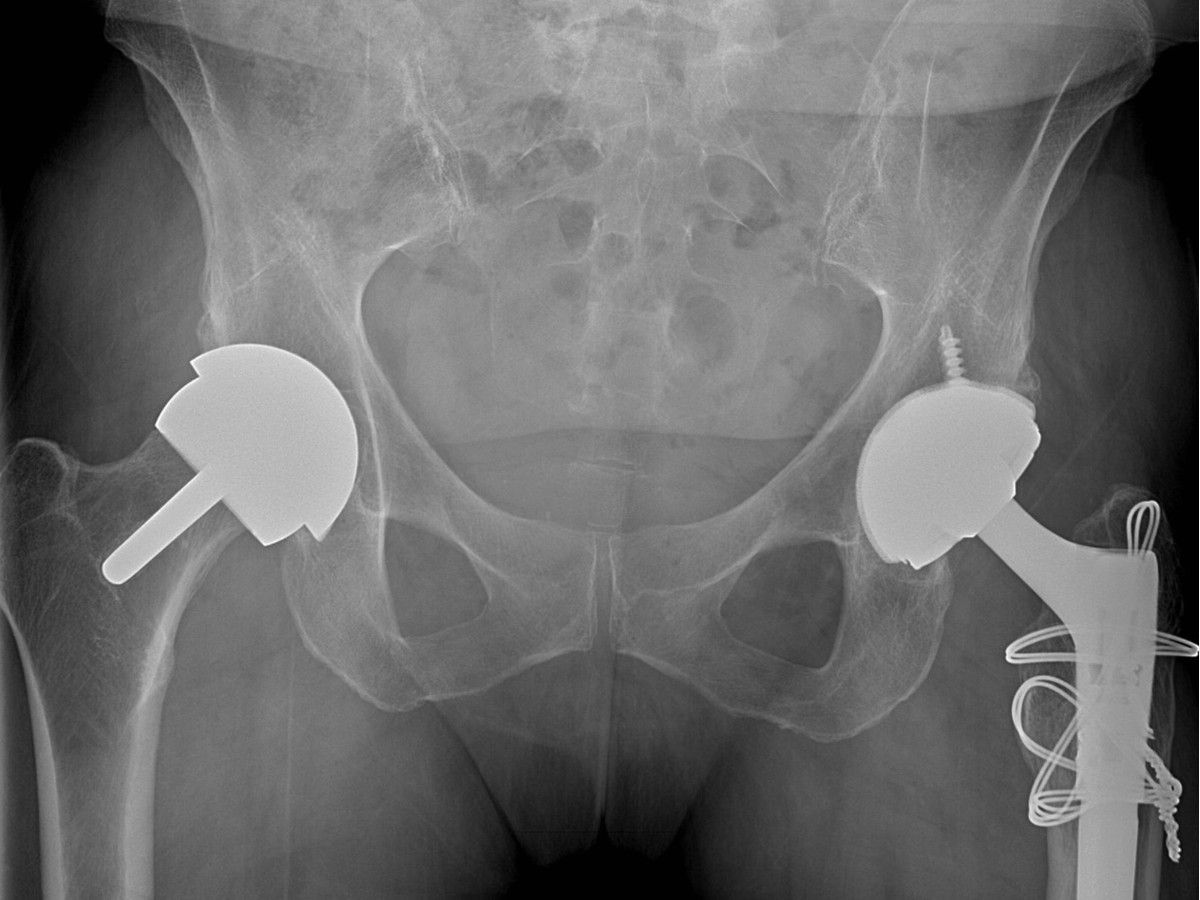
Metal-on-metal hip devices, like the kind Kinney received, have been the subject of concern — and even lawsuits — for more than 15 years. The devices have been known to cause pain, potential metal poisoning and the need for additional surgeries in some patients. The devices are no longer used at all for total hip replacements in Canada because of those complications.
But they continue to be used — though in shrinking numbers — for hip resurfacing: a bone-preserving alternative that reshapes the ball, called the femoral head, at the top of the thighbone and caps it with a prosthesis. The surgery is considered most suitable for younger men who want to maintain movement and athletic ability.
In 2012, Health Canada issued a notice to surgeons about the risks of metal-on-metal hip implants, especially for women, saying they were known to cause “pain, implant loosening and significant soft tissue reactions thought to be the result of increased levels of metal (cobalt and chromium) ions in the surrounding joint tissue.”
Even so, since then there have been at least 5,215 hip resurfacings reported in Canada, according to data provided to the Investigative Journalism Bureau by the Canadian Institute for Health Information (CIHI).
CIHI’s data does not indicate the implant material, but all hip resurfacing devices licensed in the country were metal-on-metal until last month, Health Canada spokesperson Karine LeBlanc said in an email. In late July, a ceramic hip resurfacing system was approved.
At least 492 Canadians had hip resurfacing surgery in the 2012-13 fiscal year — the same year the notice was sent out. Fifty-three of them were women, despite being identified by Health Canada as a group with increased risk for metal hip implants.
The number of resurfacings overall didn’t dip below 400 until 2019.
So far, in 2025-26, at least 280 Canadians have had the surgery. (The data excludes Quebec, which requires special authorization to release such information to CIHI.)
“I can make an argument that every hip resurfacing that’s metal-on-metal is failed from day one,” said Dr. Stephen Tower, an orthopedic surgeon based in Alaska, who was implanted with a metal device himself during hip replacement surgery.
The devices expose nearly anyone implanted “to toxic levels of cobalt in blood and urine,” he said, adding elevated levels are associated with neurologic and cardiovascular issues.
Why hasn’t Health Canada acted? “It is not within Health Canada’s mandate to oversee patient management or the delivery of clinical care,” said LeBlanc.
Kinney’s arthritis and hip pain hindered him from being able to work long shifts as an aircraft engineer in Nova Scotia. He was told resurfacing was the solution.
Today, 20 years after his surgery, he is part of a national class action lawsuit, yet to be certified, alleging the implants he and others received are “inherently defective.”
The suit targets Wright Medical Technology, an American company that sold its orthopedics parts business to MicroPort Scientific Corporation in 2014. MicroPort, founded in Shanghai, China, is also named in another class action suit proceeding at the same time with similar allegations.
The law firms representing MicroPort and Wright, respectively, declined to comment on the lawsuits. Both have filed a notice of intent to defend their actions in Ontario.
There is debate within the North American medical community about the role of metal-on-metal hip resurfacings.
Some orthopedic surgeons interviewed by the IJB called them a vestige of the past.
Dr. Amit Atrey, an orthopedic surgeon based in Toronto and spokesperson for Arthritis Society Canada, said there’s been a shift away from metal-on-metal resurfacings because of the risks and because total “hip replacements now work so well.”
Others disagreed, saying metal resurfacings can be the best option for carefully selected patients. They allow for a higher range of motion than a total replacement and have lower dislocation rates.
Metal-on-metal is not “inherently bad,” said Dr. Prem Ramkumar, an orthopedic surgeon based in California. “It’s fine if used for the right indication, with the appropriate metallurgy, and positioned correctly during surgery.”
Dr. John Antoniou, a Montreal orthopedic surgeon who does resurfacing surgeries, agreed. “Registry data indicates that metal-on-metal resurfacing should be done on men with good bone stock who are very active,” he said.
There are only a few surgeons in Canada who do such surgeries because of the steep learning curve and volume required to maintain one’s skill, he said.
A 2025 study , published in the AME Surgical Journal, looked at online joint registry data between 2010 to 2024. Its authors concluded that resurfacing is a “safe and effective alternative to (replacement) for appropriately selected patients when performed by experienced surgeons at specialised centres.” It also called increased levels of metal ions “a significant problem.”
Metal particles released into the circulatory system when metal components rub together can eat away at tissue and cause damage in the area. According to Health Canada, it can cause pain in the groin, hip or leg, swelling at or near the hip joint, a limp and limited range of motion.
A year after his resurfacing, Kinney had surgery to remove the metal implant and replace it with a non-metal device. But the pain continued.
In 2016, Kinney sold his home, unable to survive on long-term disability benefits. He left Nova Scotia — rent was too high — and moved to New Brunswick, farther from his grown children. His time is spent managing pain.
“Missed out on life, pretty much,” he said.
He isn’t alone.
Doug Smerek, a Calgary karate instructor, was implanted with two metal-on-metal devices, one in each hip, in 2017 and 2022 respectively.
Both of Smerek’s surgeries came after the Health Canada warning, which he says his doctors never flagged.
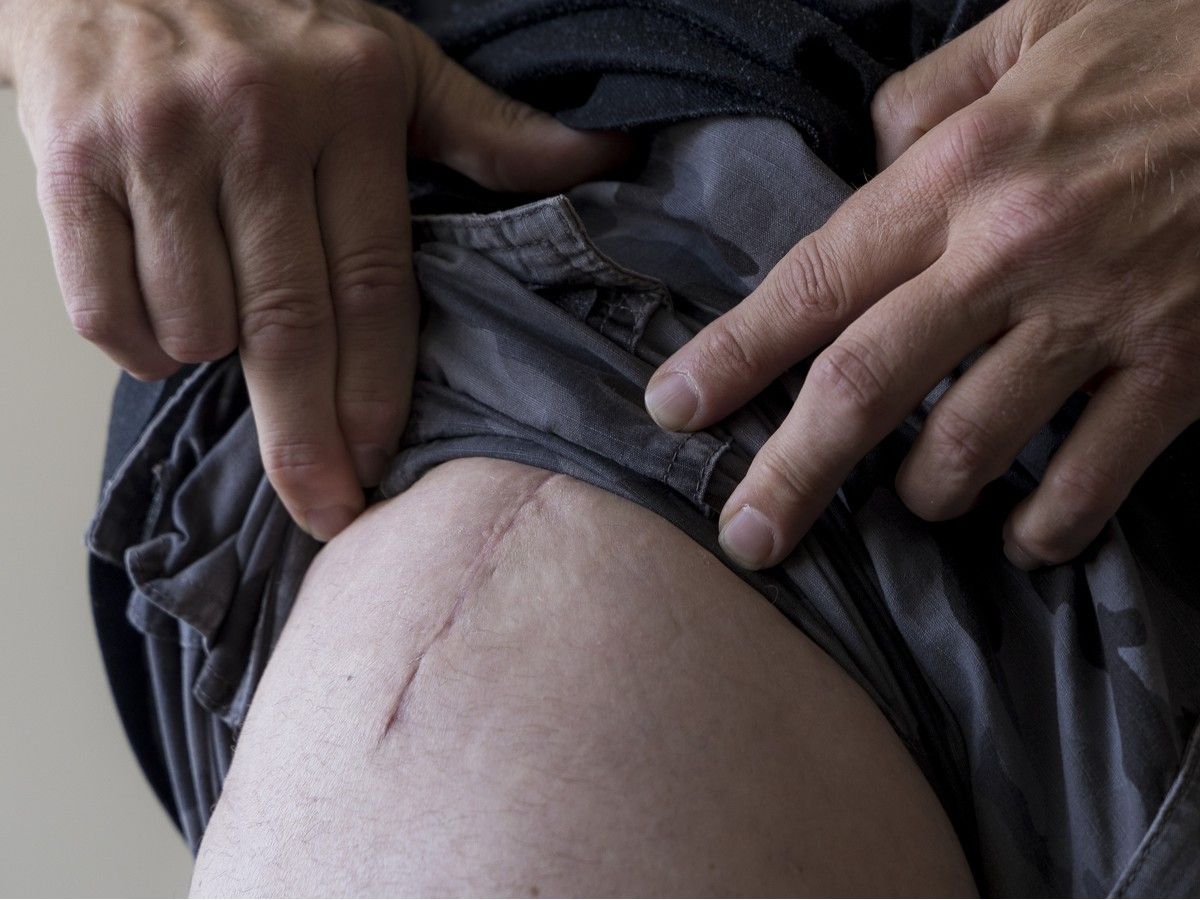
He’s been “living a nightmare,” he told the IJB. The implants have caused him pain, cramping in his calves, and difficulty lifting the front part of his foot. He says he has anxiety attacks at night.
One of the metal devices implanted in Smerek, made by MicroPort, was also recalled in 2016 — a year before it was put into his body. The recall was issued due to an increasing trend of follow-up surgeries since 2009 and a “specific hazard/harm for suspected tissue reaction to metal debris,” according to the Health Canada recall notice.
The recall applied to the parts if used for hip replacement, not if used for resurfacing. But Smerek says he is still concerned.
“Health Canada recognizes that these experiences can be difficult for patients and families,” LeBlanc told the IJB. “Patients who have concerns about their devices should contact their healthcare provider.”
It’s up to the provinces and territories to deliver services, including the procurement and use of devices in their public health systems, said LeBlanc.
Health Canada can take regulatory action when warranted, “based on emerging evidence such as new scientific literature, reports of medical device problems, and information shared by international regulators,” she said.
The federal department supposedly keeps track of hip resurfacing devices as part of its “standard ongoing post-market monitoring.” But since the 2012 warning, there have been no updates or additional notices.
Health Canada initiated a review of metal-containing hip implants in 2019. But resources had to be reallocated due to the COVID pandemic and the assessment was postponed indefinitely, said LeBlanc.
Not every province or territory is mandated to report to CIHI, which manages the national medical device registry. The IJB reached out to provincial health authorities across Canada with questions about the current use of metal-on-metal hips devices. The responses reveal a patchwork of policies.
In British Columbia, Fraser Health and Vancouver Coastal Health said their facilities do not use metal-on-metal for resurfacings. Acute Care Alberta said the same.
Metal-on-metal is only used for hip resurfacings in “very rare circumstances,” Nova Scotia Health told the IJB.
Santé Quebec said implant use varies depending on the institution and surgeon. Saskatchewan Health Authority said the decision on the type of implant used “is made by the physicians in consultation with their patient” and “is not at the direction” of the agency.
Ontario Health did not respond to the IJB’s request for comment.
Several previous class action lawsuits in Canada were launched against metal hip device manufacturers starting around 2010, resulting in recalls and settlements from major companies such as Johnson and Johnson, Stryker and Zimmer.
In September, a certification hearing will be held for the class action that includes Kinney and Smerek as plaintiffs. Certification means a judge must decide if the case can proceed as a class action.
“There’s no place for these products in the marketplace at all,” said Joel Rochon, a partner at Rochon Genoa, the law firm handling the class action suit.
“Health Canada and the regulators need to step up and do their part to ensure that these allegedly defective devices are no longer available.”
***
Tower, the Alaskan surgeon, had a metal-on-metal hip replacement in 2006. He says he suffered a slew of symptoms including tinnitus, mild deafness, spatial disorientation and sleep apnea. The symptoms, he said, stemmed from cobalt toxicity, also referred to as metallosis, a kind of metal poisoning.
The symptoms disappeared when the implant was removed, he says.
“If Canadian patients can still get a hip resurfacing through the public system, those responsible for quality assurance at Medicare and those at the FDA following adverse medical device events are either wilfully blind or asleep at the switch,” he told the IJB.
Patients can become quite sick, said Tower. “They’re very frustrated because nobody knows what to do with them, and a lot of times they’re dismissed.”
Smerek agrees. After being ignored by Canadian doctors, he said, he found a surgeon in the U.S. who specializes in revisions. He has undergone revision surgery for one of his hips but is awaiting a second surgery to remove the last metal device still in his body.
“I’m deteriorating slowly,” he said. “I can’t wait.”
The Investigative Journalism Bureau (IJB) at the University of Toronto’s Dalla Lana School of Public Health is a collaborative investigative newsroom supported by Postmedia that partners with academics, researchers and journalists while training the next generation of investigative reporters.
Our website is the place for the latest breaking news, exclusive scoops, longreads and provocative commentary. Please bookmark nationalpost.com and sign up for our newsletters here.