Newsletter Subscribe
Enter your email address below and subscribe to our newsletter

Enter your email address below and subscribe to our newsletter

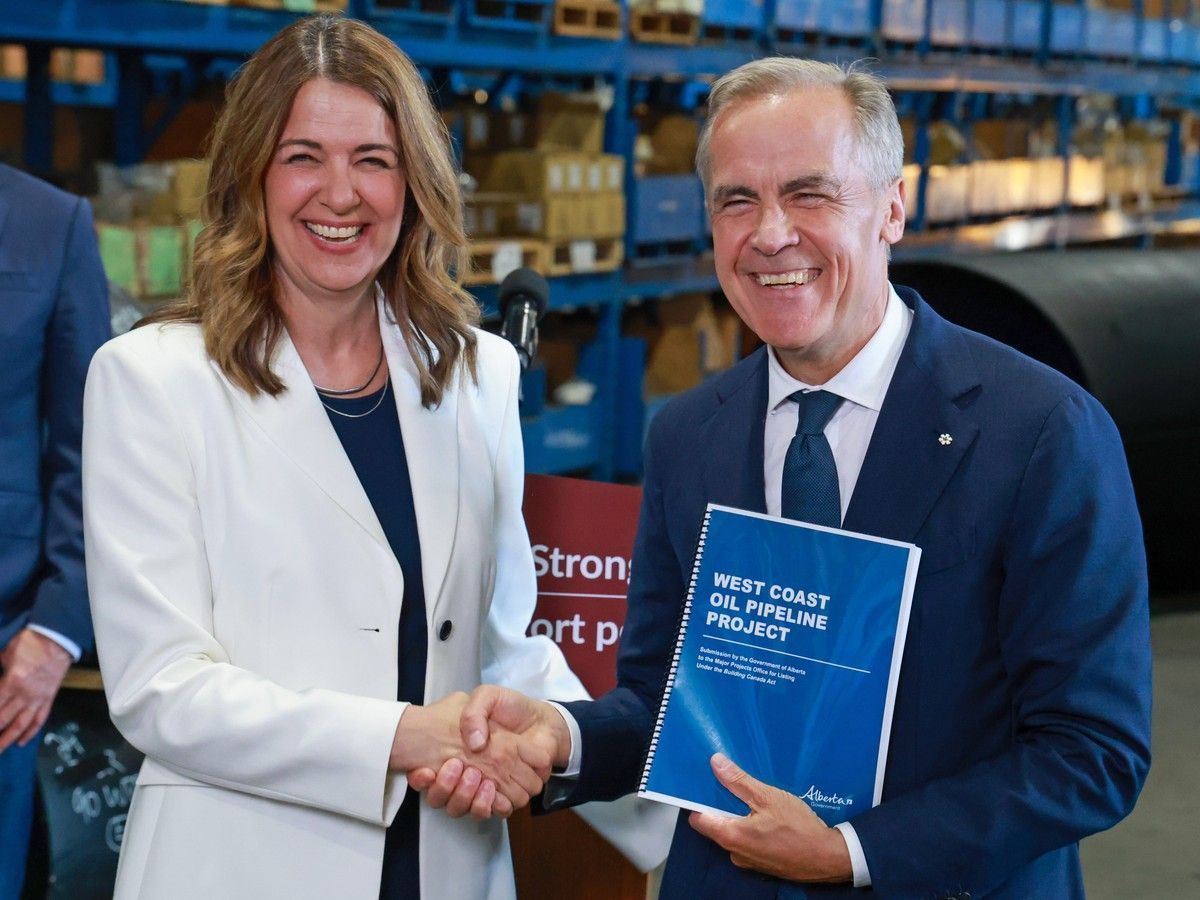
Most Canadians say the federal government should hold on to ownership of the Trans Mountain pipeline corridor, according to a new poll.
Data from the Angus Reid Institute found that 54 per cent of Canadians surveyed believe Ottawa should remain as owner of the Trans Mountain Expansion Project (TMX), which runs from Edmonton to the Westridge Marine Terminal in Burnaby, B.C. This is compared to 23 per cent who would sell to the private sector to recoup taxpayer funds.
Support for government ownership was highest in Atlantic Canada, at 62 per cent, and lowest in Quebec, at 44 per cent. When split by federal vote, all groups expressed majority support for Ottawa keeping TMX, with past Liberal voters most enthusiastic at 65 per cent, while 50 per cent of past Conservative voters also agreed, as well as 52 per cent of NDP voters.
The research foundation adds that long-term ownership by Ottawa has been made more palatable by Canadians’ broader attitudes toward public infrastructure ownership, with more than half (56 per cent) of survey respondents saying it is appropriate for governments to invest in or own pipelines. In comparison, 21 per cent said they should be owned and operated exclusively by the private sector.
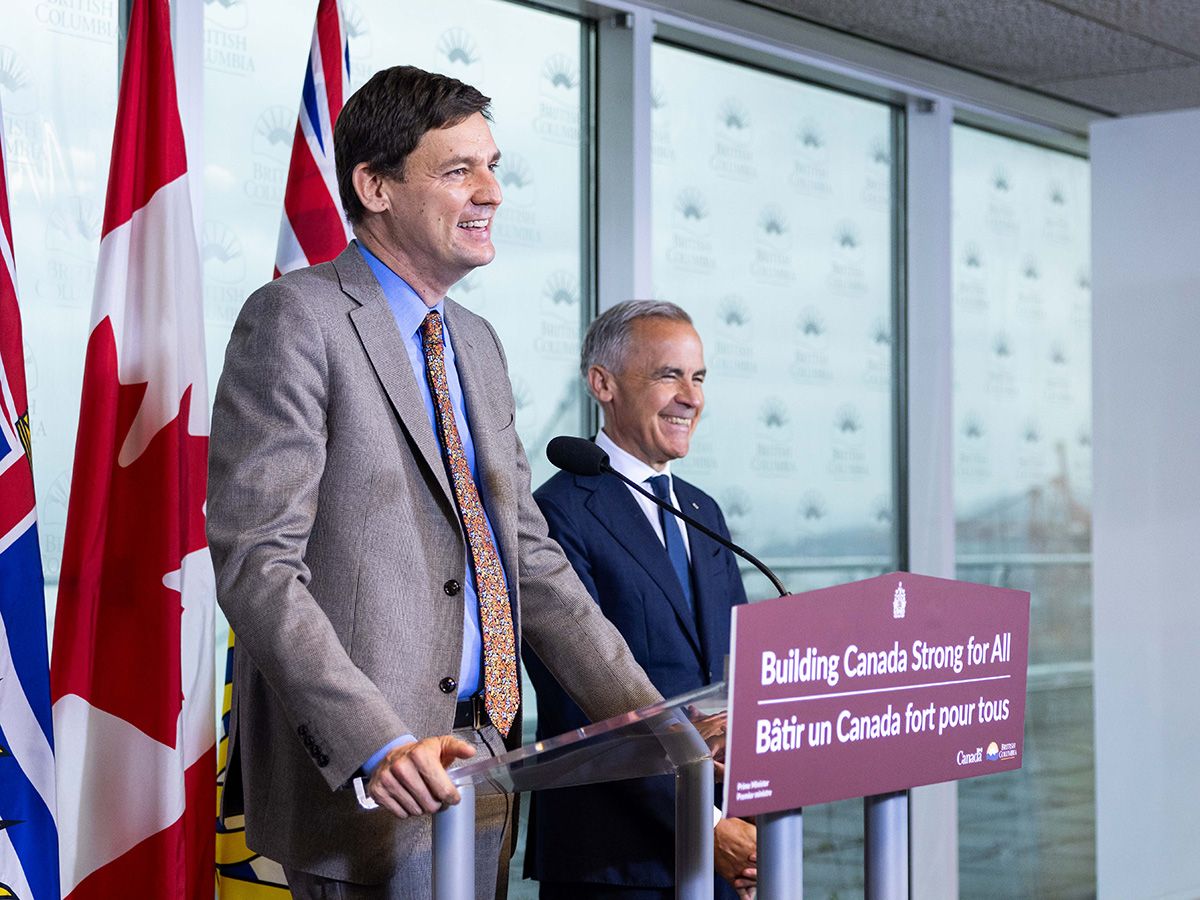
There is a notable shift in attitude on this point among past Conservative voters, with Angus Reid Institute polling from 2019 finding that 85 per cent of Conservative supporters said the economy should be left more to the free market. In contrast, half of CPC voters today say there’s a role for government ownership in pipeline infrastructure, with sovereignty amid U.S. President Donald Trump’s second term cited as a key factor.
This, the Angus Reid Institute says, partly explains an upward shift in the proportion of Canadians who say the federal government made the right decision when it purchased Trans Mountain for more than $4.5 billion in 2018. This figure now sits at 42 per cent, up from 34 per cent in February 2025 and 37 per cent in 2018.
That’s despite the project having cost the federal government more than $34 billion to complete — nearly five times as much as the original $7.4 billion forecast.
The survey findings come as the future ownership of the pipeline is being debated, with Trans Mountain and Canada Development Investment Corp. (CDEV) leadership recently arguing there is a case for Ottawa to remain a long-term owner .
At a Canadian Club Toronto luncheon in May, CDEV president and CEO Elizabeth Wademan said the pipeline “has incredible value,” adding, “There’s absolutely a case to be a long-term holder … I personally would love to see it owned by Canadians.”
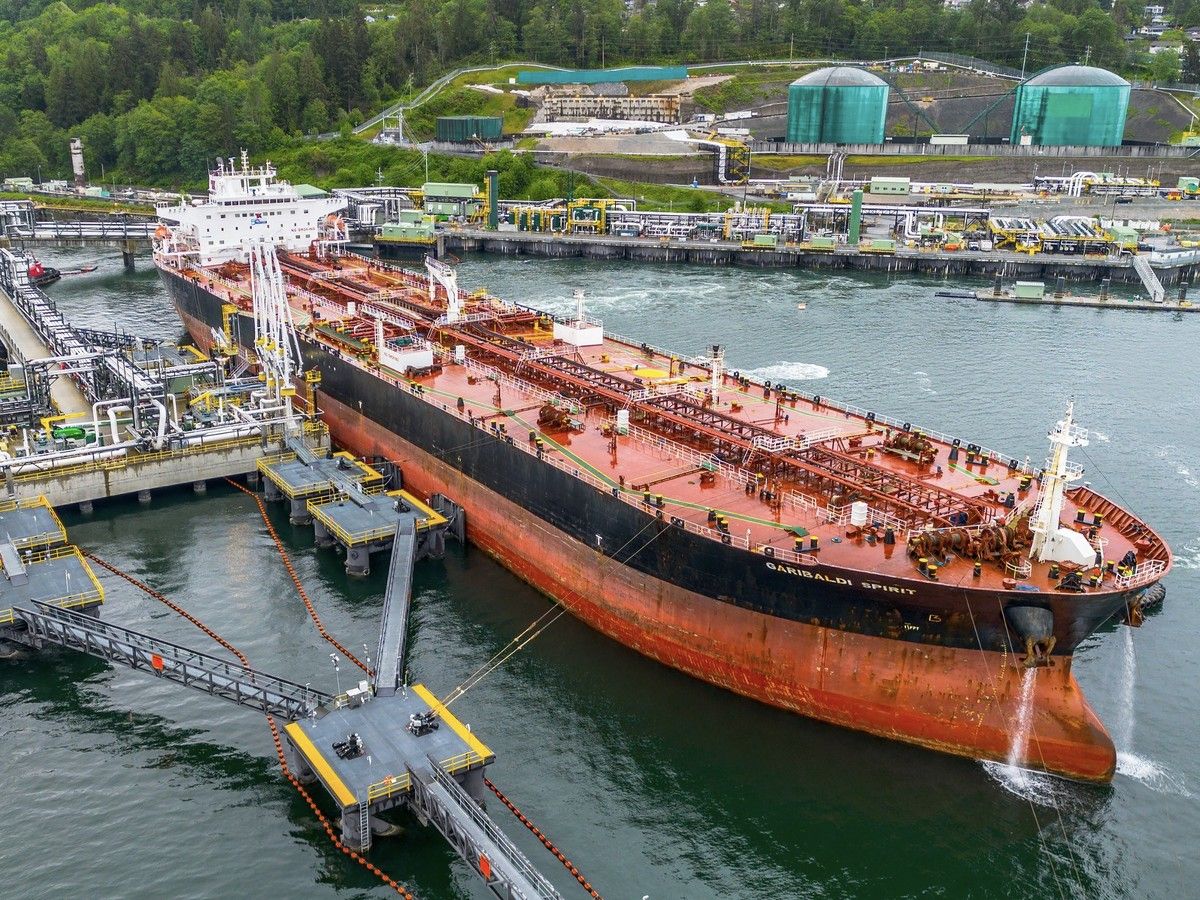
Trans Mountain Corp., which owns and operates the pipeline, is a subsidiary of CDEV, which manages investments on behalf of the Canadian government and answers to the finance minister.
Previously, the federal government said it doesn’t intend to be the long-term owner and would eventually sell the pipeline to the private sector, Indigenous groups or a combination of the two.
Elsewhere, the Angus Reid Institute previously found that 63 per cent of Canadians support a new pipeline from Alberta to B.C. , which would run along the existing Trans Mountain corridor, with economic arguments proving to be the most persuasive.
For example, 55 per cent of respondents said they support the pipeline because it helps Canada sell oil to markets outside the U.S., while 51 per cent cited the general importance of oil to the economy and 45 per cent were persuaded by the creation of jobs and economic growth.
On the other end of the scale, however, 41 per cent of respondents, including half of respondents in Quebec, felt the most persuasive argument against the pipeline was that Canada should be investing in renewable energy instead.
Meanwhile, 34 per cent said the economic benefits may not be concentrated enough to justify the project, and 30 per cent pointed to environmental and oil spill risk.
Support for the pipeline proposal was highest in Alberta, at 76 per cent, and lowest in Quebec, at 50 per cent.
The latest Angus Reid Institute Survey was conducted online from July 10–14, 2026, among a randomized, representative sample of 2,649 Canadian adults. It carries a margin of error of +/– two percentage points, 19 times out of 20.
Our website is the place for the latest breaking news, exclusive scoops, longreads and provocative commentary. Please bookmark nationalpost.com and sign up for our daily newsletter, Posted, here.