Newsletter Subscribe
Enter your email address below and subscribe to our newsletter

Enter your email address below and subscribe to our newsletter


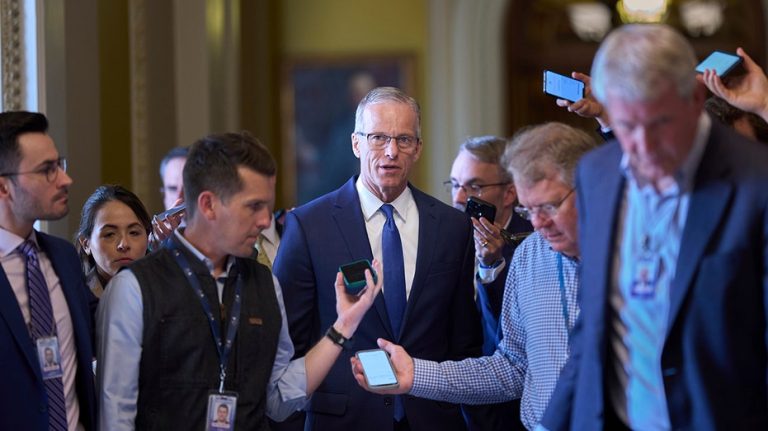
Three Republican senators filed an amendment Thursday aimed at preventing the Protect College Sports Act from overriding state laws that bar biological males from competing in women’s athletics.
Sens. Josh Hawley of Missouri, Jim Banks of Indiana and Tommy Tuberville of Alabama are trying to close what they see as a loophole in the Protect College Sports Act.
CLICK HERE FOR MORE OUTKICK SPORTS COVERAGE
As currently written, the bill would override certain state laws dealing with college athlete eligibility. The senators are concerned that could include laws in Missouri, Indiana and other states that prohibit biological males from competing on women’s college teams.
Their amendment would make clear that those state protections remain in effect. It specifically says the bill’s federal preemption provision would not apply to any state or local law that “prohibits biological men from playing in women’s sports.”
“Biological men should never be allowed in women’s sports or women’s locker rooms,” Hawley said in a statement. “We’ve got to make sure state laws protecting women stand.”
The Protect College Sports Act is primarily intended to establish national standards governing name, image and likeness (NIL) compensation, athlete eligibility and other major issues facing college athletics. However, critics warn that its broad protections for the NCAA and its eligibility rules could have unintended consequences for women’s sports.
Hawley raised the issue publicly on Wednesday.
“I’ve reviewed the current draft of the Senate NIL bill, and I am very concerned it PREEMPTS Missouri’s law banning men in women’s sports,” Hawley wrote on X. “This is what @Riley_Gaines_ has been saying. Big, big problem.”
Banks said he could not support legislation that supersedes Indiana’s existing protections for female athletes.
“Indiana has one of the strongest laws in the country that keeps biological men from competing in women’s sports,” Banks said. “As the father of three daughters, I can’t support any legislation that would preempt Indiana’s law. This amendment would make sure the Protect College Sports Act protects female athletes.”
Tuberville called the protection of women’s athletics “the civil rights issue of our time.”
“Democrats have proven again and again they don’t give a rip about protecting women from mentally ill men who wake up one day and decide to dress up like a girl,” Tuberville said. “I’m proud to stand with Senators Hawley and Banks in introducing this commonsense amendment to protect millions of female student athletes.”
The amendment addresses one of two major objections women’s sports advocates have raised about the bill.
The first is that the legislation could preempt state laws that establish sex-based eligibility requirements for women’s athletic teams. The amendment filed by Hawley, Banks and Tuberville is designed to ensure those state laws remain enforceable.
The second concern involves language critics believe could insulate the NCAA from liability over its own eligibility decisions, including in lawsuits brought under Title IX.
An op-ed supplied by the Independent Council on Women’s Sports (ICONS) argued that the legislation’s exemption is broad enough to “shield the NCAA from liability for past and future eligibility decisions that violate Title IX.” The organization is helping finance federal lawsuits against the NCAA and other college sports organizations on behalf of female athletes, including Riley Gaines and former San Jose State volleyball player Brooke Slusser.
Gaines shared the op-ed on X.
“Really great piece on how the Protect College Sports Act prevents the NCAA from being held legally accountable for Title IX violations,” Gaines wrote. “Athletes should be able to fight the @NCAA when their rights are violated !!!”
The amendment’s text is focused specifically on protecting state and local laws from preemption. It does not explicitly address the separate argument that NCAA eligibility decisions could be protected from certain challenges under federal law.
Supporters of the overall legislation say a national framework is necessary to stabilize college athletics, protect athletes’ NIL rights and establish uniform rules governing compensation, scholarships, healthcare and eligibility.
Sen. Maria Cantwell, one of the leading supporters of the bill, argued that it would actually protect roster opportunities for women’s and Olympic sports.
“We need to stabilize the arms race,” Cantwell said. “Athletes should have a federal law granting them the ability to earn compensation for their name, image, and likeness, and a federal law protecting their scholarships and healthcare.”
But Hawley, Banks and Tuberville are making clear that any broader effort to regulate college sports must not come at the expense of state protections for female athletes.
Whether their amendment is adopted could now become a significant factor in determining whether the Protect College Sports Act earns enough Republican support to advance.