Newsletter Subscribe
Enter your email address below and subscribe to our newsletter

Enter your email address below and subscribe to our newsletter



Maritime musician Ashley MacIsaac has ended his defamation lawsuit against Google over an AI overview that falsely labelled him a sex offender.
The Cape Breton-born fiddler launched his $1.5-million claim earlier this year in the Ontario Superior Court of Justice, alleging that he lost a gig at a Nova Scotia First Nation after community members came across Google AI Overview descriptions falsely suggesting that MacIsaac had been sentenced for “sexual assault and internet luring” and placed on a sex offender registry for 20 years, among other erroneous statements.
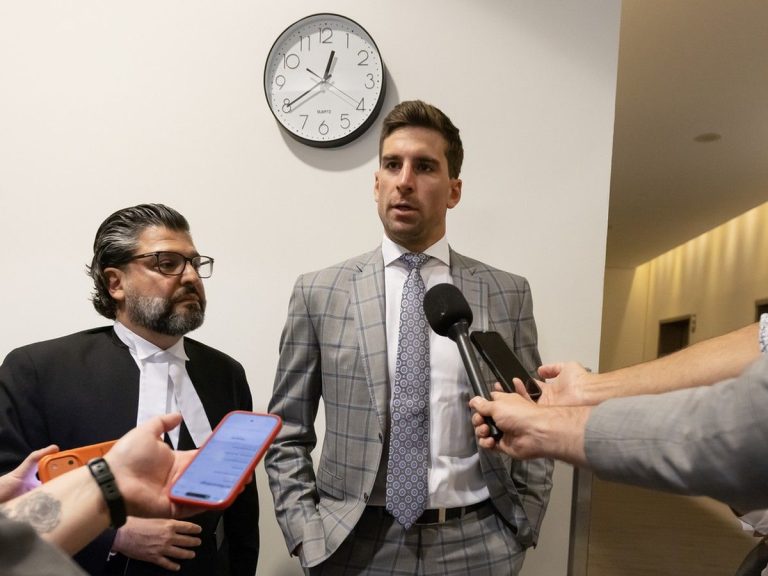
However, MacIsaac’s lawyer filed a notice of discontinuance with the court on July 29 that ends his legal action. Reached by phone, MacIsaac declined to elaborate on the reason for the discontinuance.
“I have no comment. I’ll have to leave it at that,” he said. “I appreciate the opportunity to speak to media when I feel it’s necessary, but today I don’t.”
Toronto lawyer Maanit Zemel is one of many defamation lawyers mourning the missed opportunity for a full trial in the case.
“This generally means they’ve come to some kind of agreement and they can’t provide the settlement details because they’re privileged,” she explains.
MacIsaac’s now-withdrawn claim alleged that Google was liable for the AI Overview’s statements, which appeared to confuse him for a Newfoundland man with a similar name who was convicted of sexual assault, as well as the “foreseeable republication” that resulted in the concert cancellation.
“As the creator and operator of the AI Overview, Google is also liable for injuries and losses arising from the AI Overview’s defective design,” the claim continued, alleging that the tech giant had not taken reasonable steps to prevent harm to individuals when its AI system returns false information.

Google’s Canadian lawyer did not respond to a request for comment, but in press coverage at the time of the concert cancellation, a company spokesperson pointed out that the search results linking MacIsaac to the criminal offences no longer appeared in the AI Overview, adding that: “When issues arise — like if our features misinterpret web content or miss some context — we use those examples to improve our systems, and may take action under our policies.”
Zemel says she was not surprised to see the case cut short, noting that few individuals have the resources to take on a company the size of Google. Importantly, she says the tech giant may have had its own incentive to settle the case without a formal ruling.
“Google do tend to fight if they think they can set their own precedent, but this is not the kind of case they want to make a precedent of,” she says. “I certainly wouldn’t be advising them that it’s one worth fighting if I was Google’s lawyer.”
While Google and other search engines enjoy considerable protection when indexing or linking to defamatory material thanks to a landmark 2011 Supreme Court of Canada decision known as Crookes v. Newton, Zemel says that the facts in MacIsaac’s case were quite different.
In Crookes, a majority of the nation’s top court ruled that hyperlinking to a defamatory statement does not constitute “publication” of the material, as long as the hyperlink itself does not repeat or endorse the defamatory material.
Meanwhile, in MacIsaac’s case — which remains unproven in court — there was a strong case for arguing that Google itself was the publisher of the allegedly defamatory material, Zemel says.
“It’s never simple in a defamation case, but I think a court is likely to consider the AI-generated overview as content created by Google itself. At that point, they would no longer be a re-publisher, but the original author,” she says. “The law is pretty tech-neutral, so my position would be that it doesn’t matter whether it was their software or a person who wrote it; they’re liable the same way.”
Howard Winkler, a veteran media and defamation lawyer with more than 40 years of experience, had also been following proceedings eagerly and was disappointed with the outcome.
“This is unfortunate in terms of the development of important and timely legal principles,” he says.
Unanswered questions left by the discontinued case include whether an AI creator can indeed be considered a publisher of information, whether the owner of an AI platform can rely on an “innocent dissemination” defence and whether cases involving AI hallucinations could be handled under product liability law dealing with defective products.
“Regrettably, we will now have to wait a little longer to get clarity,” he added.
Zemel won’t be holding her breath, considering the notoriously slow progress that cases make through the court system.
“Eventually there will be a decision. It’s just a matter of time,” she says. “And by then, the technology will probably have changed.”
Our website is the place for the latest breaking news, exclusive scoops, longreads and provocative commentary. Please bookmark nationalpost.com and sign up for our newsletters here.