Newsletter Subscribe
Enter your email address below and subscribe to our newsletter

Enter your email address below and subscribe to our newsletter

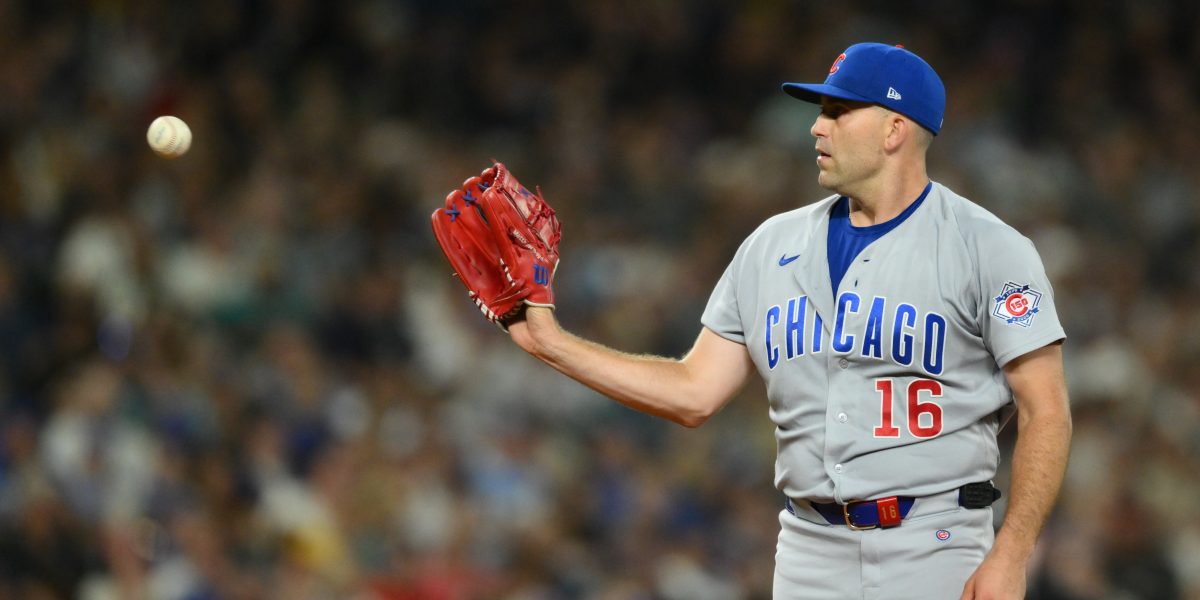

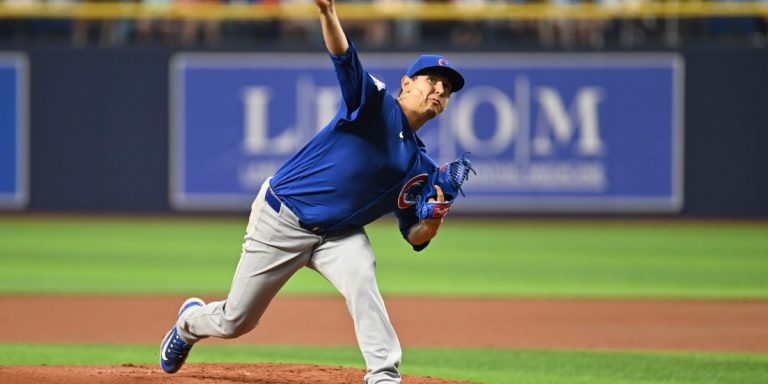
Calling Friday night’s game in Seattle frustrating is an understatement. The Cubs’ 6-5 loss in extras was defined by several factors, including another “blah” start from Matthew Boyd. He went six innings and gave up five runs (four earned) on six hits, two walks, and three strikeouts. Not horrific, but not great.
After Friday’s game, Boyd sports an 8-2 record, but a 4.15 ERA, 4.68 FIP, 1.24 WHIP, and 18.6% strikeout rate in 91 innings pitched on the season. On the surface, a 4.15 ERA in 16 starts isn’t awful, though not the goal for him. The biggest issues lie within the peripherals beyond the basic stats.

As mentioned above, he sports a 4.68 FIP and 1.24 WHIP. That is well off the 3.65 FIP and 1.09 WHIP marks from his All Star 2025 campaign. His xERA (expected ERA) is way up at 5.01 right now; compare that to 3.75 last year.
What really stands out is the home runs. While Boyd’s flyball rate is down, 39.3% this year vs. 44.9% last year, his HR/9 has jumped from 0.95 to 1.38. That’s 14 homers in 91 innings this year vs. 19 homers in 179.2 innings all of last year. Not surprising that more flyballs are being pulled this year (22.9%) vs. last year (17.7%) based on those home run totals.
So what’s he doing differently? His pitch usage has been nearly identical to last year: 45.5% four-seam fastball, 25.8% changeup, 15.4% slider, 12.8% curve, and 0.5% sinker. He’s throwing at nearly the same arm angle as last year too (24-25 degrees). The issue is that his bread-and-butter pitches, the fastball and changeup, have dipped in effectiveness. His fastball is slightly down in average velocity (93.3 to 92.7 MPH), but his fastball run value per Statcast dropped from the 86th percentile to the 17th percentile, which is VERY dramatic. His offspeed run value was in the 97th percentile last year and is now in the 58th percentile.
When the fastball isn’t located or executed as well, the offspeed won’t be as effective. Opponents are slugging .481 off his fastball this year and .426 off the changeup. A far cry from the .337 slug off the changeup last year.

Recent concerns about Boyd have begged the question of whether he should be a top choice in a playoff rotation. It would be one thing if the box score results were not great, but it was due to some flukiness. The peripherals and effectiveness of his fastball will make one pause much longer, though.
Heck, for as good as Boyd was last year, had some struggles in the second half. He’s older and has battled injury throughout his career, unfortunately, and one has to ask if the stamina is there. Early this season, there were starts where he looked gassed after just a few innings.
Boyd is a hard, dedicated worker with the talent and ability to make adjustments. With that said, can they be made soon enough? Can the Cubs infrastructure identify issues with his fastball and help him adjust? Will he have the physical stamina to be able to? Time will tell, but we are in the final stretch now, and adjustments have to come quickly.
The post The Chicago Cubs have a Matthew Boyd concern on their hands appeared first on ChiCitySports.