Newsletter Subscribe
Enter your email address below and subscribe to our newsletter

Enter your email address below and subscribe to our newsletter

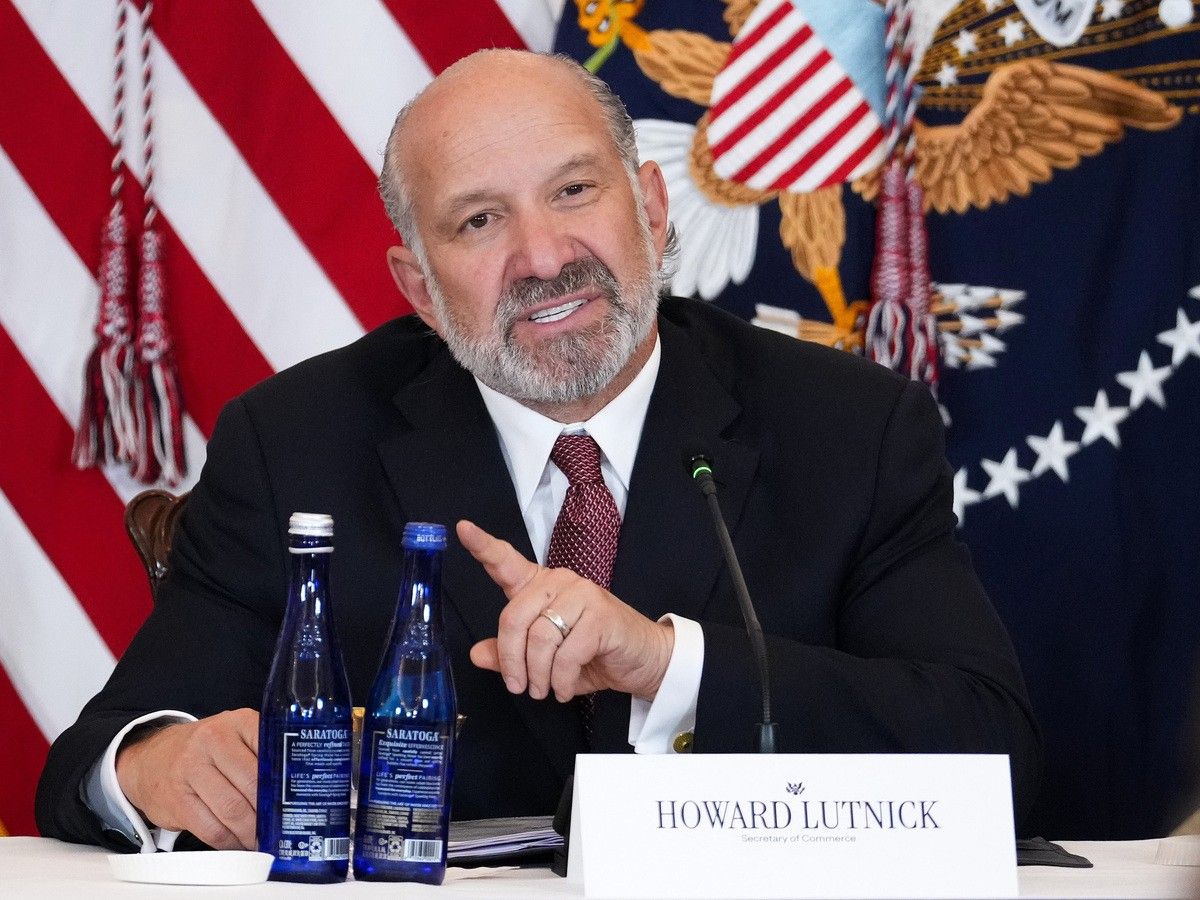
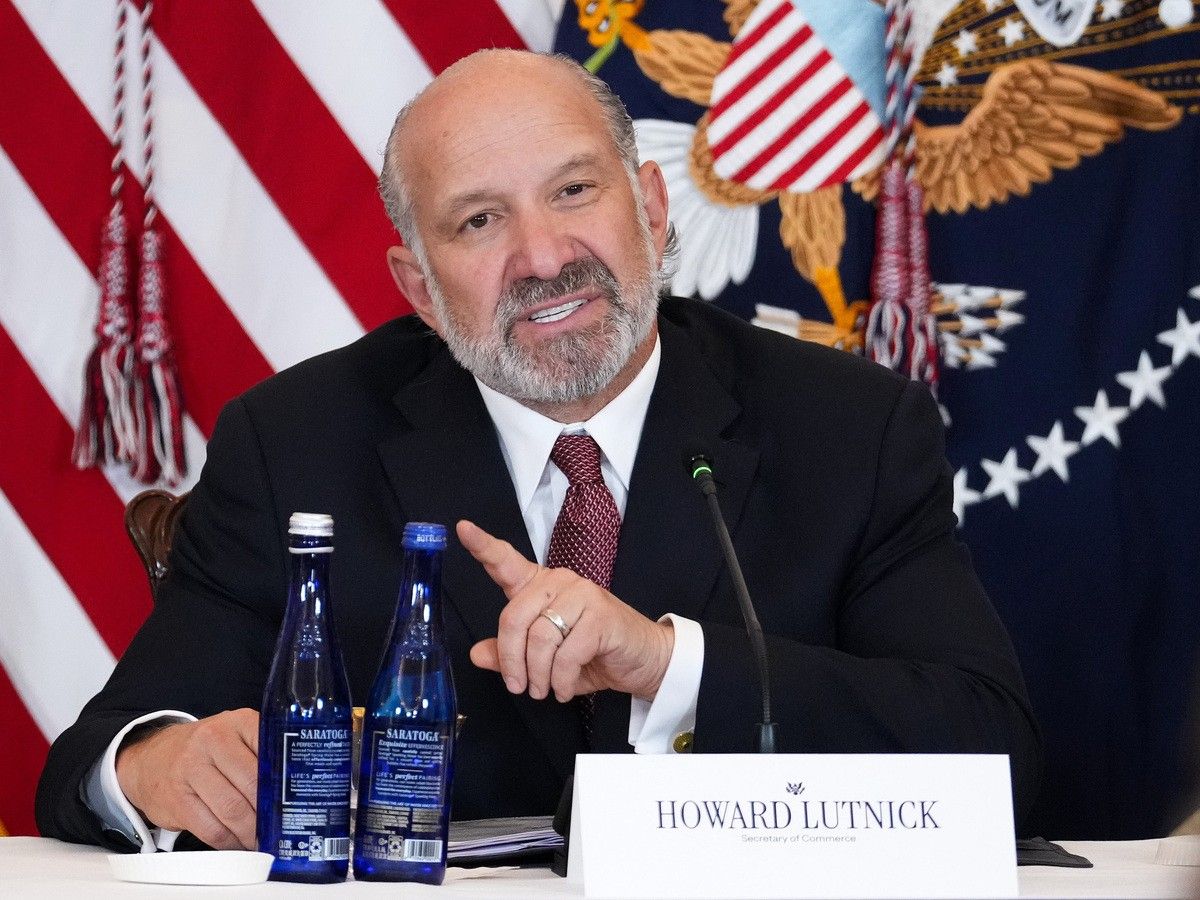
OTTAWA — United States Commerce Secretary Howard Lutnick said Canada walked away from a trade agreement with the U.S. due to “political purposes” that involved Quebec’s upcoming provincial election and Alberta’s referendum.
“It was manufactured,” said Lutnick, during a press conference in Washington on Thursday. “So there’s the sovereignty party trying to run, and they’re in the lead in Quebec and so this was Mark Carney manufacturing something that would try to keep them from winning, and then you have Alberta has an independence resolution.”
Trade talks between the U.S. and Canada for an interim agreement on tariffs collapsed late Friday evening, after Prime Minister Mark Carney paused negotiations.
In a press conference on Saturday, Carney cited efforts from the U.S. “to restrict our protections of our language, our culture, and in effect, our sovereignty” as one of the reasons why negotiations failed.
Lutnick disputed Carney’s claim.
“If you think I ever said the words French — do I care about how the Québécois speak? I mean, what could matter less to America?” he said.
Canadian sources have previously told the National Post that it was Lutnick’s last-minute demands, which included the U.S. gaining control over which other countries Canada would be permitted to do business with, which derailed the agreement between the two countries.
The other sticking point for the Canadian side was the exclusion of Canadian trucks from tariff relief in the deal.
Lutnick said the words “medium and heavy-duty trucks” were only raised at 4 p.m. on Friday, hours before the U.S. tariff deadline on Canadian goods were set to take effect.
Canada-U.S. Trade Minister Dominic LeBlanc said earlier Thursday there is a possibility of reaching a “mutually beneficial” agreement with the U.S., after the country’s top trade negotiator said discoverability of French content on U.S. streaming platforms was never a “red line” for American negotiators.
“Canada welcomes that the U.S. is now withdrawing its positions on discoverability and labelling and is confirming that measures to promote French language and Canadian culture will not be subject to future U.S. trade actions,” he said, in a post on X Thursday morning .
“We look forward to further constructive U.S. clarifications on their other positions which would create the possibility of a mutually beneficial trade agreement that respects Canadian sovereignty,” he added.
In an interview with CBC News on Wednesday , United States Trade Representative Jamieson Greer said issues surrounding French language discoverability on U.S. streaming platforms was “the farthest thing from a red line” for the American side of negotiations.
A government source suggested that Greer was not entirely truthful in his interview.
LeBlanc said in a radio interview on Thursday that while Quebec labelling laws have been a trade irritant for the U.S. for years, it was rather the issue of discoverability of French content on large streaming platforms that was non-negotiable for the Canadian team.
Speaking on the Quebec radio show Lagacé le matin, LeBlanc said the last draft deal on Friday evening still contained demands from the U.S. to limit Canada’s capacity to force large streamers to promote Canadian cultural content, in particular French-language shows and music.
“We told them that, for us, that was non-negotiable. And it kept coming back in the text, including the final draft,” he said in French.
On Saturday, the prime minister said American negotiators took issue with subsidies for Canadian culture and the French language, and labelling on Canadian products.
Quebec’s Bill 96 requires packaging on products sold in the province to be translated into French. The bill has been sited as a trade irritant in the USTR’s report on trade barriers.
The contradictions from both sides prompted reaction from Bloc Québécois Leader Yves-François Blanchet on Thursday.
Blanchet called it “interesting” in a post on X, noting that French protections may not have been as significant in negotiations as what Carney and LeBlanc had initially characterized.
Greer previously told CNBC on Monday that Carney’s claims that the U.S. was trying to curtail French protections was a “funny fake story.”
In that interview, Greer said Canada came back after a tentative deal was announced on Tuesday, wanting more than what the U.S. was prepared to give.
“I don’t know if it was political for them,” he said. “It certainly doesn’t make economic sense, but perhaps for political reasons, they have some byelections coming up.”
Carney’s Liberals are hoping to win a byelection on Aug. 31 in the riding of Chicoutimi–Le Fjord.
Quebecers will also be headed to the polls on Oct. 5, after Quebec Premier Christine Fréchette kicked off her campaign in Quebec City on Thursday.
Speaking to reporters minutes after the writ dropped, Fréchette said that her true opponent in the Quebec election is U.S. President Donald Trump, which led to accusations from other political parties that she is leveraging the trade war to save her own skin.
“She’s right in saying that this is a major commercial crisis, but she’s not right in saying that she’s the one who’s going to solve this,” said Quebec Liberal Leader Charles Milliard.
Milliard warned against Fréchette attempting to distract from her party’s record in the last eight years. She took the reins of the party from François Legault only last April.
Parti Québécois Leader Paul St-Pierre Plamondon said Quebecers are faced with many challenges, which include a cost-of-living crisis, and said he hopes that the campaign will not be overshadowed by the turmoil caused by Trump south of the border.
“Let’s not let him confiscate our election because, in the end, it’ll be up to us, as Quebecers, to decide… of our future and our destiny,” he said.
Asked about Greer’s comments, Fréchette said her government would never agree to compromise Quebec’s identity or the French language in trade negotiations with the U.S.
“We will stay the course, stand tall, and uphold the laws and rules we have adopted to ensure the presence of French and the discoverability of Quebec and francophone cultural products,” she said. “We will maintain them despite the threats.”
St-Pierre Plamondon said, if his party forms government, he will not wait patiently beside his phone for a call from Ottawa to inform him of trade negotiations.
“That situation will not be the same under a Parti Québécois government, which does not accept this modus operandi,” he said in Montreal. “We cannot accept having our vital interests negotiated by a government that is not our own.”
With files from Christopher Nardi
National Post
Our website is the place for the latest breaking news, exclusive scoops, longreads and provocative commentary. Please bookmark nationalpost.com and sign up for our newsletters here.