Newsletter Subscribe
Enter your email address below and subscribe to our newsletter

Enter your email address below and subscribe to our newsletter

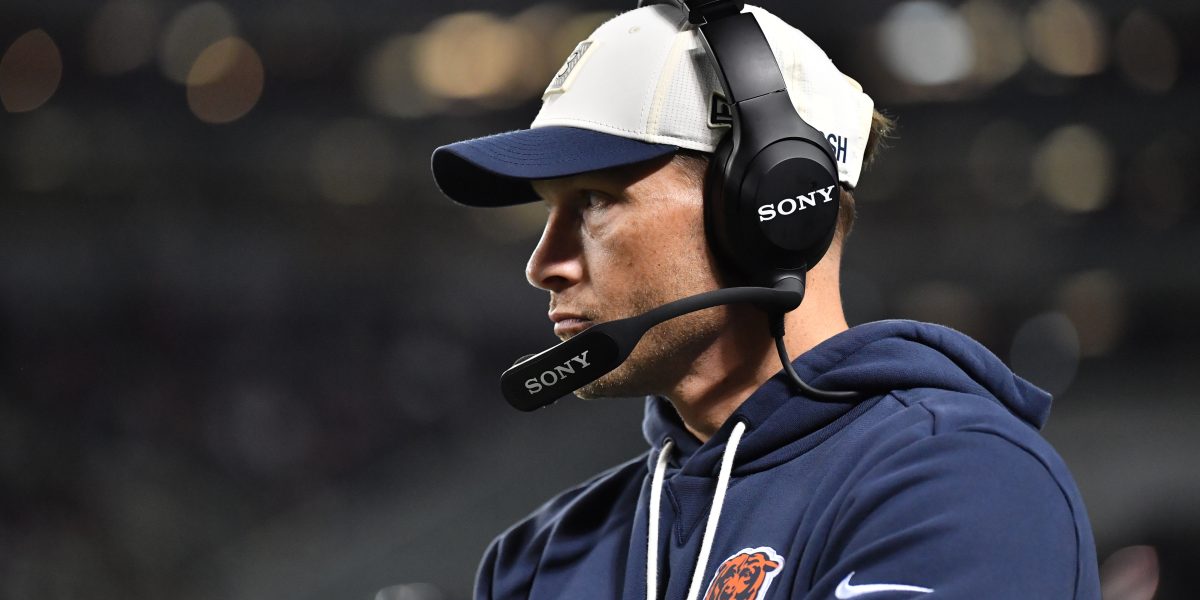

Three games into the 2026 season, Chicago has produced sharply different results. The Bears scored 59 points in a win at Carolina, managed three in a home loss to Minnesota and responded by beating Philadelphia 27 to 7. They enter October with two wins and one loss.
The three games offer a clearer picture than any one score. Chicago has run effectively with several players, struggled to finish drives near the goal line and improved defensively after its opener. The win over Philadelphia also showed how the offense operated without the injured Caleb Williams.
Against Carolina, the Bears gained 291 rushing yards. D’Andre Swift contributed 124 yards and three touchdowns, Kyle Monangai added 100 yards and a touchdown, and Caleb Williams ran for another 65. Chicago did not depend on one ball carrier to move the offense.
Minnesota held Swift to 45 yards on 16 carries, although the Bears still rushed for 134 yards as a team. Against Philadelphia, Swift gained 84 yards on 20 carries and Monangai added 31. The Eagles game offered a third version of the ground attack: less explosive than the opener, but useful alongside a productive passing game.
Fans comparing those performances with Chicago Bears odds have three distinct games to consider. Carolina showed the offense at its most explosive. Philadelphia showed the value of steady carries alongside an effective passing game, even without Williams’s contribution on the ground.
The Minnesota loss showed how much a team leaves behind when promising drives end without points. Chicago reached the Vikings’ 1, 5 and 12 yard lines on separate possessions without scoring. Swift lost a fumble at the 1, and Minnesota blocked a short field goal attempt after another drive reached the 5.
Philadelphia brought a better final result, though the problem did not vanish. After recovering a fumble deep in Eagles territory, Chicago advanced to the 1 yard line and turned the ball over on downs. Later, Case Keenum finished another close range possession with a quarterback sneak for a touchdown.
Other drives against Philadelphia ended differently. Keenum found Luther Burden III for a touchdown on the opening possession, then scored on a quarterback sneak in the fourth quarter. Chicago produced two touchdowns and a field goal after halftime. Its next measure near the goal line is straightforward: turn more of those short fields into points.
Williams produced 334 total yards and four touchdowns against Carolina before injuring his right hamstring against Minnesota. He missed the Philadelphia game, and Chicago has not announced a return date.
Bagent finished the Minnesota game, but Case Keenum started against Philadelphia. Keenum threw for 247 yards and two touchdowns without an interception and added a rushing touchdown. His performance showed that Chicago’s offense remained productive without Williams.
Quarterback depth will stay important until Williams returns. Chicago now has evidence that it can still move the ball through a more conventional passing structure but future opponents will have more film on Keenum and more time to prepare for that version of the offense.
Keenum’s passing numbers tell only part of the Philadelphia story. Kalif Raymond caught six passes for 90 yards, including a 41 yard touchdown. Luther Burden III caught seven for 61 yards and scored on Chicago’s opening drive. Colston Loveland added four catches for 31 yards.
That distribution gave Keenum options at different points of the game. Burden finished the first possession, while Raymond’s longer scoring play widened Chicago’s lead in the second half. The offense did not require one receiver to account for every important gain.
That range matters while Williams is sidelined. Keenum completed passes to multiple targets instead of leaning on one receiver for most of the yardage. Chicago paired that distribution with 115 rushing yards from Swift and Monangai, giving the offense production through both phases.
Carolina scored 37 points in the opener. Chicago then held Minnesota without a touchdown and allowed 246 total yards. The Vikings converted three of 13 third downs, keeping their offense from sustaining drives.
The defense followed that performance with an even stronger result against Philadelphia. The Bears forced three turnovers, limited the Eagles to two conversions on nine third downs and allowed only 62 yards in the second half. Philadelphia did not score after halftime.
The takeaways created opportunities as well as ending Eagles drives. One fumble recovery put Chicago at Philadelphia’s 15, although the Bears failed to score. The defense delivered the field position; finishing that possession belonged to the offense.
Chicago’s 27 to 7 win combined Keenum’s 11-play opening touchdown drive with a defense that forced three consecutive three and outs early in the second half. The Bears outscored Philadelphia 17 to 0 after halftime.
Chicago also cut its penalties from eight against Minnesota to five against Philadelphia. A failed possession at the Eagles’ 1 yard line remained a concern, but the passing game and defensive stops gave the Bears a more balanced performance than their high scoring opener at Carolina.
Chicago’s later October schedule should provide a better measure of whether the strengths from its first three games can become more consistent. The Bears visit Green Bay on October 11, travel to Atlanta on October 18 and then host New England on October 22 in a short-week Thursday night game. As those October games approach, NFL news and analysis can provide additional context around injuries, recent performances and matchup trends that may affect how each test looks by kickoff.
The Bears have shown an explosive running game, capable quarterback depth and a defense that improved in consecutive outings. They have also missed scoring chances near the goal line in both a loss and a win.
The work near the goal line remains uneven. Chicago left close-range possessions empty in both its loss to Minnesota and its win over Philadelphia. How the Bears finish those drives, alongside the status of their starting quarterback, will shape the next assessment of their season.
The post What the Chicago Bears’ Early Games Reveal About the 2026 Season appeared first on ChiCitySports.