
Newsletter Subscribe
Enter your email address below and subscribe to our newsletter

Enter your email address below and subscribe to our newsletter

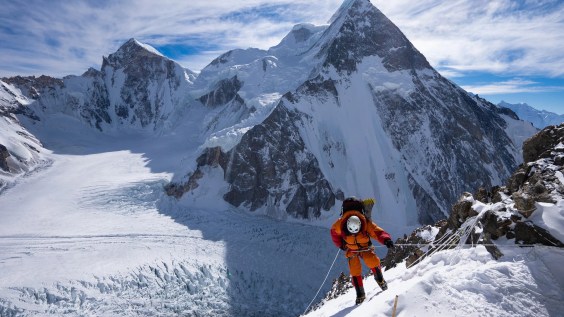
Having leisurely picked it up one day without expecting to be taken in, Jon Krakauer’s Into Thin Air arrested me from the first page. “Among my five teammates who reached the top [of Mount Everest], four … perished in a rogue storm,” Krakauer writes. “By the time I’d descended to Base Camp nine climbers from four expeditions were dead, and three more lives would be lost before the month was out.” Twelve deaths seemed to me a Shakespearean number. But the more I read about mountaineering, the more I realized that there was nothing extraordinary, per se, about tragedy in the mountains. On Everest alone, as many as 10 people die on average every year, a number that keeps climbing as temperatures rise. Krakauer’s book is so affecting because he refuses to look at this fact with nonchalance.
In that, Krakauer seems to be a bit of an outlier. Nonchalance is a common trait in adventurers whose impossible feats break through to the mainstream; consider Alex Honnold’s maddeningly blasé attitude towards his own chances in Free Solo. For those of us who are fearful, this ability to repress, or at least temper, the fear of death is the root of our fascination with extreme sports athletes. Most depictions of their exploits ask an obvious question: Why do this? But that’s a deceiving question, because the answer, at least as far as the psychologies on display are concerned, is equally obvious: Why not? When he was asked why he wanted to climb Mount Everest, George Mallory—the English mountaineer who was among the first to break trail on Everest, and who died on his third attempt to summit the mountain in 1924—famously replied: “Because it is there.” But the rest of his quote is just as telling a glimpse into the reasoning of the high-elevation climber. The urge, he said, is “a part, I suppose, of man’s desire to conquer the universe.”