Newsletter Subscribe
Enter your email address below and subscribe to our newsletter

Enter your email address below and subscribe to our newsletter

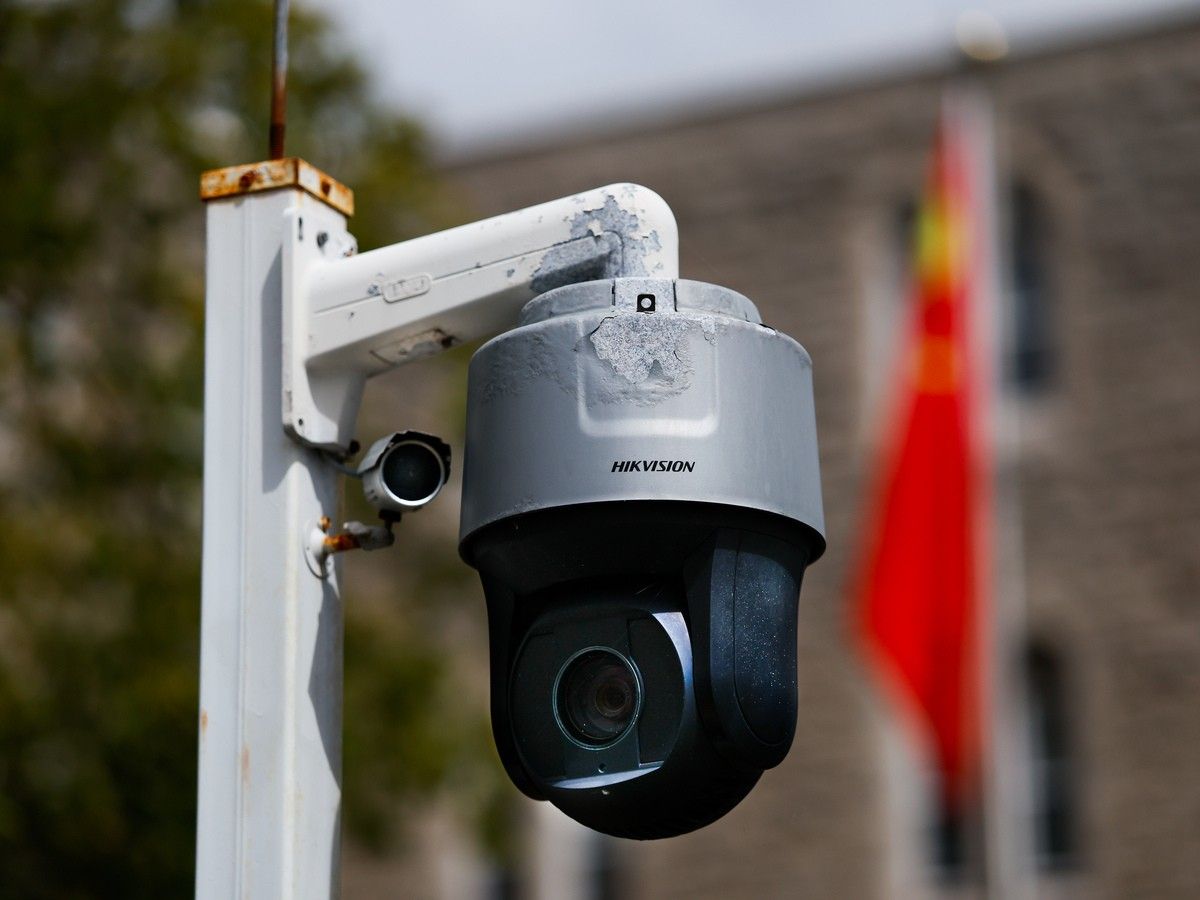
OTTAWA — In July 2025, a senior federal official delivered a stark warning in a court affidavit. Every day that Chinese surveillance camera giant Hikvision continues to operate in Canada is another day China could spy further on Canadians.
“The continued operation of Hikvision Canada leads to an increase of the capabilities of the PRC (People’s Republic of China) to conduct surveillance of Canadians and others in Canada,” swore Robert McCarty, a senior investment officer in the Innovation, Science and Economic Development (ISED) branch responsible for reviewing foreign investments.
The potential espionage uses of the thousands upon thousands pieces of Hikvision surveillance equipment in Canada were numerous and unnerving, he warned.
The PRC could use it to monitor specific people, collect “pattern of life” information or use the company’s artificial-intelligence powered tools for facial recognition, license place monitoring or even record audio and video of people meeting in public or private spaces, McCarty wrote.
At the time McCarty swore his affidavit, Hikvision had operated “illegally” in Canada for nearly one decade. During that time, the Chinese giant catapulted from a relative newcomer to a “leader” in the Canadian security and surveillance gear market.
By 2024, over a dozen federal government departments and agencies offices had Hikvision equipment deployed on their properties. Today, there are over 28,700 of the company’s devices connected to public-facing Internet connections in Canada (and likely far more on private connections), according to device search engine Shodan.
Hikvision is the most valuable manufacturer of “Internet of Things” surveillance equipment in the world, but also one of the most controversial. It is partly state-owned by the Chinese government and benefits from PRC subsidies that allow it to sell its equipment cheaper than most competitors.
But over the last decade, the company has been linked to multiple major cybersecurity vulnerabilities , is allegedly used by the Chinese government for mass surveillance of Uyghurs and other minority groups , and has been blacklisted by governments around the world over concerns about espionage and cybersecurity.
And yet, it was only in 2025 that the Liberal government took what appeared to be decisive action against the company that Canada’s security apparatus had viewed as a potential threat to national security for years. In June 2025, Industry Minister Mélanie Joly issued a rare order demanding the company pack its bags and leave Canada.
In the confidential order obtained by National Post, the government laid out five broad reasons for the ban. Those include Chinese laws compelling companies to spy for the government, Hikvision’s proximity to the PRC and its ability to access end user data is some cases.
All issues security analysts, other Western governments and even Canada’s intelligence apparatus had been warning about for years.
The Hikvision case raises serious questions about how the federal bureaucracy guards itself against technology it considers harmful, and if it heeds the advice of its own security agencies.
Hikvision is one of only a handful of companies that the federal government has moved to outright ban from Canada due to national security concern. Details — including confidential and classified information — revealing the process behind-the-scenes are laid out in thousands of pages of Federal Court documents as part of Hikvision’s legal battle to remain in Canada.
In both the court documents and a statement, Hikvision denied all the government’s concerns regarding the safety of its equipment and said it could not use its gear to spy on Canadians on behalf of China.
“The existing court submissions accurately reflect the company’s stance that there is no evidence that our products or operations pose a national security risk in Canada. We continue to expect a fair and transparent environment for all businesses and investors in the country,” Hikvision told National Post.
Until Hikvision’s lawsuit, much of the government’s grave concerns about the Chinese company were locked away from the eyes of the public. Even the government’s 2025 order in council justifying the Hikvision ban is still marked as “privileged information and cannot be published” online .
The information reviewed by National Post invites scrutiny into how the federal government reviews foreign investments in Canada that could be injurious to national security.
That’s because, despite repeated warnings from its security and intelligence apparatus about Hikvision gear, copious public reporting detailing security vulnerabilities in Hikvision cameras and the risk of espionage posed by the Chinese tech giant, ISED only launched a review of the company’s Canadian presence in 2024.
That’s when the department discovered the company had been operating “illegally” in Canada for nearly one decade, according to government court filings.
Hikvision had never notified ISED when it incorporated in 2014 and began operating in Canada in 2015, a mandatory step that allows Ottawa to review the investment for national security concerns. In court, the company said it wasn’t aware of the obligation at the time, which a judge dismissed in September 2025 as “no excuse” while declaring Hikvision to have “unclean hands.”
CSIS and other Canadian security agencies have long warned about the espionage risk of some Chinese tech. But those concerns spiked when the Chinese government adopted a National Intelligence Law in 2017 that requires local companies to “support, cooperate with and collaborate” with the China’s intelligence efforts if required.
Another key government concern was Hikvision’s participation as a “Tier One Technical Support Unit” in China’s cybersecurity vulnerability reporting program run by the government’s Ministry of State Security.
Not only did the company fail to disclose its voluntary participation in the program early in ISED’s review, the government charged, but the PRC is suspected of passing on reported cyber vulnerabilities to its “hacking teams” before disclosing them publicly.
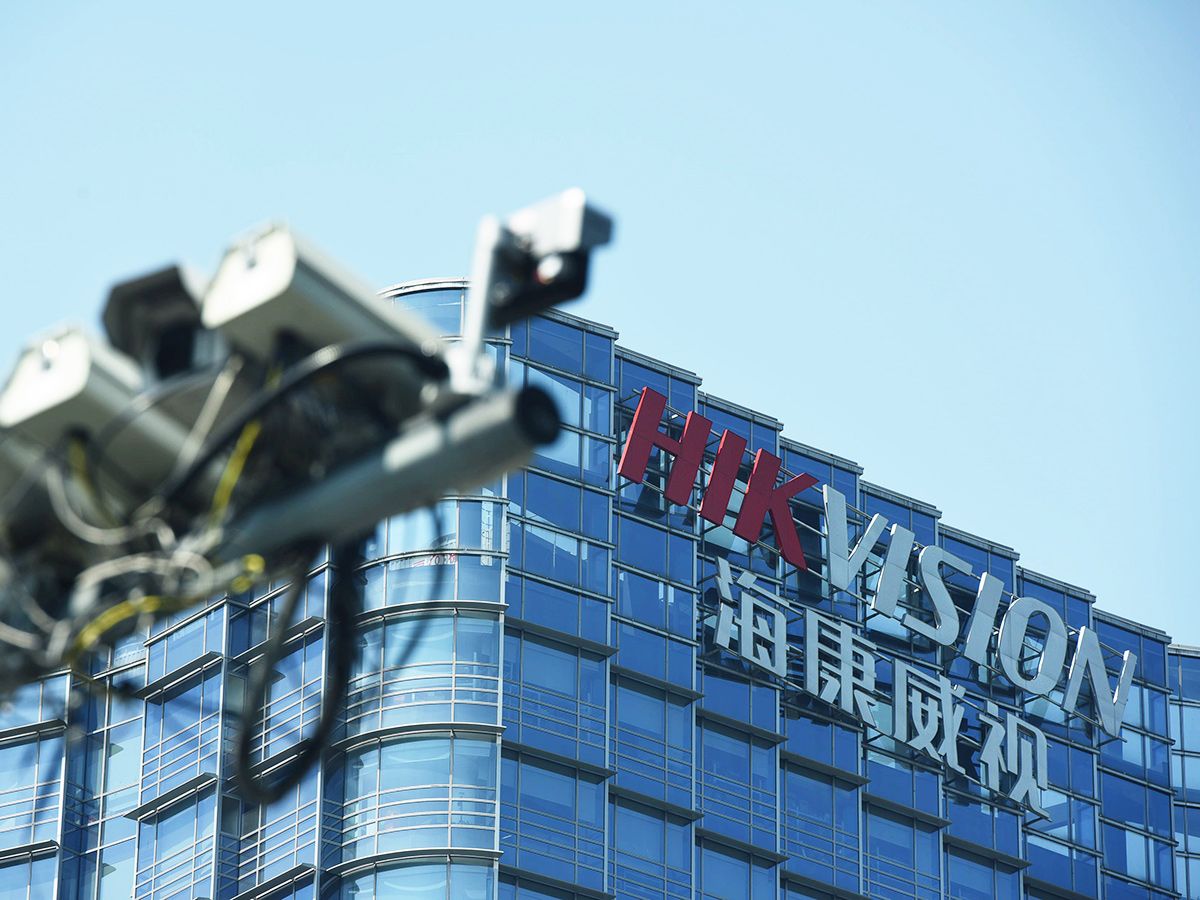
In its lawsuit, Hikvision Canada said it complies with all Canadian privacy laws and regulations and is “not subject to PRC law”. It argued that it “cannot” be compelled by the PRC to provide end user data or any other information, nor had it ever received any such request from the Chinese government.
The company also fiercely opposed the government’s position that it could access users’ data, arguing that it had essentially no way to access such information. Furthermore, it said its participation in China’s cyber reporting program was aligned with industry norms.
Ottawa’s national security concerns about Hikvisions are simply “speculation,” the company charged.
Despite that, in early 2025, Hikvision offered a series of concessions to ISED in order to avoid a ban. Court records show the company proposed six undertakings, including adhering to Canadian privacy laws, appointing Canadian citizens to its board and issuing “transparency reports.”
But the offer did not sway Ottawa. China’s national security laws are a key reason why Canada declared Hikvision persona non grata in the federal government’s confidential 2025 order.
“Despite Hikvision Canada’s representations that it would attenuate the national security risks… it is likely that, even if those undertakings were given, Hikvision would act contrary to Canadian interests under the direction of the CCP (Chinese Communist Party) or the government of the PRC (and) would not adhere to any such undertakings,” reads the confidential document.
Samy Khoury, a former top Canadian cybersecurity official, told National Post that China’s National Intelligence Law applies to Chinese companies regardless of the intent of foreign staff. That’s particularly the case for state-owned companies like Hikvision.
“The National Intelligence Law compels companies to sometimes … act against the customers’ interests, regardless of the good faith of the local staff,” said Khoury, who headed the Canadian Centre for Cyber Security and worked over three decades for the federal signals intelligence agency before retiring in July.
“The fact that the country has a law that compels a technology company, or presumably any company, to fork over data, that is something I would think twice about.”
Intelligence and security agencies also quietly shared their concerns about Hikvision technology specifically to the federal government years before ISED began the 2024 review of Hikvision Canada’s presence in Canada.
Notably, in November 2022, Canada’s spy agency sent out a rare and stark advisory to its partners.
Hikvision poses a threat to Canada’s national security because its products can potentially be used as an intelligence collection platform for China in Canada and abroad, reads the Canadian Security Intelligence Service (CSIS) security alert obtained by National Post.
On top of that, Hikvision directly designs, implements and operates China’s Xinjiang-based surveillance project of the Uyghur minority, CSIS warned.
Hikvision video surveillance gear should be given national security consideration and due diligence, particularly on Government of Canada facilities, CSIS warned in the 2022 document.
In other words: don’t use it.
Yet two years after the 2022 CSIS alert, a dozen government departments and agencies still used Hikvision surveillance equipment on their property in 2024. Thursday, National Post reported that over one year after the government’s ban, at least two federal agencies still used Hikvision gear on their properties.
“We shouldn’t allow Hikvision equipment to be used in Canada, particularly in government offices,” Michael Kovrig, CEO of Kovrig Group and a former diplomat imprisoned by China from 2018 to 2021, told National Post.
“Canadians should be wary of surveillance systems made by PRC companies, because the problems with their products aren’t just technical, they stem from China’s increasingly totalitarian political system.”
CSIS declined to comment, citing ongoing litigation between the government and Hikvision.
It’s not just the government’s concerns about Hikvision that were shrouded in secrecy for years, but also a key watchdog’s.
In 2024, the privacy commissioner quietly launched a privacy and security review of the potential risk posed by Hikvision equipment such as security cameras, network video recorders and companion applications.
The review was launched at the request of then Bloc Québécois MP René Villemure, and a briefing note for the commissioner said he would report his findings.
It was completed and never made public. His office declined to share a copy of the report or summarize any of its findings.
“Once the Office of the Privacy Commissioner of Canada completed the analysis, it was shared with the appropriate government institution. The analysis was not made public given the sensitivity of the information,” office spokesperson Vito Pilieci said.
Why, if Hikvision’s products pose such a grave threat, did it take years after CSIS’s warning for ISED to launch its review of Hikvision’s presence in Canada?
Both ISED and Joly refused to answer those questions and more, citing ongoing litigation.
But even before the spy agency’s alert, Canada’s allies had been warning for years that Hikvision equipment could pose a threat.
In 2019, the U.S. government banned its federal agencies from purchasing or using Hikvision equipment, citing security concerns and the company’s surveillance of Uyghurs in the Chinese province of Xinjiang.
In the following years, parts or all of the Indian, South Korean, European, U.K., New Zealand and Australian governments implemented bans or restrictions on Hikvision equipment for similar reasons.
Then in late 2023, the Quebec government announced it was barring public institutions from purchasing any new Hikvision equipment and implementing stringent firewalls on existing gear.
Now, Hikvision’s lawsuit against the federal government in a last-ditch attempt to quash the 2025 order requiring it to leave Canada may be reaping fruits.
In a September hearing, lawyers for both parties told the court that they were negotiating a settlement and hoped to find a “mutually acceptable outcome” by December. Presumably, the negotiations are about finding a way to allow Hikvision to continue operating in Canada, though both parties declined to comment.
In its submissions, Hikvision noted that being forced to cease its operations in Canada would effectively shut out its products and destroy its Canadian business.
Dennis Molinaro, a researcher on national security and former federal intelligence analyst, said that the government needs to explain any reversal on its ban of Hikvision Canada.
“There is no safe way for them to operate. Otherwise, there wouldn’t have been a (federal) order in the first place,” said Molinaro, the author of Under Assault: Interference and Espionage in China’s Secret War Against Canada.

But in the meantime, a Federal Court judge rejected Hikvision’s attempt to pause the government’s ban pending the end of the lawsuit, citing the “serious public interest harms” linked to the national security risks posed by the company.
The ban also irked the Chinese government at a time when Prime Minister Mark Carney is trying to rebuild diplomatic bridges between both countries.
A statement in the PRC-operated Global Times shortly after the Hikvision ban stated that “China is strongly dissatisfied with and firmly opposed to this” and urged canada to “change its course”.
Federal briefing documents also suggest the Chinese government raised Hikvision with Canadian government officials directly during bilateral meetings in fall 2025 when discussing “challenges” for Chinese businesses.
“The federal government’s 2025 order does not explicitly ban Hikvision products from being sold and installed by a third party. “However, I strongly encourage all Canadians to take note of this decision and make their own decisions accordingly,” Joly declared at the time .
Genetec, a leading security software firm based in Montreal, made that decision all the way back in 2016 after one too many incidents involving Hikvision cameras connected to their products, according to vice-president Andrew Elvish.
“These cameras are worse than asbestos. They are super duper dangerous time bombs waiting to explode, and especially now in a very unstable geopolitical climate,” said Elvish.
“You don’t want to know when they’re going to start activating these backdoors they’ve put in place.
Asked if he would ever install Hikvision equipment in his home, Khoury, the former top Canadian cybersecurity official, was succinct.
“I wouldn’t.”
National Post
cnardi@postmedia.com
Our website is the place for the latest breaking news, exclusive scoops, longreads and provocative commentary. Please bookmark nationalpost.com and sign up for our politics newsletter, First Reading, here.