
Newsletter Subscribe
Enter your email address below and subscribe to our newsletter

Enter your email address below and subscribe to our newsletter


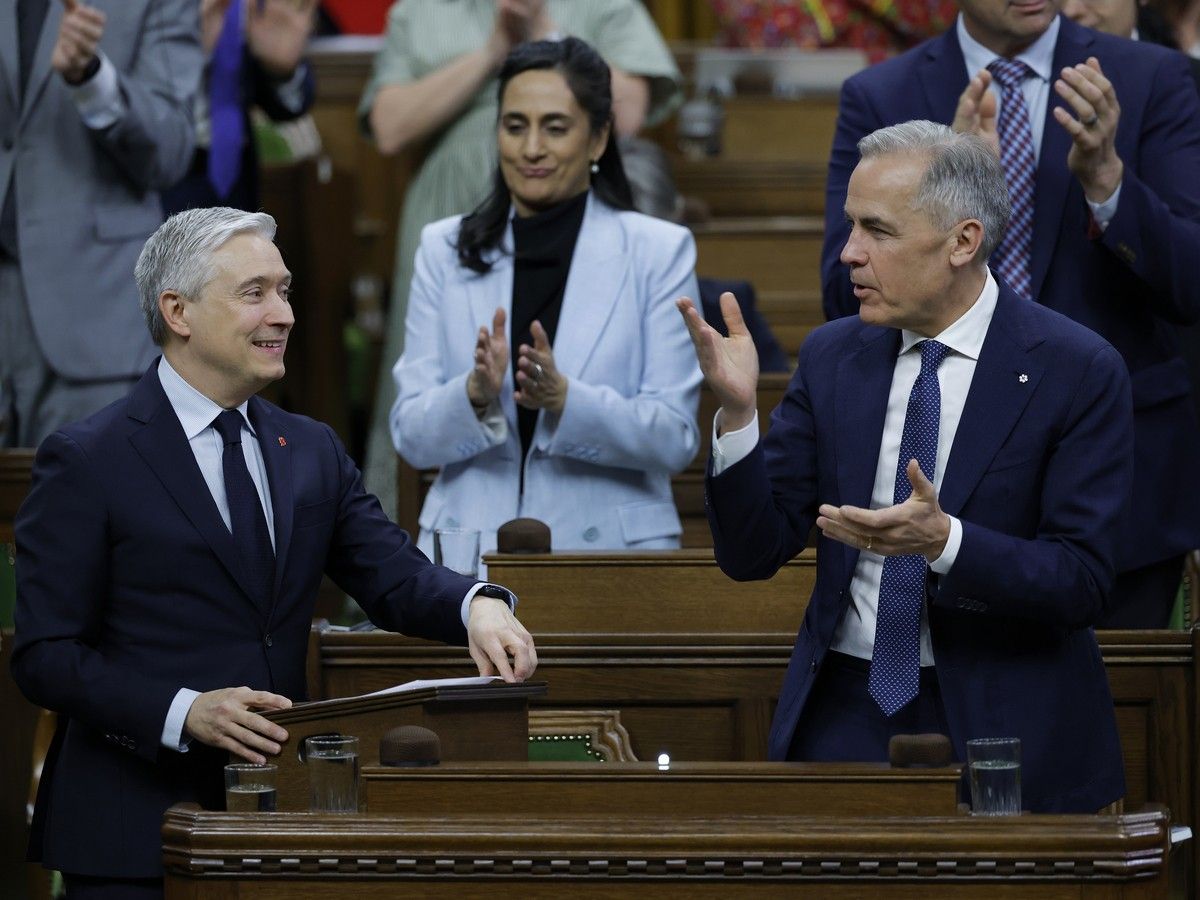
OTTAWA — The Carney government’s recent efforts to make Canadian taxes more competitive have not yet put any significant dents internationally, a new study released Monday has found, putting further pressure on Ottawa to take significant steps in the federal budget that is expected in less than a month.
The annual study, by The Tax Foundation’s Center for Global Tax Policy, gave Canada an overall rank of 15th among 38 industrialized countries — the same as last year but slightly ahead of the United States.
Canada’s score, and its economy, were dragged down largely by high personal income taxes, which ranked 28th overall among Organisation for Economic Co-operation and Development (OECD) countries. Canada ranked 22nd in direct taxation on wages and salaries and 34th on income from capital gains and dividends.
But the national grade was much better on consumption taxes, with Canada placing 8th, despite the national disdain for the GST and its provincial counterparts. The report, titled the 2026 International Tax Competitiveness Index Rankings, also noted that Canada, unlike many countries, does not apply wealth, estate or inheritance taxes.
Not surprisingly, after more than a year of a trade war with the United States, Canada was given a poor grade (28th) in its cross-border tax regime.
The study noted that Canada has taken some steps to make its tax regime more competitive, but that other countries are doing the same. Many countries, the report noted, are trying to rely more on sales and payroll taxes, which are less harmful economically, while cutting corporate and personal income taxes.
“A well-structured tax code is easy for taxpayers to comply with and can promote economic development,” the report says. “In contrast, poorly structured tax systems can be costly, distort economic decision-making, and harm domestic economies.
After a decade of waning competitiveness under former prime minister Justin Trudeau, the Carney government has made it a priority to try to turn Canada’s economic performance around and part of the strategy has been to lower taxes. Ottawa has eliminated the consumer portion of the carbon tax, cut the GST on first-time homebuyers, eliminated the digital services tax cancelled the planned increase in the capital gains inclusion rate and made a tepid cut to personal income taxes.
Ottawa also took a big swing at improved competitiveness last month when it introduced the Building Canada Strong Act, designed to speed up infrastructure projects, improve trade and transportation links and amend labour rules in federally regulated sectors to try to avoid strikes and other work stoppages.
Those changes have not yet been passed into law, so were not included in The Tax Foundation’s study. Its cutoff for policy changes was July.
The U.S., Canada’s predominant trading partner and competitor, ranked 17th in the competitiveness rankings, two spots behind Canada. The U.S. placed eighth overall in corporate competitiveness, and 17th overall on personal taxes: 20th on taxation of wages and 26th on taxes of capital gains and dividends.
The U.S. score was hampered by a very poor rating (37th) on cross-border tax rules, far behind Canada’s 28th place and ahead of only one country.
The Canadian Taxpayers Federation said the new report should be a “wake-up call” for Ottawa to cut both income and business taxes, made even more important by the trade war with the U.S.
“Canadian workers and businesses are fighting to survive tariffs and our governments are making it harder by imposing less competitive business and income taxes than the Americans,” said Franco Terrazzano, the federation’s federal director, in a release.
But Canadian business leaders, according to a KPMG survey released late last week, believe that the Carney government is getting the message, with 71 per cent of respondents saying they’re confident the upcoming budget will help Canadian business
The survey also found that they would like the budget to rank the Canada-U.S. trade conflict (62 per cent) as the most pressing issue, following by attracting foreign investment (44 per cent), accelerating major projects (34 per cent), cost pressures on both businesses and households (34 per cent) and taxes / red tape (26 per cent).
John Fragos, a spokesperson for Finance Minister François-Philippe Champagne, said the government is trying to “derisk” Canada’s tax regime to increase investment and make the G7’s most competitive economy. Recent policies, such as the mega-deduction to make investment more attractive, are important steps towards that goal, Fragos said.
The keys to an effective corporate tax system, The Tax Foundation’s report says, are neutrality and competitiveness.
As tax regimes become more complicated, as most have over time, they become less neutral in that they encourage biases towards, for example, labour over capital investment. And if a country’s corporate taxes are too high, it will drive investment elsewhere, reducing economic growth.
Estonia earned the top spot in the OECD for its tax code for the 13th year in a row. It has a 22 percent tax rate on corporate income that is only applied to distributed profits and a flat 22 percent tax on individual income that does not apply to dividends. Estonia is followed at the top of the rankings by Latvia and New Zealand in the rankings.
France came dead last in the rankings, trailing only Colombia and Italy.
The Tax Foundation’s study compares national tax regimes, not those at the provincial or state levels.
National Post
Our website is the place for the latest breaking news, exclusive scoops, longreads and provocative commentary. Please bookmark nationalpost.com and sign up for our daily newsletter, Posted, here.