Newsletter Subscribe
Enter your email address below and subscribe to our newsletter

Enter your email address below and subscribe to our newsletter

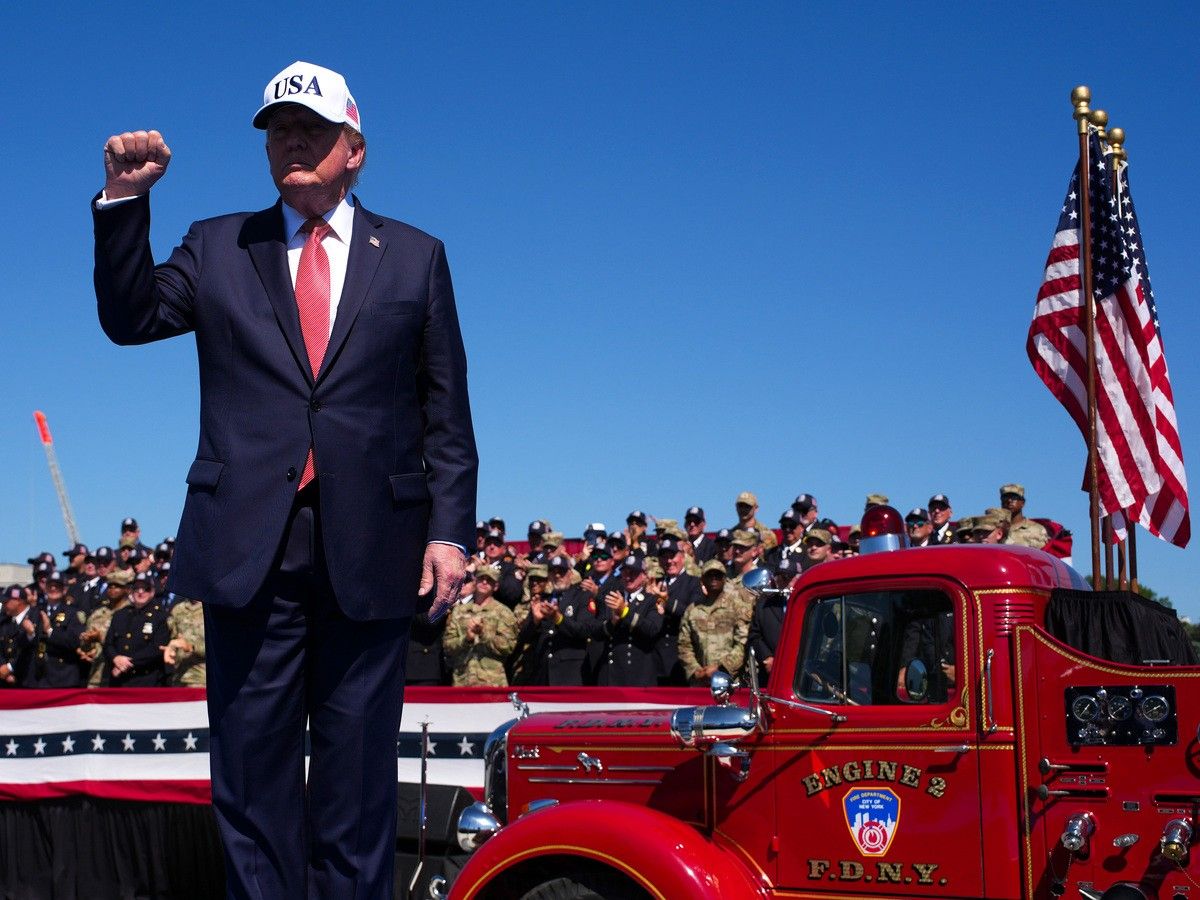
OTTAWA — U.S. President Donald Trump’s tariffs on steel and aluminum have been a “disaster” for the U.S. economy because they’ve fuelled inflation and failed to spur the promised growth in those industries, a new think report has found.
The Montreal Economic Institute report, to be released Thursday, found that steel and aluminum prices in the U.S. market have soared since Trump slapped tariffs on those two critical industrial sectors, while failing to create new jobs.
Not only have the tariffs led to sharply higher steel and aluminum prices, but the two sectors are key inputs in a wide variety of other products, the report found, that have also become more expensive. It’s left consumers and industrial buyers facing higher price tags on autos, aircraft, construction, machinery, and a wide range of other products.
“The United States has imposed on itself a historically large price shock with little protected sector employment or output growth to show for it,” concluded the report, titled Tariffs Deliver a Price Shock, Not an Industrial Revival.
The study, which is in line with economists’ broader analysis of tariffs, found that steel prices in the U.S. have jumped 33.9 per cent since February 2025, while aluminum prices have increased by 58 per cent. By comparison, prices in the Canadian market for those two metals have increased by only one and 26 per cent respectively.
Trump imposed 25 per cent tariffs on steel and aluminum from a wide range of countries, including Canada, in March of last year. A few months later, those tariffs were increased to 50 per cent.
The policy’s desired benefits have been modest at best. During that 19-month period, U.S. steel production has gained 7.6 per cent, with a 0.7 per cent increase in employment. Aluminum production, meanwhile, fell 0.1 per cent, while the number of jobs in that sector increased by just 0.6 per cent.
“Trump’s tariff policy has not helped revitalize the industry as promised,” said Joseph Steinberg, an economics professor at the University of Toronto and the primary author of the study. “I don’t think a single economist will say tariffs on metal is a good idea.”
And consumers and those industries that buy steel and aluminum for their own products have paid the price, according to Steinberg’s study. Without any changes to the inputs, the new steel tariffs alone would mean cost jumps of 6.5 per cent and 13 per cent, for example, in the auto and fabricated metals sectors.
Jamie Tronnes, executive director of the U.S.-based office of the Canadian think tank the Macdonald-Laurier Institute, said she’s not surprised by the report’s conclusion and added that the tariff-fuelled price hikes on steel, aluminum and other inputs are also affecting investment decisions in the U.S. In some cases, she said, producers have decided to buy from China and elsewhere, instead of building or expanding their own operation in the U.S. because of the increased costs of construction.
“It makes investors want to stay away.”
Steinberg said the only winners from Trump’s tariff policies have been the U.S. government, which has raked in billions at the country’s international borders, and incumbent U.S. producers in the steel and aluminum industries. “They’re making a lot of money.”
While steel tariffs make little economic sense, he said, the aluminum tariffs make even less.
The Iran war and subsequent shipping problems in the Strait of Hormuz have also contributed to dwindling supplies and rising prices in the aluminum market. Emirates Global Aluminum leans on its country’s abundance of natural gas to power its smelters to produce almost as much aluminum as Canada. But like many other exports from that region, the United Arab Emirates company has had a difficult time in recent months getting its product to markets such as North America.
Trump’s tariffs remain a contentious subject and a key source of friction in U.S. relations with Canada and many other countries. While some previous tranches of his tariffs have already been ruled illegal by American courts, a new lawsuit challenging the 50 per cent tariffs against Canada was launched this week by New Jersey food importer Gellert Global Group. The company imports Canadian cheese, which is on the list of products, along with furniture, clothing, cement, hockey sticks and other dairy products, that were hit by new tariffs in August.
Trump then escalated the conflict last month by announcing an outright ban on nearly $1-billion worth of Canadian exports, including booze, motorcycles and more dairy products.
In each case, Trump used section 338 of the Tariff Act of 1930, never previously used in a trade dispute or tested in court, to impose the tariffs.
Canada and the U.S. appeared to be close to a new trade deal in late August, but talks fell apart after days of intense negotiating. Negotiators from the two countries remain in contact but there have been no reports of a deal being close.
The U.S. tariffs remain a major sticking point in the talks, while rising consumer prices have been a major issue as Americans are poised to vote in mid-term elections in early November.
Despite the challenges, Canada seems willing to stick by its steel and auto sectors. Prime Minister Mark Carney and Ontario Premier Doug Ford announced Wednesday a new $9-billion fund, with more than $5-billion of it going to support steel mills in Ontario that have been affected by the Trump tariffs.
National Post
Our website is the place for the latest breaking news, exclusive scoops, longreads and provocative commentary. Please bookmark nationalpost.com and sign up for our daily newsletter, Posted, here.