
Newsletter Subscribe
Enter your email address below and subscribe to our newsletter

Enter your email address below and subscribe to our newsletter

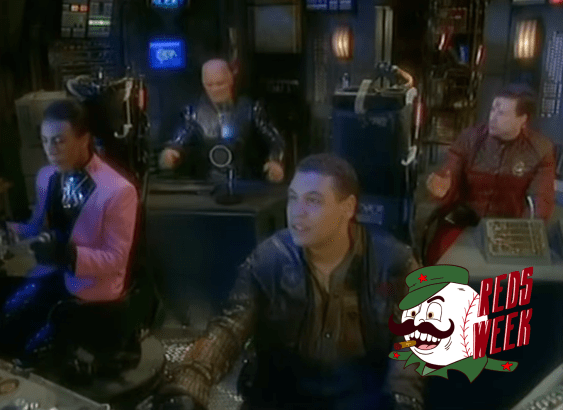
Post-apocalyptic comedies have not been in vogue since the notably less comic actual apocalypse has started filling our windscreens. Even moderately depraved cultural products like Survivor and Squid Game have stopped short of ritually killing and eating lesser characters as part of the competition. Then again, those shows don’t pretend to be comedies, and so could easily make cannibalism part of the show without a sizable loss in audience. We bring that up to open your minds to the idea of the Survivor contestants rising up as one and finishing off Jeff Probst with a nice coconut chianti once and for all. Now that would be comedy.
But because that hasn’t happened (yet), we can say that this genre pretty much topped out with Red Dwarf, the hydraheaded British comedy of yesteryear that took the post-apocalypse and pushed it into a corner in which there was only one human left, plus a hologram, a cat, a neurotic robot butler, a ship-piloting head, a brief unrequited love interest, and a few spare characters here and there. Mostly there, because Earth was not part of the universe Rob Grant and Doug Naylor plotted out when they first pitched an idea they had originally assembled as a series of sketches for the radio called Dave Hollins: Space Cadet. They proposed it to a typically obstinate BBC programming department—typical, because all programming departments are preternaturally wired to say no to anything that hasn’t been done six other times before. It was eventually greenlit by BBC North in Manchester through the persuasive powers of Grant, Naylor, and producer Paul Jackson, and debuted on BBC Two in 1988. Yes, that’s 38 years ago. What of it?
The broader plot, which any good smeghead (more on that in a bit) could recite in their sleep, is simple enough. It is certainly unencumbered by a surfeit of extraneous characters. A human technician on an outer space salvage ship who is known mostly for being an unambitious slob is punished for smuggling a cat on board and then for refusing to surrender said cat; he is imprisoned in stasis for what is supposed to be 30 days. While he was busy being inert, the ship incurs a radiation leak that kills everyone on board except him, and the ship’s computer does not release him until the radiation levels are once again acceptable for humans—which is three million years later.