Newsletter Subscribe
Enter your email address below and subscribe to our newsletter

Enter your email address below and subscribe to our newsletter

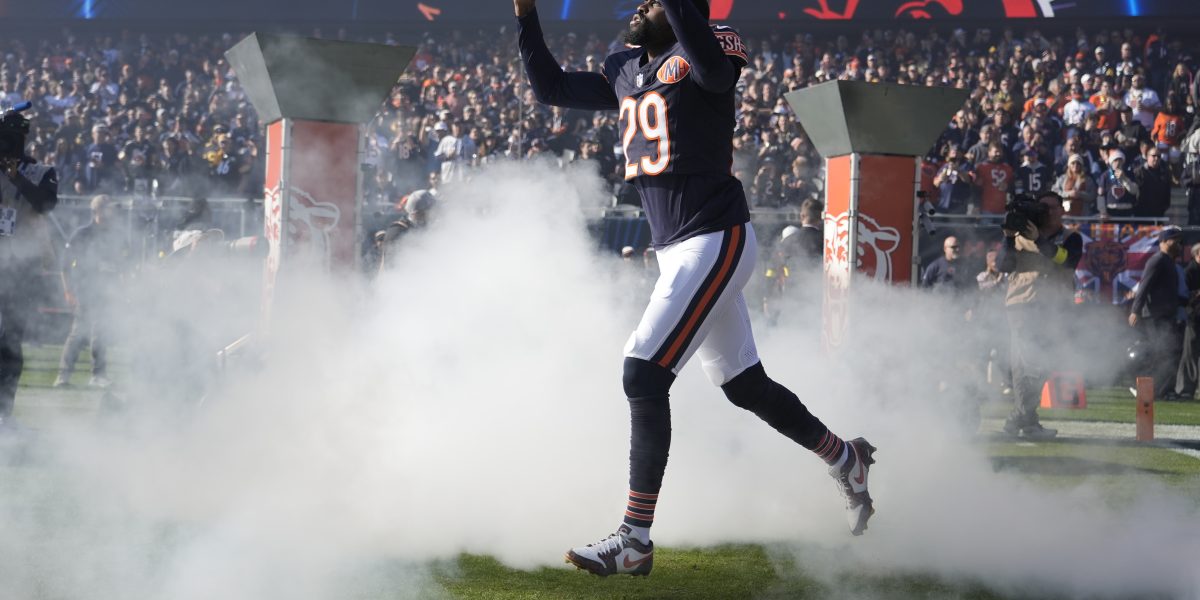

The Green Bay Packers followed a tough 20–17 road loss to the Detroit Lions with a rebound 27–19 victory over the Carolina Panthers, testing both sides of their deep passing game. Against Detroit, Jordan Love threw for 274 yards and two touchdowns, but a costly interception and Detroit’s ability to limit explosive downfield plays left Green Bay coming up just short. Days later against Carolina, Love and the offense regained rhythm, capitalizing on key red-zone conversions and a balanced attack to secure the win.
This article examines how Detroit contained Green Bay’s deep passing game compared to how Carolina surrendered scoring drives, breaking down what the underlying metrics say about scheme execution versus personnel. It also considers the tactical adjustments head coach Matt LaFleur made between games and what the upcoming schedule will reveal about Green Bay’s long-term consistency.
Green Bay exposed Chicago’s problems defending deep passes in its 31–7 win on October 11. Jordan Love completed 25 of 31 passes for 367 yards and two touchdowns, according to Pro Football Reference’s game statistics. Christian Watson caught six passes for 143 yards, including 42- and 53-yard touchdowns.
Watson’s first touchdown showed how pre-snap motion and a seam route can test a defence. He crossed the formation before running upfield, and Love found him for a 42-yard touchdown. The Week 5 play breakdown details the play.
Green Bay attacked deep again early in the third quarter. Love connected with Watson for a 53-yard touchdown, extending the Packers’ lead. The Packers’ game report also records a long pass to J. Michael Sturdivant that was ruled out because of offensive pass interference before Watson’s score.
The repeated deep completions raise questions about Chicago’s safety positioning and coverage assignments. The results are clear, but further film analysis is needed to establish whether the breakdowns came from missed assignments, poor positioning or individual matchups.
That distinction became even sharper over Green Bay’s subsequent games against the Detroit Lions and Carolina Panthers. Detroit demonstrated how disciplined two-high shell structures and physical boundary play can disrupt Green Bay’s downfield timing, keeping the top on the defense and forcing Jordan Love to check down in a tight 20–17 loss. In contrast, Carolina fell victim to the same coverage lapses that plagued Chicago: blown bracket responsibilities and late safety rotations allowed Christian Watson to rack up 113 yards and Love to strike for three passing touchdowns in Green Bay’s 27–19 victory. Together, both matchups prove that while Green Bay’s explosive vertical concepts punish undisciplined secondary communication, sound deep-coverage technique remains the blueprint to neutralizing it.
Chicago’s deep-pass problems may stem from its coverage scheme, execution or a combination of both. Reviewing safety positioning and pass-rush timing can help show where the defence is breaking down.
A single-high safety structure leaves one safety deep in the middle, with cornerbacks responsible for more outside coverage. This can support pressure near the line but leave the sidelines exposed if receivers beat their matchups. A two-high structure uses two deep safeties to cover more ground, but it can open space underneath and force the front seven to stop shorter passes.
Allen must balance those responsibilities without giving quarterbacks clear opportunities to attack deep. Film review should establish whether Chicago’s safeties maintained the right depth, responded to route combinations and communicated when receivers crossed into another defender’s zone. Without clear footage of a missed assignment, it’s premature to blame a specific player or coverage call.
Deep coverage becomes harder to sustain when the pass rush fails to disrupt the quarterback’s timing. If Love has time to scan the field and wait for Watson to gain separation, even sound coverage can break down. Chicago must assess whether its four-man rush can generate pressure consistently or whether certain passing situations call for selective blitzes.
Blitzing can force quicker decisions, but it also removes defenders from coverage. Allen needs to determine whether the rush is losing individual matchups, the scheme needs different pressure packages, or the coverage is failing to hold up long enough.
Green Bay’s passing attack produced more yards than Chicago had allowed in any of its first four games. The table compares the Packers’ performance with the Bears’ defensive averages across their first five games, using Chicago’s game log and the official Week 5 game center.
Green Bay gained 142.6 more net passing yards than Chicago’s game average. The Packers also exceeded the Bears’ average total yards allowed by 116.6 yards. Chicago recorded slightly fewer sacks than its average and allowed a higher third-down conversion rate. These figures show a poor defensive performance, though they do not prove that deep coverage alone caused it. Away from the football statistics, readers can learn more about casino promotions at https://automatenspielex.com/en/casino-bonus/50-no-deposit.
Chicago’s five turnovers gave Green Bay extra opportunities and left the Bears chasing the game. The Packers led 14–0 before Chicago scored, then added 17 points in the second half. A lead can give an offense more room to take deep shots because an incompletion carries less risk when the team is ahead. Watson’s 53-yard touchdown in the third quarter came in that context. His 42-yard touchdown did not. It capped a 91-yard drive on Green Bay’s first possession, so the game script cannot explain every deep completion.
Overall time of possession was close, with Green Bay holding the ball for 30:24 compared with Chicago’s 29:36. The defense did not carry a much heavier workload across the full game. The first quarter was different: Green Bay outgained Chicago 130 yards to 9 and held the ball for 11 minutes, 45 seconds. That put early pressure on the Bears’ defense. The turnovers and growing deficit then made an already difficult defensive performance harder to recover from.
The box score shows the damage, but film review can help explain how Chicago allowed long completions. Coaches should examine four details:
These questions can help the staff identify execution problems without assuming every long completion came from the same mistake. The answers will matter against Atlanta, where Michael Penix Jr. and Drake London will test Chicago’s coverage assignments and tackling.
Allen needs to address the breakdowns against Green Bay without creating new weaknesses. Three adjustments could help Chicago improve its defensive performance.
Fans should look for fewer long completions, earlier pressure and fewer coverage breakdowns. Better tackling will also matter if Atlanta relies on short passes to move the ball.
The Falcons game will not settle every question about Allen’s scheme. It should show whether Chicago has corrected its mistakes or remains vulnerable to deep passes.
Dennis Allen has limited time to address Chicago’s defensive issues. The Patriots game will test whether he can respond to the problems exposed by Green Bay, according to the Chicago Sun-Times.
Personnel adds to the challenge. Allen does not need to overhaul his defence after one poor performance. He needs to identify the breakdowns and make targeted changes. The Patriots’ game should show whether Chicago can respond before opponents make the weakness a recurring target.
The post Why the Bears’ Deep-Pass Defense Is Becoming a Problem for Dennis Allen appeared first on ChiCitySports.