Newsletter Subscribe
Enter your email address below and subscribe to our newsletter

Enter your email address below and subscribe to our newsletter

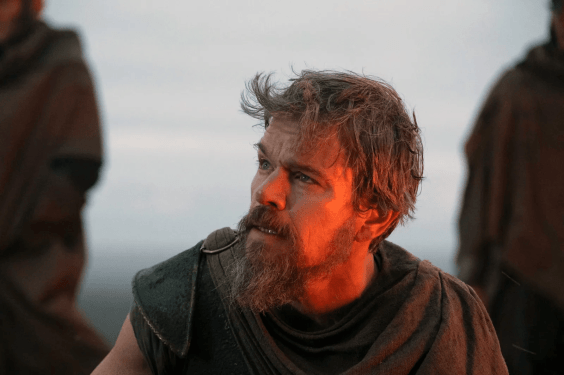
Just as every film is really about filmmaking, isn’t every film also an adaptation of Homer’s The Odyssey? The hero’s journey. The antihero’s journey. The road trip movie. The war movie. Movies set in space or at sea, in the middle of a treacherous jungle or a barren desert. The story of Odysseus is a foundational myth, which makes the proposition of an actual movie of The Odyssey seem, among other things, redundant. And that’s before you get to the near impossibility of filming it.
But tell Christopher Nolan it’s impossible to do something, and he will only want to do it more. And so we have his vision of The Odyssey, a massive, operatic cinematic experience mostly about the story’s own operatic massiveness. In many ways, Nolan especially has always been making The Odyssey from the inside out, obsessed as he has been with his own harrowing quest to make big, majestic spectacles. It makes sense for him to just finally go at it for real. Nolan heightens and demystifies the mythology in equal measure, and the result is a throwback to the epic cinematic expressions of David Lean and Fritz Lang. It’s also a treatise on Nolan’s favorite subject: history’s great men and the messes they make.
The Odyssey is, of course, the story of wily Odysseus (Matt Damon) and his 20-year journey back home following the Trojan war. He and his men battle the currents, run into giants, cannibals, witches, sirens, and his own dead soldiers in his bid to get back to his wife Penelope (Anne Hathaway) and son Telemachus (Tom Holland), who are barely holding his kingdom together as the many suitors vying for Penelope impose their will in Odysseus’s absence. Damon’s Odysseus is a wizened general, weary after another battle fought on behalf of King Agamemnon (Benny Safdie). He’s a serious, brilliant man, but arrogant in the face of mercurial Gods, which leads to much of his suffering.