Newsletter Subscribe
Enter your email address below and subscribe to our newsletter

Enter your email address below and subscribe to our newsletter

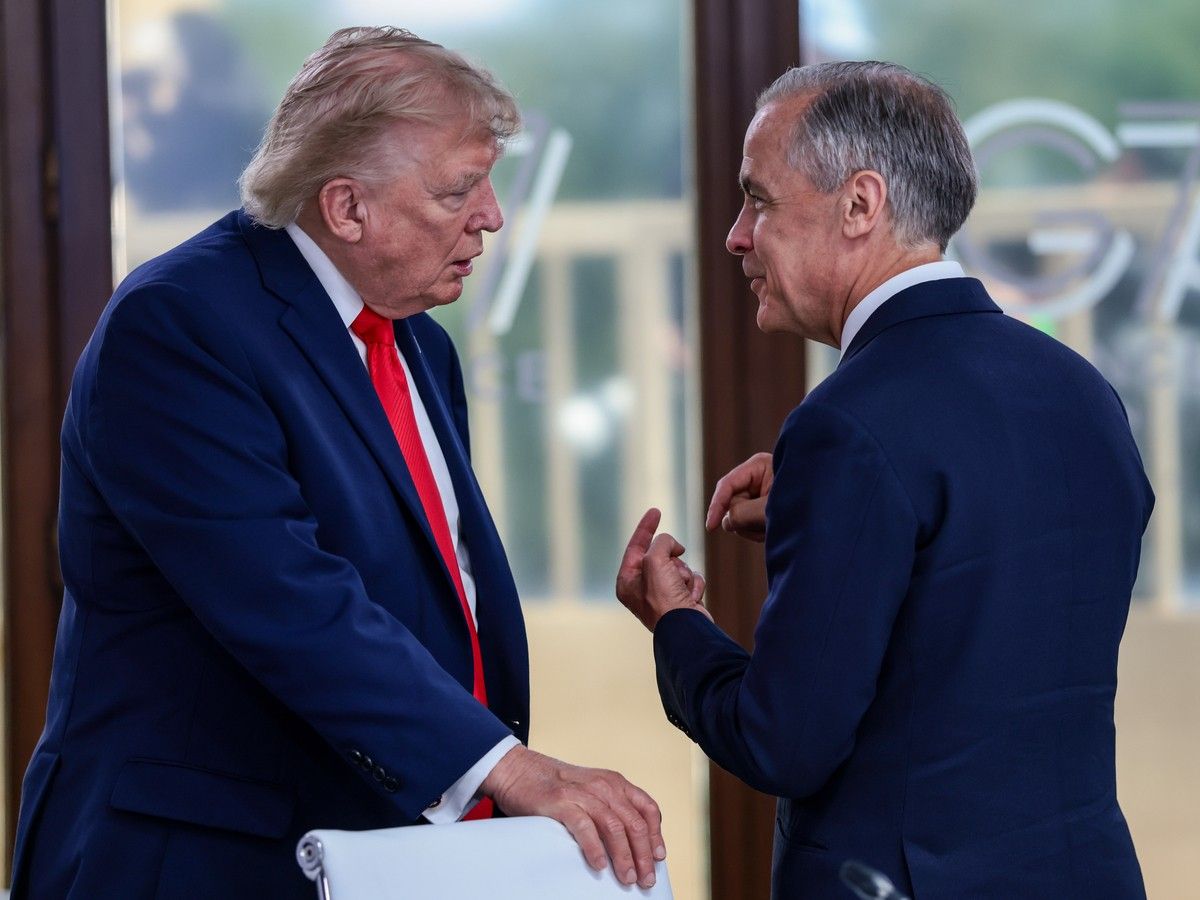
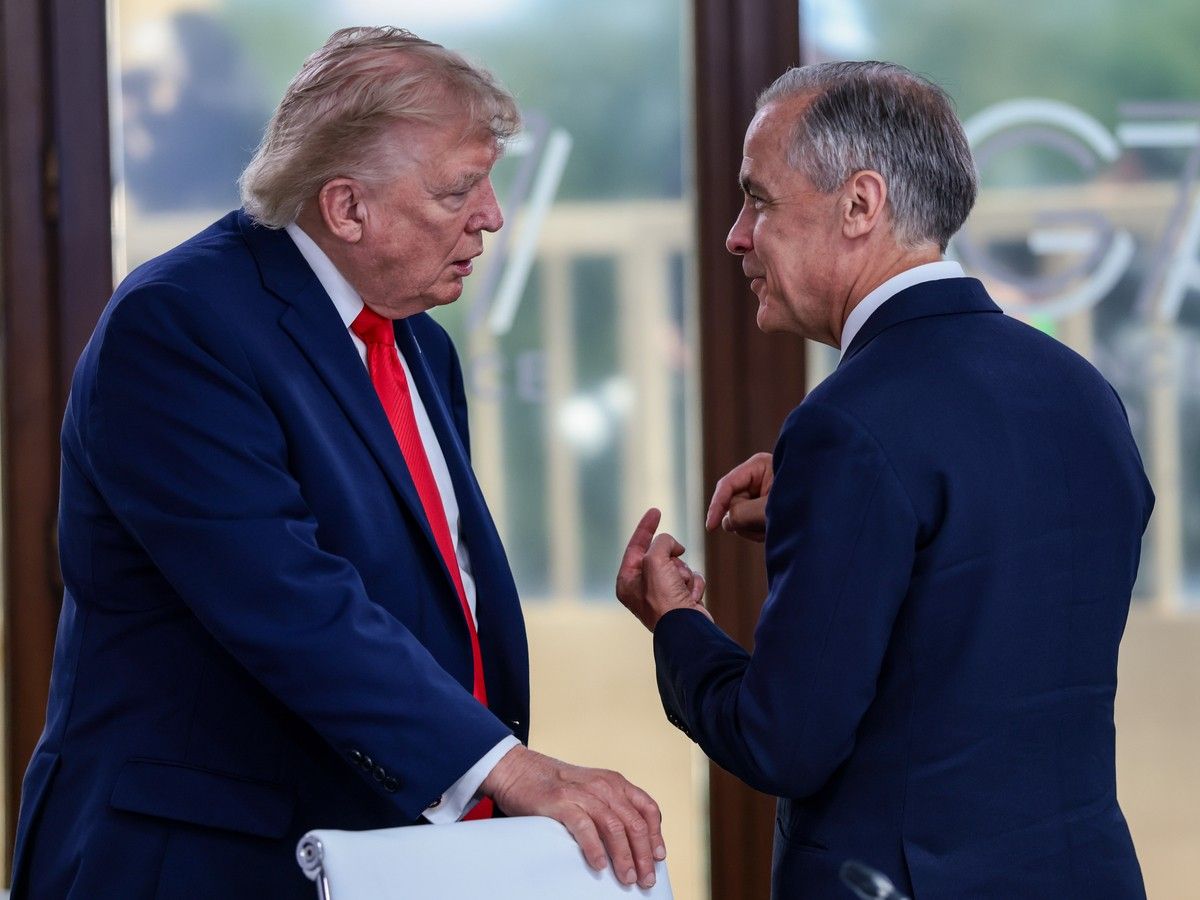
WASHINGTON, D.C. — What a difference a few days make. Rather than cutting the deal U.S. President Donald Trump hailed early last week, the United States and Canada entered an escalating tariff conflict over the weekend that threatens to become a full-blown trade war.
Prime Minister Mark Carney pulled his negotiating team back from Washington late Friday and has threatened dollar-for-dollar retaliatory tariffs in response to the newly imposed 50 per cent Section 338 tariffs Washington placed on about $28 billion worth of Canadian exports to the U.S. on Saturday.
The relationship “is worse than it has been at any point in my lifetime, and I think you you’re digging out your history books to go back to the period before the First World War when things between Canada and the United States were so rocky and tense and characterized by what you have to call a trade war of this magnitude,” said Graeme Thompson, a senior analyst with the Eurasia Group.
Since the talks broke down, both sides have pointed fingers over last-minute demands and surprises. Trump has since posted on social media about Canada being unfair toward the United States, and on Monday, he threatened to raise U.S. tariffs on imported cars, trucks, auto parts and steel from Canada to 50 per cent, starting in January 2027.
“Canada has been ripping off the United States of America for years. Their ridiculously high tariffs on our Farmers and farm products has made life impossible for these great American Patriots, and has long created a 60 Billion Dollar Deficit between our two Countries. Not sustainable, and NOT ANYMORE!” he posted with the tariff threat.
That threat comes with a long runway, as the proposed duties would not hit for more than four months, leaving time for a possible return to the negotiating table.
Thompson said that offered a little room for optimism.
“One thing that is hopeful for de-escalation is that the president has been relatively constrained, for as far as it goes for him, in his public comments,” he said. “And the threat of 50 per cent tariffs out four-and-a-half months from now is by far not the worst reaction that Canada might have got from this administration.”
For now, Ottawa and Washington appear headed toward further escalation. But could there still be an off-ramp? Can both sides get back to the negotiation table before the 338 tariffs do too much damage — or before Canada’s retaliatory duties or Trump’s January tariffs take hold?
Some trade watchers see a narrow, but rapidly closing, window for de-escalation.
“I think there is a window, particularly now, between now and Sept. 8, when the Canadian countertariffs are scheduled to come into effect,” said Wendy Cutler, senior VP at Asia Society Policy Institute and a former trade negotiator at the Office of the U.S. Trade Representative.
“I think this is the window, if we’re going to find an off-ramp, [when] it will be the easiest.”
Thompson said selecting Sept. 8 may have been intended to leave “time for cooler heads to prevail.” But it also gives Canada time to be strategic and to design a retaliation list around goods that are politically important in key swing districts.
“I think the other reason is that Canada is going to do its due diligence on which sectors might be targeted by those new retaliatory tariffs, and will try to identify products that are of particular importance to swing districts in the U.S. House and swing states in the U.S. Senate, which may be in play in the midterm elections.”
He noted that Ottawa would likely favour products for which Canadians have easy alternatives, such as U.S. alcohol.
“That’s been Canada’s approach in the past,” he said.
As for the likelihood of finding an off-ramp, however, he said, “I think the challenge is that this government in Washington does not want to compromise on its vision of tariffs and its restructuring of the U.S. economy in ways that we now know and understand.”
“That is their right, but it means that it will be very difficult for Canada to accept some of the conditions that would be necessary for a deal to be reached …”
But Canadian retaliation is likely to invite a further U.S. response, making any eventual settlement more difficult.
“Once Canada puts in counter tariffs, I think the U.S. will respond quickly with its own set of escalatory measures. And once you get into that escalation spiral, it just gets harder and harder to reverse the direction,” warned Cutler.
Cutler said a plausible off-ramp could begin with a narrower deal, stripping out issues that accumulated in the final days of negotiation.
“I think what happened was, over time, more and more issues were added,” she said. “Maybe if they went back to the bare bones of what the U.S. tariff threat was, and given that Canada, through these negotiations, did agree, it seems to address U.S. concerns there, I think a scaled-back deal would be one way to look at this.”
She also suggested both sides could delay their tariffs for 90 days, giving negotiators more time to try again.
Thompson said that kind of deal would likely require back-channel talks before a leader-level intervention. While a call between Trump and Carney could help, he said it would be more productive if trusted intermediaries had already established a basis for an agreement.
“Something has got to be done behind the scenes and quietly rather than out in public, because both sides publicly have an incentive to escalate,” Thompson said.
Cutler seemed to agree, noting that both governments may need trusted emissaries working alongside their trade teams — as Jared Kushner did with then-U.S. trade representative Robert Lighthizer during the final phase of the original CUSMA talks.
“Both sides should pick emissaries that have the president’s and prime minister’s trust to work with the trade ministers to try and get some kind of deal over the finish line,” she suggested.
Cutler said she sees little evidence now of the political will required for a resolution.
“I’m not sensing that right now,” she said. “But … as each day goes by, I’m hoping cooler heads will prevail because this is a lose-lose outcome for U.S. and Canadian businesses and consumers, and our overall relationship of two neighbours that have been historically very close.”
National Post
Our website is the place for the latest breaking news, exclusive scoops, longreads and provocative commentary. Please bookmark nationalpost.com and sign up for our newsletters here.