
Newsletter Subscribe
Enter your email address below and subscribe to our newsletter

Enter your email address below and subscribe to our newsletter

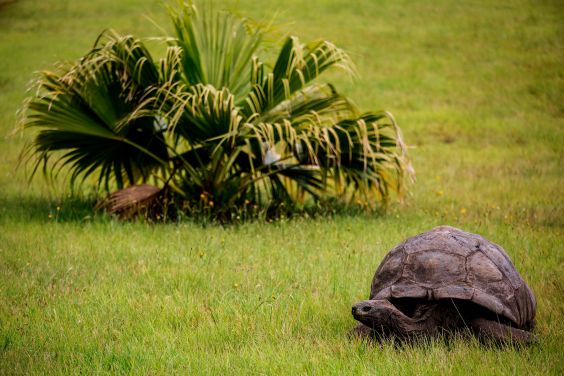
Geriatric Jonathan has made the news again, this time for having his genome sequenced. The Aldabra giant tortoise, who is estimated to be 194 years old, is the oldest known land animal on the planet. (The ocean, which teems with glass sponges thousands of years old and Greenland sharks that have been swimming for centuries, takes longevity to different extremes.) As such, it is understandable why scientists would want to sequence Jonathan’s genome. He’s lived a long freaking time.
Yet many of the headlines heralding this new inquiry into Jonathan’s venerable age, which was published in Science Advances, have made me laugh with their implications that we may follow in Jonathan’s closely spaced footsteps. Consider Reuters: “A 194-Year-Old Tortoise, World’s Oldest Land Animal, May Hold Clues to Longer Life.” Or take The Times: “Has 194-Year-Old Tortoise Jonathan Taught Us the Secret to Longer Life?” What are the clues and secrets to Jonathan’s extremely long life? Mainly there is one: Jonathan is a turtle.
I can hardly blame these publications for this headline format; the blueprint was in the press releases issued by the University of Cambridge and Vanderbilt University, both of which framed Jonathan as potentially holding the secret to a long and healthy life, which he very well could! The headline in IFLScience—”We Finally Know How Jonathan The Tortoise, The World’s Oldest Land Animal, Is Still Alive And Kicking At 194″—is easily answered the same way. Jonathan the tortoise is alive and kicking because he had the good luck to be born an Aldabra giant tortoise. Were Jonathan a human guy he would not be alive.