Newsletter Subscribe
Enter your email address below and subscribe to our newsletter

Enter your email address below and subscribe to our newsletter

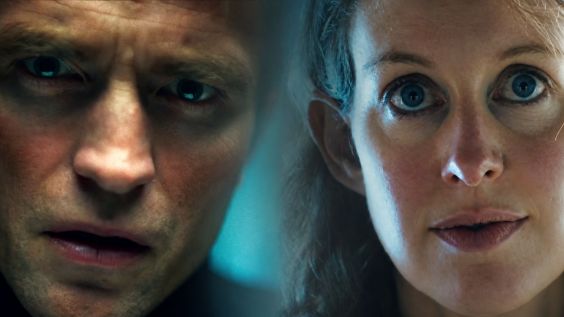
Given that we’re all being filmed and filming ourselves all the time, how can it be exploitative to put someone on camera? The two movies this fall directed by Lance Oppenheim, Primetime and You Can See Everything (which he co-directed with Nathan Fielder), explore voluntary surveillance and the ethics of non-fiction. Together, they share an interest in the violence and vulnerability of seeing and being seen in a sickly recursive popular culture.
Oppenheim was precocious: His first feature-length film, Some Kind of Heaven, with an executive-producer credit from Darren Aronofsky, premiered at Sundance on January 26, 2020, Oppenheim’s 24th birthday. He was fresh out of Harvard, where he studied under the film diarist Ross McElwee. At a time when consumers were buying new, smaller cameras and making home movies, McElwee turned his life into a sprawling documentary project, interweaving personal milestones with larger social concerns across, such as his masterpiece, the 1985 New South dating odyssey Sherman’s March, and 1993’s Time Indefinite, about the death of his father and the birth of his son. By the time Oppenheim met him, McElwee was at work on Remake, his most recent film, which draws from his many hours of footage of his son from his birth to his tragic early death, and in which McElwee expresses remorse over casting his family as characters that he misinterpreted.
In one way or another, Oppenheim’s films also live with the consequences of throwing people into the spotlight. The feature-length documentaries he made in his 20s, Some Kind of Heaven, Spermworld, and the three-part HBO series Ren Faire, were about aging and loneliness: retirees in The Villages, a sprawling community in Florida, spending their golden years indulging in precarious hedonism; compulsive sperm donors; the Lear-like elderly “king” of a Texas Renaissance Faire, and the children and employees vying to inherit it, should he ever step down. Oppenheim’s subjects are all, in one way or another, clinging on, but they’re fully integrated into a uniquely heightened aesthetic scheme. Intense conversations occur in tight, frame-filling closeups, under stylized lighting and with faces tinted in aggressive color grading that strains against accepted notions of verisimilitude, as if these people are offering up their lives to the camera and losing control of the narrative. Shot-reverse shot setups suggest the conventional camera coverage and editing rhythms of a narrative film; no moment of these characters’ lives is so abject that it isn’t being filmed with an audience in mind.