Newsletter Subscribe
Enter your email address below and subscribe to our newsletter

Enter your email address below and subscribe to our newsletter

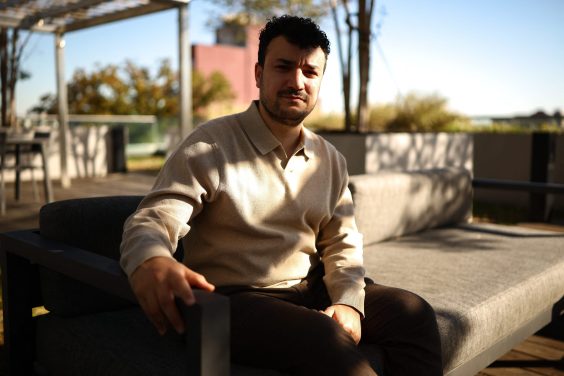
I remember the pit in my stomach as I woke up to the texts telling me that Mahmoud Khalil had been kidnapped. I remember the terrifying 48 hours when we had no idea where he had been taken—just that the President wanted to make an example out of him. I remember crying on the phone to my dad, telling him I had lost all hope. It was difficult to relive, and in preparing for this interview, I wanted to do Mahmoud justice.
Mahmoud was central to the community of activists at Columbia University. He was the person we looked to for calm and guidance in the midst of upheaval. When he was taken, we all felt his absence. We were mostly kids. We struggled not just with the question of how to push back against the intensity of encroaching fascism and the weight of the federal government’s crackdown on free speech, but how to do so without Mahmoud. He knew the university rulebook front and back. He knew all of the administrators and had a friendly rapport with them (or so we thought). He would calm us down when it felt like everything was falling apart. All of a sudden, he was thousands of miles away at a detention center known for inadequate medical care, unsafe food and living conditions, and abusive tactics by guards. And we remained inside the gates of the place that had allowed it to happen, as the retired Homeland Security Secretary, former IDF intelligence officer, and war profiteers who made up the administration and board of trustees wrung their hands and told us they were powerless.
Mahmoud’s book No Land to Stand On is a devastating and essential story of his time in ICE detention, his childhood in Syria, and his experience as a negotiator at Columbia. In typical Mahmoud fashion, he insists that there are people far braver than him, who have made more sacrifices than him. He wants you to know the stories of the men he was detained with. They too were separated from their families and held without any charge.