Newsletter Subscribe
Enter your email address below and subscribe to our newsletter

Enter your email address below and subscribe to our newsletter

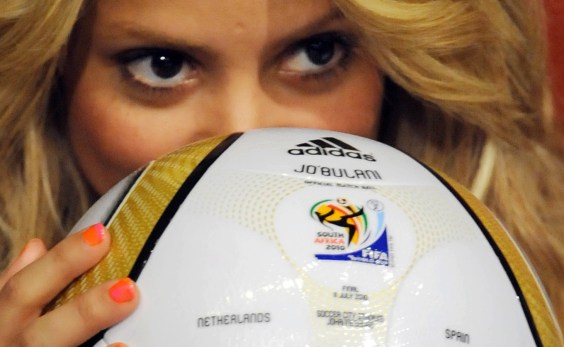
Dai dai. Ikou. Dale, allez, let’s go. So says Shakira in the chorus of the 2026 Official World Cup Song “Dai Dai,” in which she links up with Burna Boy to express the same sentiment in five different languages. Why find the universal in the specific when you can attempt to recreate the magic of your 2010 World Cup hit “Waka Waka” by finding the universal in the universal? “No one’s getting tired, I know/‘Cause you got that fire, ayo” indeed. One Italian sportswriter described the lyrics of “Dai Dai” as “so generic they reach an almost spiritual level of abstraction” and compared listening to “contemplating a geometric shape.”
It’s a tragedy that “No matter black, white, or beige/Chola or Orient made” was already featured in another anthem, and so could not be included in “Dai Dai.” The feeling, though, is the same. At one point in the song, Shakira sings the names of various iconic players: Pelé, Maradona, Maldini, Romário. What better way to celebrate the spirit of the tournament than with a list of those who, yes, have definitely played the game of soccer! She repeats the trick by listing a bunch of the participating countries, like a drunk uncle who hasn’t prepared a wedding speech and resorts to naming all the places people have traveled from to attend. “We got Wilmington, Delaware in the house tonight! Thanks for coming all this way!” As always, even supposedly apolitical World Cup choices are rife with politics; Shakira would never sing “Iran” in the song, despite its supple rhyming potential.
The utter unremarkability, the total insipidness of “Dai Dai” got me thinking about the genre of World Cup songs: Has it always been this bad? Here’s the answer, in a brief history of the music of the men’s World Cup.