Newsletter Subscribe
Enter your email address below and subscribe to our newsletter

Enter your email address below and subscribe to our newsletter

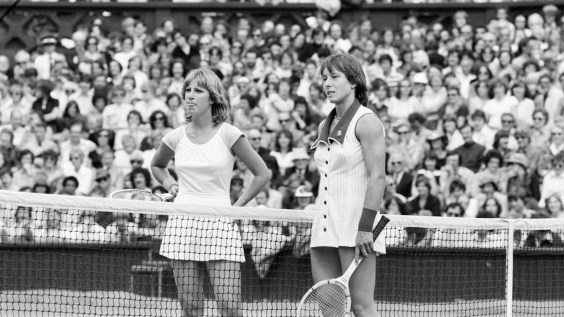
There’s a bit of symmetry in the new Netflix documentary The Final Set, a chronicle of the epic, tumultuous rivalry and friendship between Martina Navratilova and Chris Evert. Long removed from their legendary careers, both women were diagnosed with cancer in recent years: ovarian for Evert, breast and throat for Navratilova. After beating back the disease, they each go in for a scan. Just before sliding into the tubular machine, Evert hesitates, then removes her cap for comfort, revealing her chemo-bald head. Navratilova follows the exact same instinct at her appointment, taking off her shoes at the last second. In both cases, the discarded article of clothing lay nearest their greatest on-court asset, as portrayed in the doc. Evert is praised for her unwaveringly calm mindset; Navratilova, for her indefatigable legs. The Hall of Famers ended their careers in a deadlock at 18 major titles. Their friendship has survived major finals, sabotage, and now bouts with cancer. When both scans come up clean, this staunch atheist’s mind admitted the words “bound souls.”
The Final Set, directed by Rebecca Gitlitz, is the latest in a growing line of Netflix tennis documentaries. You had the discontinued Break Point, a messy Carlos Alcaraz in My Way, and last month, Rafa, a revealing look at Rafael Nadal’s physical and mental trauma. There’s reason to think this new entry into the online streaming canon is the best yet. Navratilova and Evert’s narrative is better and more complex—they played 80 damn times, 60 of those in finals—with higher stakes than Alcaraz trying to navigate burnout or even Nadal breaking his body to prolong his career.
Eighty matches! Evert favored a baseline-heavy style, with creative passing shots to defuse her rival’s net-rushing and skillful, dipping volleys, though both dipped into the other’s bag plenty in search of successful adjustments. Navratilova edged the head-to-head 43-37, a narrow margin that disguises a number of fascinating twists. Evert was first to hit her prime and ran out to 20-5 and 30-18 leads in the rivalry. The friendship flourished during these Evertian summers, generating shared practice sessions and even a doubles partnership. In a moment of frankness, Chris admits it was easy to maintain a relationship during these years because she was better; Martina’s observation that Evert “was only really close friends with players who could never beat her” has some bite. Once Navratilova began turning the tide, Evert broke off their occasional doubles partnerships.