Newsletter Subscribe
Enter your email address below and subscribe to our newsletter

Enter your email address below and subscribe to our newsletter


Never let it be said that the Chicago Cubs aren’t a very interesting team.
This Cubs squad has been nothing but up and down, hot and frigid, all year so far. When fortune shines, it’s as bright as the Wrigley afternoon sun. When bad luck comes around, it’s as dreary and overcast as an early spring rain delay at the friendly confines.
More News: Chicago Cubs GM opens up about trade deadline finances and the tough decisions ahead
These last two games kind of perfectly encapsulate what the North Siders have been suffering through all season.
On Wednesday, they blasted the San Diego Padres 23-3 in an absolute orgy of offense. On Friday, though, they were the ones being blasted in a 17-1 drubbing at the hands of the division rival St. Louis Cardinals.

More News: Chicago Cubs: Wicks sent down, Pomeranz called up ahead of Cards series
The analysts and stats companies were quick to dig up the numbers proving this to be an unprecedented two-day change from dominance to utter decimation.
Per OptaSTATS:
The Cubs are the second team in MLB history to win one game by 15+ runs but then lose their next game by 15+ runs.
The other was the Boston Beaneaters from September 10-11, 1894 – a 25-8 win followed by a 17-2 loss, both in Chicago against the Colts (the modern-day Cubs).
Per Jordan Bastian of MLB.com, quoting Elias Sports Bureau:
“This marks the first time in MLB history that a team won a game by 20 or more runs and then lost its next game by at least 10 runs.”
Even without the stats reminder of how odd this dramatic turnabout was, everyone knows just how much of a deflating experience Friday afternoon could be for a team that had previously been riding high on a 15-4 run their last nineteen games.
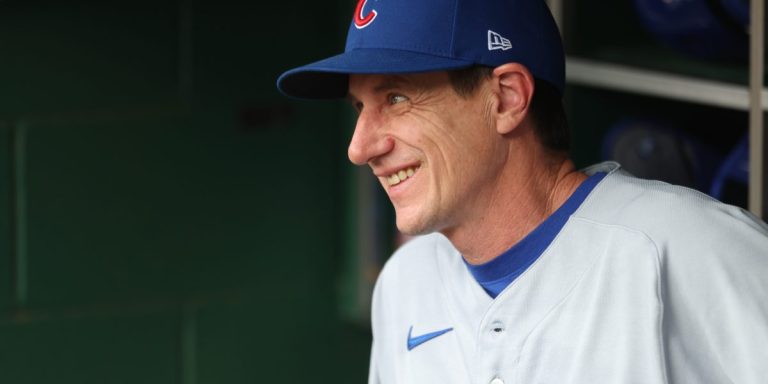
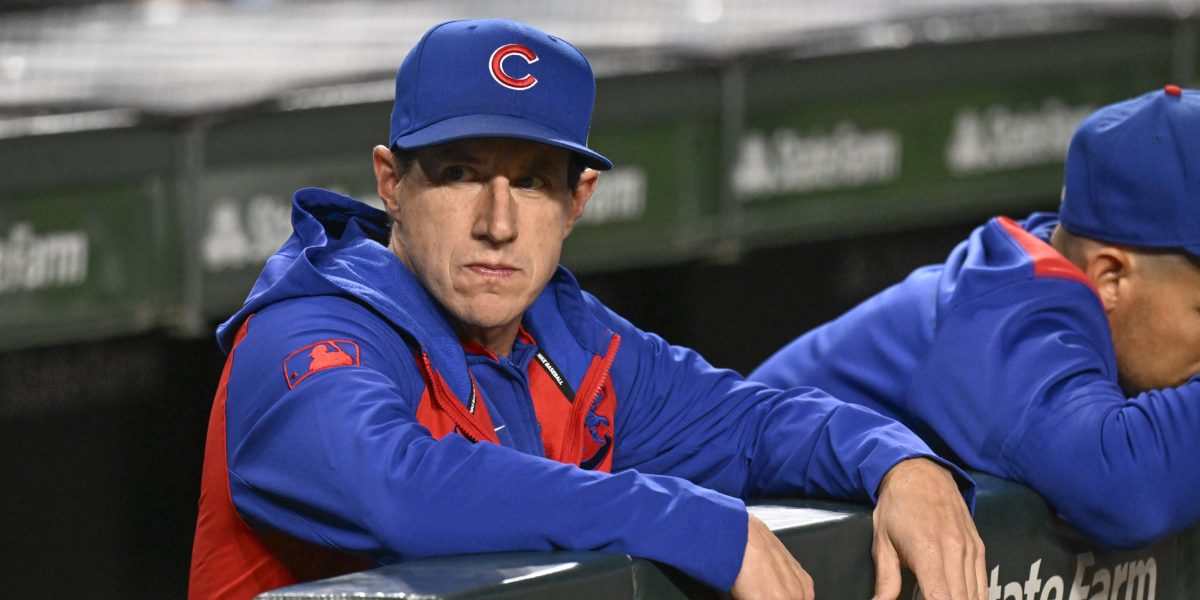
Cubs Manager Craig Counsell tried to make some sense of it in his post-game comments to the press.
“Obviously, it was a rough day,” Counsell told reporters. “The one thing, we’ve got to get the ball on the ground more. I think today he [starter David Peterson] faced 23 hitters, one batted ball on the ground. And that’s something that David kind of excels at, he’s been good at it. Over 50% in his career. That’s a pretty big difference.”
Well, yeah.

But Friday’s squash showcased a very real problem facing a Cubs crew filled with pitching castoffs from other teams—they’re fielding a pitching staff filled with castoffs from other teams. Injuries have decimated Cubs pitching and they simply don’t have the proven arms to keep things running smoothly.
Peterson came via recent trade with the Mets, who had lost their faith in the veteran starter after he posted a 6+ ERA through June 21. On the heels of a solid first start with the Cubs on June 27 against the Brewers, he looked worse than he’s been all year in allowing 10 earned runs in 3.2 innings on Friday.
Bryse Wilson, who came to the Cubs as a waiver wire pickup, looked outstanding in his Chicago debut on the 28th versus the Brewers, delivering 4.1 scoreless innings. On Friday, he gave up 7 earned runs in 3.1 innings.
Counsell and the Cubs have done an outstanding job in getting solid work from a patchwork pitching staff, but the law of averages is catching up with the team. Despite the occasional success story, you can’t field third-tier pitchers and expect that they won’t perform at a third-tier level.
Unless Cubs pitching gets miraculously healthy over the next couple of weeks and/or the front office makes some major pitching acquisitions at the trade deadline, the rest of the season may look more like Friday’s game than Wednesday’s.
The post Chicago Cubs: The awful truth behind the team’s history-making two-game stretch appeared first on ChiCitySports.